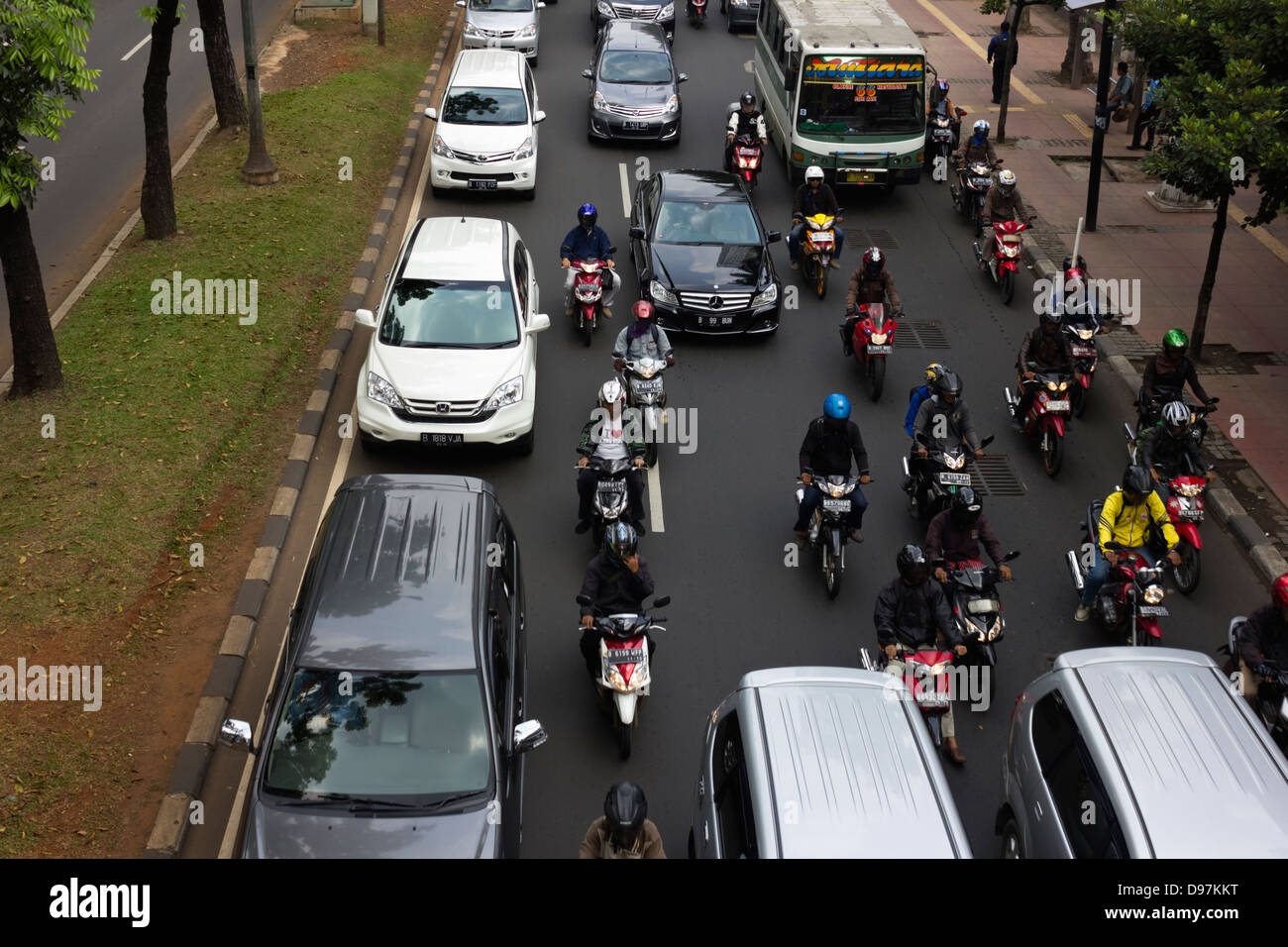
Jakarta, the capital of Indonesia, witnessed a massive influx of vehicles, with approximately 2.5 million vehicles entering the city after the Eid al-Fitr holiday. This traffic congestion poses a significant challenge to the city's infrastructure, raising concerns among local authorities about how to manage such a large number of vehicles.
According to official data, this large number of vehicles was recorded at the main Cikampek toll gate in the Karawang area of West Java on Saturday, March 28, 2026. This influx follows the conclusion of the Eid al-Fitr holiday, as citizens return to the capital after spending the holiday in their hometowns.
Details of the Event
This increase in the number of vehicles is an annual phenomenon that occurs after every holiday, as many Indonesians seek to return to the city after spending the holiday with their families. Reports have indicated that traffic congestion was severe, leading to delays in many areas.
Local authorities are working to improve road infrastructure, but challenges remain. Some experts have pointed out that this large number of vehicles indicates an urgent need for the development of public transportation in the city.
Background & Context
Historically, Indonesia, particularly Jakarta, has faced chronic traffic problems, making the city one of the most congested in the world. This is attributed to rapid population growth and an increase in the number of private vehicles. In recent years, the Indonesian government has attempted to address this issue through public transportation development projects, including the establishment of new metro and bus lines.
Moreover, religious holidays significantly contribute to increased traffic, as many people travel to their hometowns to celebrate with their families. This makes returning to the capital after the holiday a major challenge.
Impact & Consequences
Traffic congestion affects the daily lives of citizens, leading to increased commute times and fuel costs. Additionally, congestion contributes to the deterioration of air quality in the city, raising health risks for the population.
The Indonesian government is striving to mitigate this impact by improving public transportation, but progress in this area remains slow. Experts emphasize the need for urgent action to alleviate congestion and enhance the quality of life in the city.
Regional Significance
Jakarta's experience in dealing with traffic congestion is similar to that of many major Arab cities, such as Cairo and Damascus. These cities also suffer from similar traffic problems due to population growth and an increase in the number of vehicles. Arab countries could benefit from Indonesia's experiences in developing public transportation and improving infrastructure.
In conclusion, the influx of 2.5 million vehicles into Jakarta after the Eid al-Fitr holiday presents a significant challenge for the city. A swift response from the government is required to improve infrastructure and develop public transportation to ensure a better quality of life for citizens.