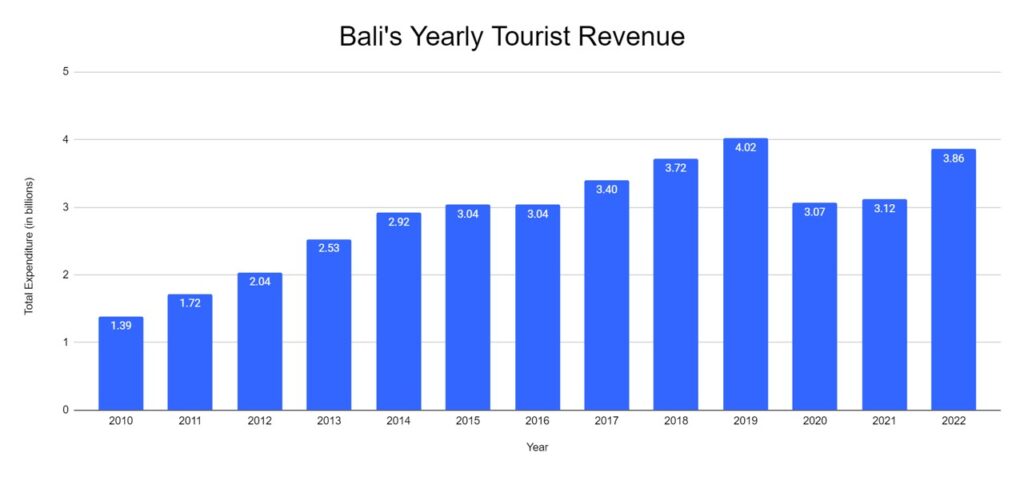
The Vice Chairman of the Indonesian Parliament's Tourism Committee, Lamhot Sinaga, revealed that approximately 55% of the country's total tourism revenue, estimated at 305 trillion rupiah, comes from the island of Bali. Sinaga emphasized that this percentage reflects an imbalance in the distribution of tourism revenues among regions, necessitating government attention to develop new strategies for tourism growth.
During his address in the Indonesian Parliament, Sinaga noted that 170 trillion rupiah of the tourism revenue is generated from Bali, while other regions contribute around 135 trillion rupiah. This highlights the urgent need for a more equitable distribution of tourism revenues throughout Indonesia.
Details of the Event
Sinaga stated that the significant concentration of revenues in Bali indicates that the government needs to reassess its tourism strategies. He explained that improving performance in the tourism sector should be accompanied by a fairer distribution of benefits across all regions. He asserted that this issue should be a focal point in discussions during the preparation of the budget for 2026.
He also pointed out that the anticipated growth in tourism revenue for 2025 has not yet been affected by the new law enacted in the same year. He clarified that the impact of this law will only be evident in the subsequent budget, meaning the government needs to plan proactively to ensure that all regions benefit from tourism growth.
Background & Context
Indonesia is considered one of the leading tourist destinations in Southeast Asia, renowned for its natural beauty and rich culture. However, the heavy focus on Bali as a primary tourist destination has led to disparities in economic development among regions. Historically, Bali has attracted tourists due to its beautiful beaches and cultural festivals, making it a prominent tourist hub.
In recent years, the Indonesian government has begun efforts to diversify tourist destinations by developing new areas such as Java and Sumatra, but much work remains to achieve the necessary balance.
Impact & Consequences
If tourism revenues continue to concentrate in Bali, it could exacerbate economic disparities between regions. This may lead to social discontent and negatively impact sustainable development. Therefore, achieving a fair distribution of tourism revenues is vital for ensuring community and economic stability in Indonesia.
The government hopes that the new law will further enhance tourism growth, targeting a revenue increase of 20% by 2026. Achieving this goal depends on the effective implementation of new policies and cooperation between central and local governments.
Regional Significance
The Arab region also faces similar challenges in tourism revenue distribution, with tourism concentrated in certain countries like Egypt and Jordan, while others suffer from a lack of tourism investments. Indonesia's experience could provide valuable lessons for Arab countries on how to achieve balance in tourism development.
In conclusion, enhancing the tourism sector in Indonesia requires ongoing efforts to ensure a fair distribution of revenues, contributing to sustainable development and improving living standards across all regions.