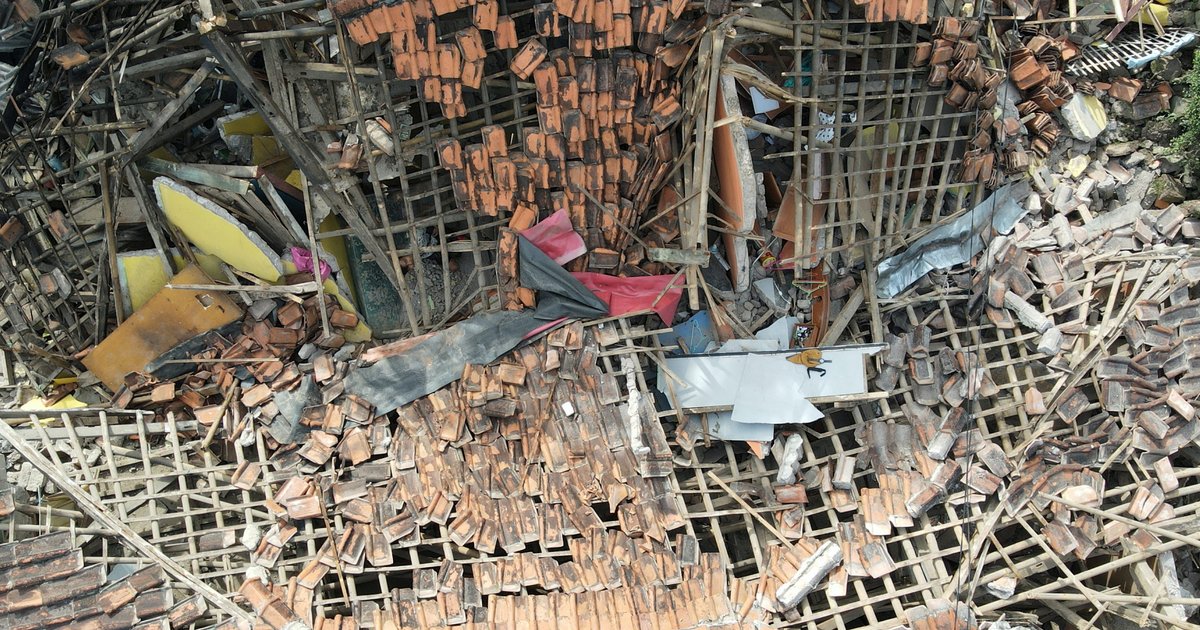
The Indonesian Meteorology, Climatology, and Geophysics Agency (BMKG) recorded 960 aftershocks following the main earthquake that occurred on Thursday, April 2, 2026, with a magnitude of 7.6 on the Richter scale. The earthquake struck off the southwestern coast of Batang Dua Island, Ternate, in North Maluku.
As of Sunday, the coordinator of the data and information section at BMKG, Mohammad Zulqifli, reported that 22 aftershocks were felt. He explained that aftershocks, which vary in intensity, are a common phenomenon following a significant earthquake.
Details of the Event
The main earthquake occurred at 05:48:14 local time, with its epicenter located at coordinates 1.25° N and 126.27° E, at a depth of 33 kilometers. This earthquake is classified as a powerful seismic event that impacts surrounding areas, necessitating precautionary measures from local authorities.
The aftershocks that followed the main earthquake are a natural result of changes in pressure distribution within the Earth's crust, where massive amounts of energy are suddenly released, leading to slips along geological faults. This phenomenon results in instability in the regions surrounding the earthquake's epicenter.
Background & Context
Indonesia is considered one of the most earthquake-prone regions in the world, located on the Pacific Ring of Fire, an area known for its seismic activity. Historically, the country has experienced numerous devastating earthquakes, prompting it to adopt advanced strategies in early warning and disaster preparedness.
These strategies include enhancing the seismic monitoring system and educating the population on how to respond during earthquakes. Previous experiences have shown that good preparedness can significantly reduce human and material losses.
Impact & Consequences
The aftershocks following the main earthquake can exacerbate damage in affected areas, potentially causing already weakened buildings to collapse. Therefore, it is crucial for local authorities to respond swiftly to provide necessary assistance to those affected.
Such events also raise concerns among the population, requiring the government to provide accurate information and psychological support to those impacted. The psychological effects of earthquakes can be profound, as people often feel fear and anxiety about the possibility of further seismic activity.
Regional Significance
While earthquakes in Indonesia may seem distant from the Arab region, there are lessons that Arab countries can learn. Preparedness for natural disasters and the development of early warning systems can significantly impact risk reduction in any disaster-prone area.
Moreover, international cooperation in sharing information and expertise can enhance countries' abilities to face natural disasters, contributing to the protection of lives and property.
In conclusion, earthquakes and aftershocks serve as a constant reminder of nature's ability to impact our lives. It is essential to learn from these events and work on strengthening our disaster response capabilities.