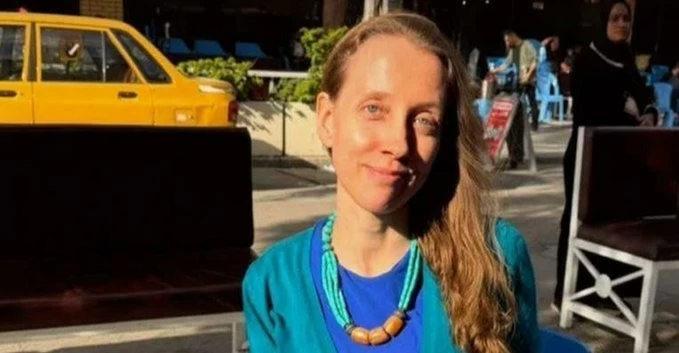
American journalist Sheli Renee Kittleson, who specializes in Middle Eastern affairs, was kidnapped by a group of unknown armed men in downtown Baghdad, the capital of Iraq. The incident took place in front of the Palestine Hotel, near the Royal Garden Hotel, raising widespread concerns about the security situation in the country.
Kittleson entered Iraq on March 24 and was staying at the aforementioned hotel. Iraqi security sources confirmed that a group of unidentified individuals, traveling in a Honda vehicle, executed the kidnapping and then headed south towards Baghdad. This incident marks the first of its kind for the American journalist in Iraq, where she has extensive experience covering political and security events in the region.
Details of the Incident
The Iraqi Ministry of Interior announced that security forces began their work immediately after receiving the report of the incident and managed to arrest one of the suspects involved in the crime. Investigations are ongoing under the supervision of the Iraqi intelligence agency to identify the remaining kidnappers and the location where the journalist is being held. The incident occurs at a sensitive time, as the country is experiencing noticeable security tensions, especially following a series of attacks targeting American interests.
It is worth noting that the American embassy in Baghdad has issued repeated warnings to its citizens about the risks of kidnapping and targeting by Iranian-backed armed factions, which increases concerns about the safety of foreign journalists in Iraq.
Background & Context
Historically, Iraq has witnessed numerous cases of kidnapping involving both foreign and local journalists, some of which ended with their release, while others were more complicated. Journalist Sheli Kittleson, born in 1976 and residing in Italy, has worked in hot zones around the world, but this incident represents a new challenge for her in Iraq.
Kittleson is considered one of the independent journalists who collaborates with international media outlets such as The Monitor, Foreign Policy, and BBC, highlighting the importance of her coverage of events in the Middle East. This incident may impact journalists' ability to work freely and safely in Iraq.
Impact & Consequences
This incident may heighten concerns among foreign journalists regarding their safety in Iraq, potentially affecting media coverage of events in the country. Additionally, the continued occurrence of kidnappings could negatively reflect on Iraq's image in front of the international community and increase pressure on the Iraqi government to improve the security situation.
This incident serves as a reminder of the need to enhance security measures to protect journalists, especially in conflict areas. Ongoing investigations may reveal a larger network of kidnappers, further complicating the security situation in the country.
Regional Significance
The repercussions of this incident extend beyond Iraq, as it could affect press freedom across the Arab region as a whole. In light of the tense conditions, journalists may feel apprehensive about covering events, leading to a decline in freedom of expression.
Moreover, the incident may escalate tensions between the United States and Iran, as kidnappings are part of the broader conflict between regional powers. Ultimately, the international community must unite to protect journalists and ensure their safety in conflict zones.