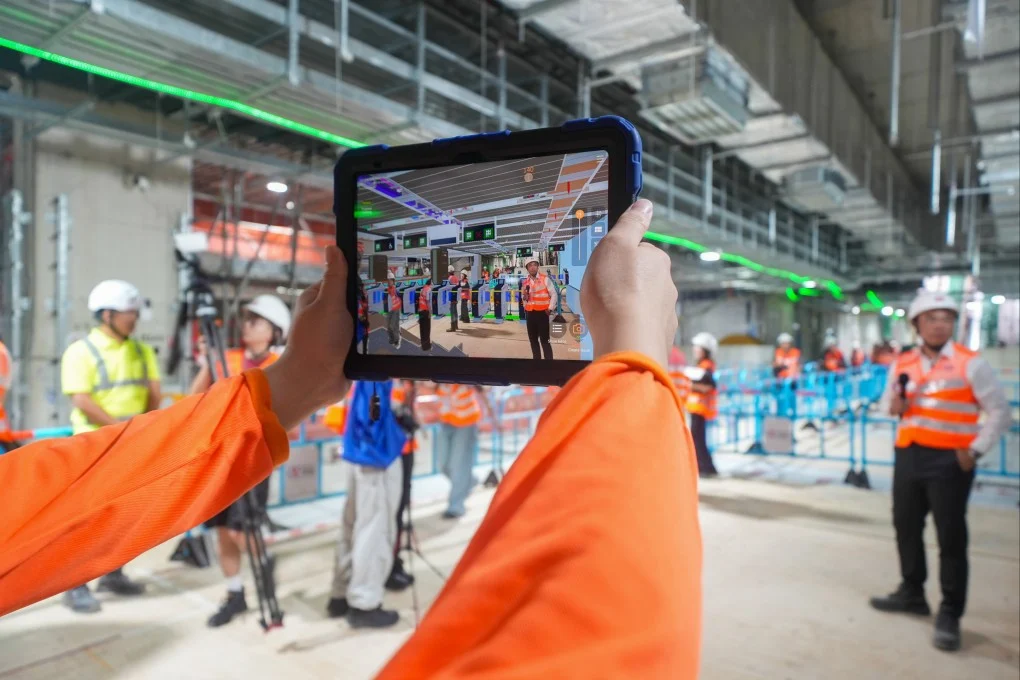
MTR Corporation, the operator of Hong Kong's railways, has announced the use of augmented reality (AR) technology to expedite construction at a new station within the massive Northern Metropolis project. This initiative aims to enhance the transportation network in the region and ensure the station opens on time next year.
In an official statement, the company confirmed that it has connected power to the Kwu Tung station, marking a significant step in the construction process. It also explained that utilizing the AR inspection system will allow workers to simulate future scenarios, aiding them in executing assembly tasks with greater precision.
Event Details
Augmented reality technology has become an effective tool across various fields, including construction and engineering. By providing interactive visual information, workers can see how different parts fit together before implementing them in reality. This reduces errors and accelerates work pace, which is vital in large infrastructure projects.
The Kwu Tung station is part of the Northern Metropolis project, which aims to develop a new urban area that includes residential and commercial centers. This project is expected to improve the quality of life for local residents and boost economic growth in the area.
Background & Context
Historically, Hong Kong has witnessed significant development in public transportation, with railways being one of the most important modes of transport in the city. As the population grows and demand for transportation increases, it has become essential to expand the railway network to meet citizens' needs.
The Northern Metropolis project aligns with the government's vision to promote sustainable development and enhance infrastructure. It is anticipated that this project will help alleviate traffic congestion and improve access to essential services.
Impact & Consequences
The use of augmented reality in construction may transform how projects are executed in the future. This technology not only speeds up work but also contributes to cost reduction and quality improvement. As reliance on technology increases across various sectors, AR could become a standard in construction projects worldwide.
Moreover, the success of the Northern Metropolis project could attract new investments to Hong Kong, enhancing its status as a global economic hub. This could open new avenues for collaboration with international companies in technology and construction sectors.
Regional Significance
Hong Kong's experience in utilizing modern technology in construction serves as a model for Arab countries seeking to develop their infrastructure. With increasing investments in public transportation projects across several Arab nations, these countries could benefit from Hong Kong's experiences in implementing technologies like augmented reality.
Additionally, collaboration between Arab nations and global technology companies may foster innovation in construction projects, leading to improved services for citizens.
In conclusion, the use of augmented reality technology in the Northern Metropolis project reflects a global trend towards innovation in construction and building. As these technologies continue to evolve, infrastructure projects worldwide are expected to undergo a significant transformation.