International efforts are intensifying to address the implications of Iran's closure of the Strait of Hormuz, with varying approaches between military and diplomatic options. In this context, Ukrainian President Volodymyr Zelensky has offered his country's contribution to efforts to reopen the strait, confirming Kyiv's readiness to provide defensive support based on its experience in securing navigation in the Black Sea following the Russian invasion.
While Paris and other European capitals express skepticism about the feasibility of any military intervention to open the vital corridor, London is preparing to host a meeting of military planners next week to discuss options that include mine removal and providing reassurance forces for commercial vessels. This multi-phase approach may not be activated until a ceasefire is in place.
Details of the Event
In his remarks, Zelensky emphasized that Ukraine is capable of providing technologies that include drone interception, escorting ships, and electronic warfare. He noted that reopening the strait may require a combination of air defense systems, protected naval convoys, and advanced jamming capabilities to ensure safe passage. He added that Ukraine is "ready to assist in all matters related to defense."
This Ukrainian proposal comes amid efforts by Kyiv to avoid a decline in its position on the international agenda as focus shifts toward the Middle East conflict, attempting to leverage its military experience against similar weaponry patterns used by Iran, particularly drones.
Context and Background
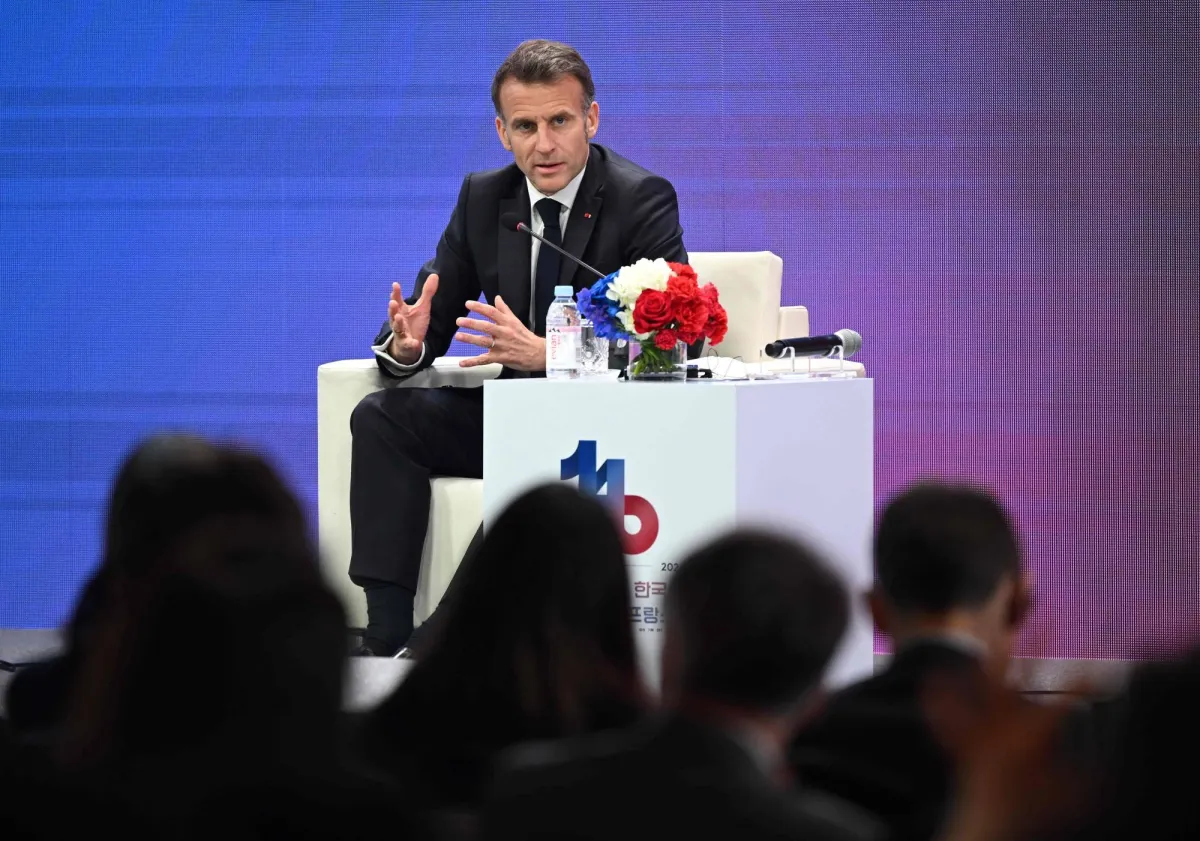
In contrast, French President Emmanuel Macron, during a summit with South Korean President Yoon Suk-yeol, chose to focus on the diplomatic path. The two sides agreed to coordinate efforts to contribute to reopening the strait and mitigating the crisis's impact on the global economy. The leaders emphasized the necessity of ensuring the security of shipping lanes, without delving into operational details.
Macron deemed resorting to a military operation to open the strait as "unrealistic," a stance that reflects a divergence from calls by former US President Donald Trump, who urged allies, particularly in Asia, to take a more significant role in securing the corridor through which nearly one-fifth of global oil supplies pass.
Consequences and Impact
A video conference organized by London, which included 40 countries, emphasized the urgent need to "reopen the Strait of Hormuz immediately and unconditionally." The foreign ministers of these countries viewed the closure of the strait by Iran as a "direct threat to global prosperity" and a violation of the principle of freedom of navigation.
UK Foreign Secretary Yvette Cooper confirmed that the international community has shown a "clear determination" to ensure freedom of passage in one of the most crucial maritime corridors in the world, through which about one-fifth of global oil, as well as liquefied natural gas and petroleum products, pass.
Impact on the Arab Region
Concerns are rising regarding the impact of the closure of the Strait of Hormuz on the Arab economy, especially given the heavy reliance on oil and gas. Any escalation in the region could lead to increased oil prices, negatively affecting the economies of Arab countries.
In conclusion, the situation in the Strait of Hormuz remains under international scrutiny, with increasing calls for coordination among countries to ensure freedom of navigation, amid ongoing tensions between Iran and Western nations.