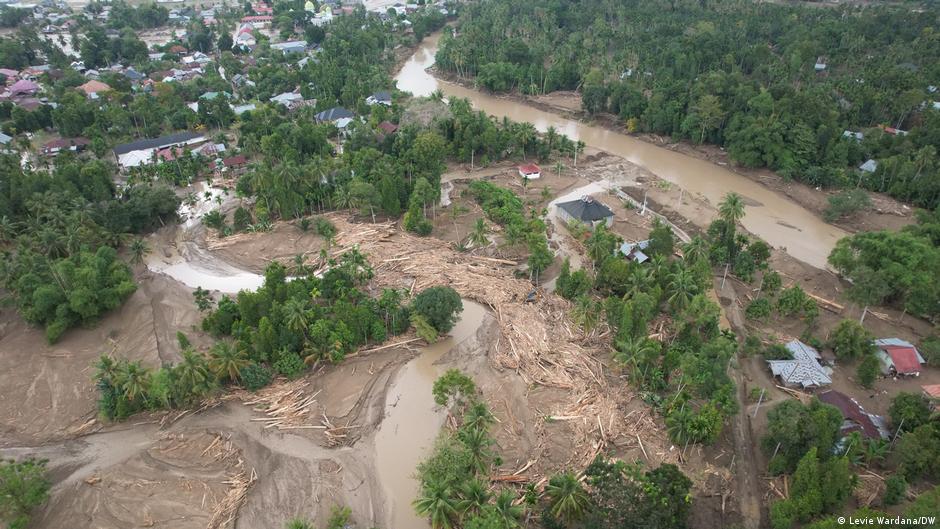
The Disaster Management Agency in Medan, Indonesia, has announced the commencement of evacuation operations for residents affected by the floods that swept through the area due to rising water levels in the Deli River. A team of 15 personnel from the agency has been deployed to several areas, including water channels and neighborhoods, to provide support and assistance to the affected population.
Unitas, the head of the Disaster Management Agency in Medan, stated that relief teams are working to evacuate residents in collaboration with relevant authorities, noting that the evacuation process requires coordination with the local government to ensure the necessary assistance is provided to those affected.
Details of the Incident
These floods are a result of heavy rainfall in the surrounding mountainous areas, with continuous rain since 11 AM, leading to rising water levels in the Deli River. Although the rain has currently stopped, concerns remain regarding the aftermath of the floods on the residents.
Unitas reported that the number of people evacuated has not yet been determined, as evacuation operations are still ongoing. She confirmed that the agency will register the number of affected individuals after the evacuation operations are completed.
Background & Context
Flooding in Indonesia is a recurring phenomenon, as the country experiences a rainy season that typically lasts from November to March. Many regions in Indonesia have faced previous floods, resulting in significant loss of life and property. In recent years, the severity of floods has increased due to climate change and increased urban activity in areas near rivers.
The Indonesian government is striving to improve early warning systems and develop infrastructure to combat natural disasters, but challenges remain, especially in remote areas that suffer from a lack of resources.
Impact & Consequences
Floods cause severe damage to property and infrastructure, leading to the displacement of residents and loss of their livelihoods. Additionally, floods affect essential services such as education and healthcare, as schools and health centers may be forced to close for extended periods.
Moreover, floods can lead to the outbreak of diseases due to water contamination and a lack of health services, increasing the burden on the government and relevant authorities in managing health crises.
Regional Significance
Although the floods in Indonesia may seem distant from the Arab region, the climate changes that lead to such natural phenomena affect the entire globe. Many Arab countries also face similar challenges due to rising temperatures and drought, necessitating enhanced regional and international cooperation to address these challenges.
In conclusion, the floods in Indonesia serve as a warning of the risks that countries may face due to climate change. A swift and effective response from governments and local communities is required to protect lives and property.