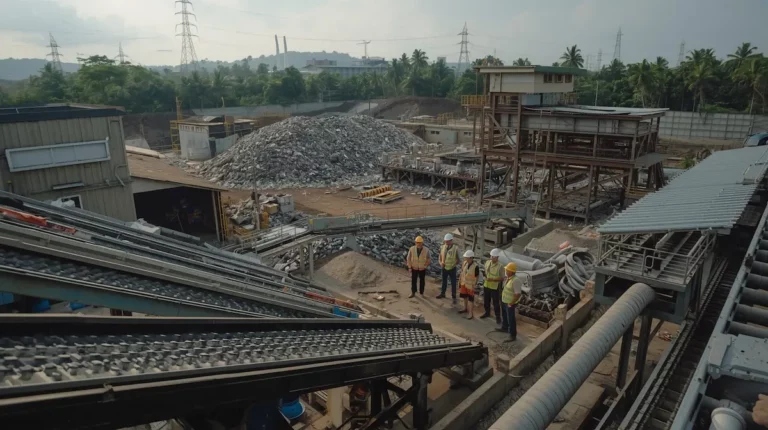
Indonesian Coordinating Minister for Food Affairs, Zulhasan, announced the acceleration of waste-to-energy projects (PSEL) across 30 sites, as part of the Indonesian government's efforts to combat the growing waste crisis. This announcement came after a special coordination meeting in the capital, Jakarta, where Zulhasan confirmed that these projects aim to address areas suffering from waste accumulation of over 1,000 tons daily.
Zulhasan explained that the government initially proposed establishing 34 locations for waste conversion, but the number has been adjusted to 30 projects covering 61 administrative regions. These projects aim to process approximately 14.4 million tons of waste annually, which represents about 22.5% of the national waste total.
Event Details
During the statements, Zulhasan noted that the projects encompass multiple regions, as some sites have been integrated into single service areas, leading to a reduction in the total number of projects. Some projects are scheduled to begin operations by 2027, while others aim for completion by May 2028.
He also mentioned that the government possesses various technologies for waste processing, such as refuse-derived fuel (RDF) and composting, allowing flexibility in applying suitable solutions for each area. Tender procedures have already begun for several sites, including cities such as Denpasar, Bekasi, Bogor, and Yogyakarta.
Background & Context
The waste crisis in Indonesia is one of the pressing issues facing the government, as the volume of waste has significantly increased in recent years. According to reports, the country generates approximately 65 million tons of waste annually, necessitating urgent action to improve waste management.
The Indonesian government aims to achieve sustainable development goals through these projects, as waste management and conversion to energy are part of its environmental strategy. These projects also aim to reduce reliance on traditional landfills, which have become inadequate to meet the country's growing needs.
Impact & Consequences
Accelerating waste-to-energy projects can have positive impacts on both the environment and the economy. These projects are expected to contribute to reducing pollution resulting from waste accumulation and improving air and water quality in targeted areas.
Moreover, these projects will create new job opportunities in areas such as construction, operation, and maintenance, contributing to the enhancement of the local economy. Converting waste to energy can also reduce reliance on traditional energy sources, thereby enhancing the country's energy security.
Regional Significance
Many Arab countries face similar challenges in waste management, with waste quantities significantly increasing. Indonesia's experience in converting waste to energy could serve as a model for Arab countries seeking to improve waste management and promote environmental sustainability.
Adopting similar technologies in Arab countries may help address the waste problem and bolster sustainable development efforts in the region. Additionally, cooperation among Arab countries in this field could facilitate knowledge and experience exchange, enhancing the effectiveness of proposed solutions.