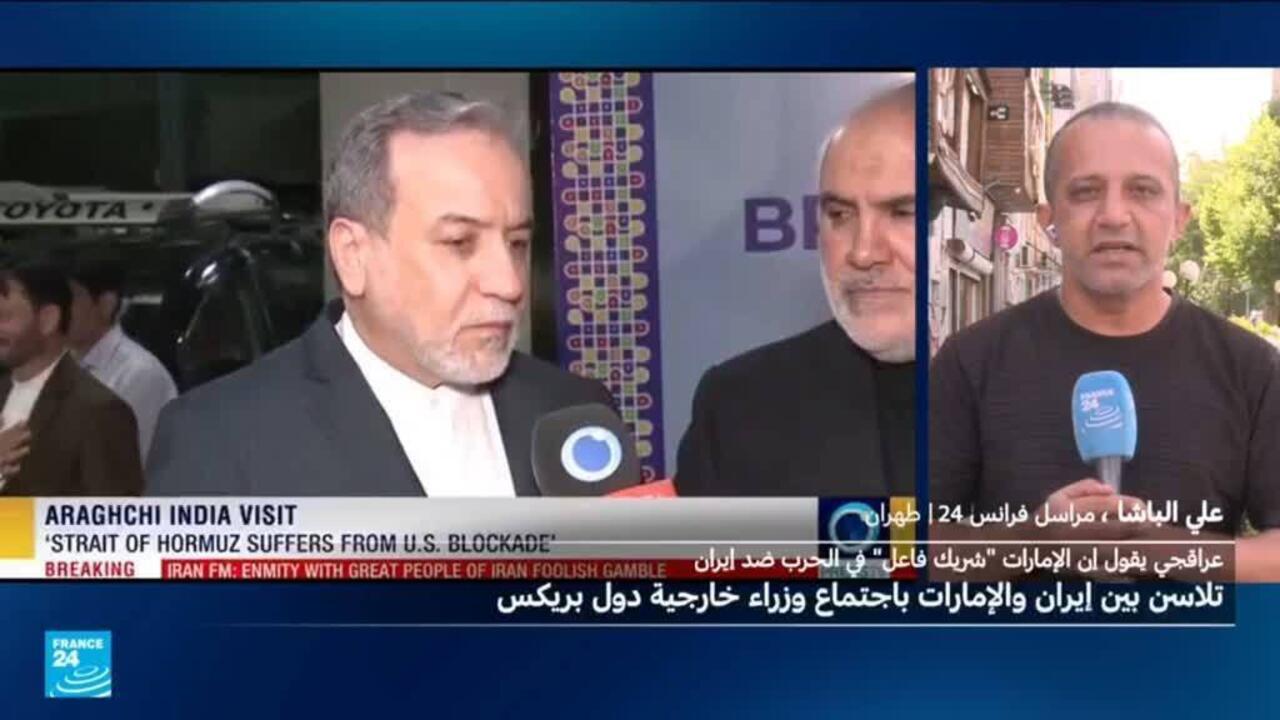
Iranian Foreign Minister Abbas Araghchi accused the United Arab Emirates of playing a crucial role in the US-Israeli aggression against Iran. During his speech at the BRICS summit held in India, Araghchi stated that "the UAE is an active partner in this aggression, and there is no doubt about it." He added that the UAE may have participated in attacks against Iran, reflecting an escalation in regional tensions.
These statements come at a sensitive time when the region is witnessing rising tensions between Iran and the United States and its allies, as Tehran seeks to bolster its regional position in the face of military and political pressures. Araghchi's remarks have elicited varied reactions in political and media circles, with some viewing them as a confirmation of Iranian fears regarding new alliances in the region.
Details of the Event
During the BRICS summit, which includes countries such as China, Russia, and India, Araghchi addressed the challenges Iran faces amid increasing US pressures. He confirmed that the UAE, considered an ally of the United States, may have taken direct steps against Iranian interests. These statements come at a time when attacks on Iranian facilities are escalating, heightening tensions between Tehran and its regional allies.
It is noteworthy that relations between Iran and the UAE have experienced significant tension in recent years, especially following the escalation of disputes in the Gulf region. Reports have indicated that the UAE may have participated in military operations against Iran, complicating the regional situation further.
Background & Context
Historically, relations between Iran and Gulf states have been marked by ongoing tensions, particularly following the Iranian revolution in 1979. These tensions have led to deep divisions in the region, as Iran seeks to enhance its influence in the face of Western and Arab alliances. Recent events, such as attacks on oil facilities in Saudi Arabia, have heightened fears of potential military escalation.
Moreover, new alliances formed in the region, including cooperation between the UAE and Israel, have further complicated the political landscape. Iran views these alliances as a direct threat to its national security, prompting it to adopt more aggressive stances towards its neighbors.
Impact & Consequences
Araghchi's statements underscore Iranian fears of a potential escalation in regional conflict, as these tensions could lead to greater military confrontations. Additionally, these remarks may affect relations between Iran and Gulf states, increasing the likelihood of new conflicts in the region.
These statements could provoke reactions from the UAE and its allies, further complicating diplomatic relations. At the same time, these tensions may increase pressures on Iran, potentially impacting its internal stability.
Regional Significance
These developments indicate that the Arab region may face new challenges as a result of tensions between Iran and the UAE. Such tensions could lead to new divisions among Arab states, complicating the security situation in the region.
Furthermore, these events may affect peace and stability efforts in the Middle East, as many countries seek to achieve new agreements. Under these circumstances, there remains hope that the concerned parties can reach peaceful solutions to avoid military escalation.
In conclusion, the Iranian Foreign Minister's statements reflect the increasing tensions in the region, necessitating greater international attention to ensure stability and avoid escalation.