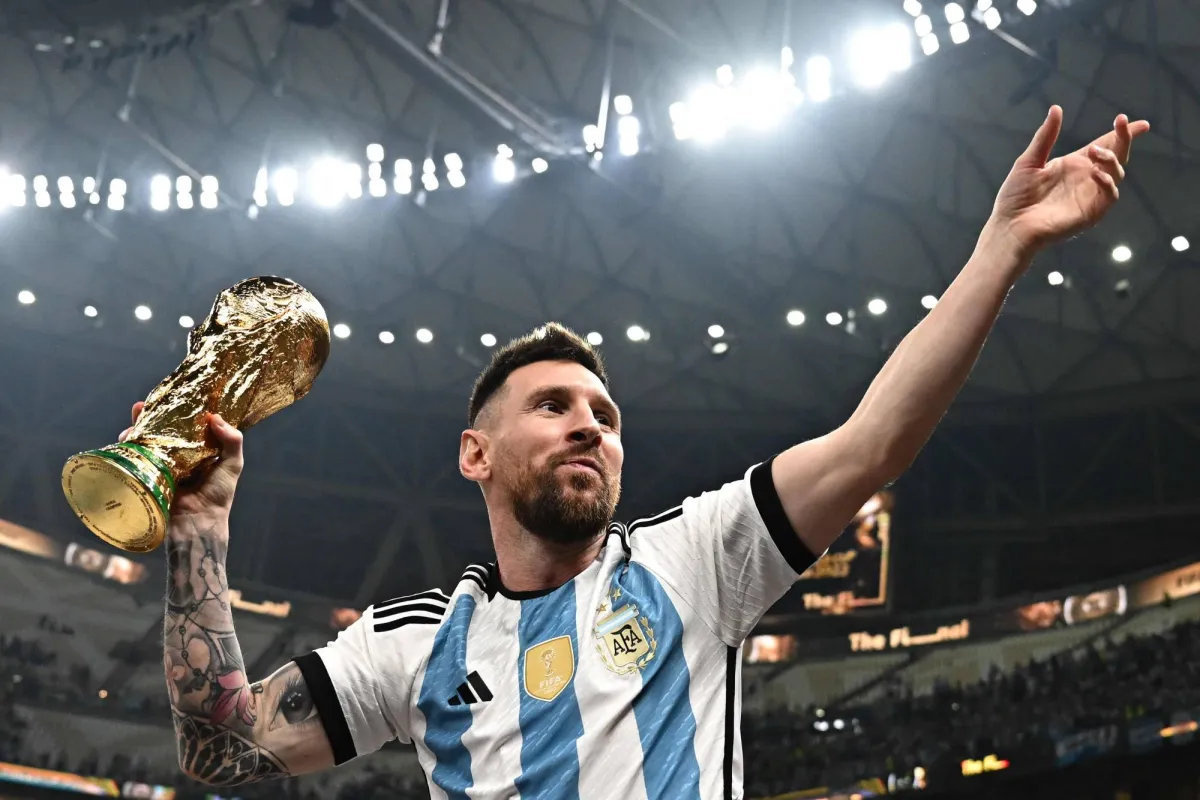
Combining the World Cup with the Olympic gold medal is considered one of the greatest achievements a football player can attain, but achieving both titles together is even more challenging. Over a century of the International Football Federation (FIFA) organizing the men's Olympic football tournament, only 15 players have succeeded in winning this historic double that combines the shine of Olympic gold with the grandeur of the World Cup.
After World War II, the names of Argentine legends Ángel Di María and Lionel Messi stand out as the only players to have achieved this unique feat. Their story began at the Beijing Olympics in 2008, when Messi passed the ball to Di María, who scored the decisive goal in the final against Nigeria, granting his country the gold medal. More than 14 years later, the duo shone again in the final of the 2022 World Cup in Qatar, where Di María scored one goal and Messi netted two against France, lifting the coveted trophy and achieving a rare cinematic moment of glory.
Event Details
In the 1930s, the Italian quartet of Sergio Bertoni, Alfredo Foni, Ogo Lucatelli, and Pietro Rava etched their names in golden letters. After winning the gold medal at the Berlin Olympics in 1936, this quartet became an essential part of the Italian national team that defended its world title at the 1938 World Cup in France, where they participated in a significant victory over Hungary with a score of 4-2 in the final, achieving the historic double under the guidance of coach Vittorio Pozzo.
The golden generation of Uruguay remains the most dominant in this historical record, featuring nine legendary players: José Andrade, Héctor Castro, Pedro Cea, Lorenzo Fernández, Álvaro Recoba, José Nasazzi, Pedro Petrone, Héctor Scarone, and Santos Urdinarán. This generation did not settle for one gold medal; they achieved gold at the Paris 1924 and Amsterdam 1928 Olympics, before crowning their legendary careers by winning the first edition of the World Cup in 1930 on home soil, confirming that these immortal players had an undeniable dominance over global football during that era.
Background & Context
The story of Uruguay's golden generation begins aboard a ship crossing the Atlantic Ocean to participate in the Paris 1924 Olympics, the first time FIFA organized the competition. The players had to play friendly matches in Spain to fund their journey and secure accommodation expenses, surprising the world with their elegant performance, culminating in a clean sweep of Switzerland in the final with a score of 3-0, proving that South American talent was set to conquer the old continent.
This generation's ambition did not stop there; the core structure of the team maintained its superiority at the Amsterdam 1928 Olympics, where legendary captain José Nasazzi emerged as the best defender of that era, alongside the fearsome scorer Pedro Petrone, successfully defeating Argentina in a historic rematch in the final. In 1930, Uruguay hosted the first World Cup, and these nine champions reinforced their global dominance by beating Argentina again in the World Cup final, achieving the Olympic gold twice and the World Cup trophy.
Impact & Consequences
The fifteen players who etched their names in the annals of immortality represent the elite in football history, having combined the championship that embodies the Olympic spirit with the championship that represents the pinnacle of global professional sports. From Beijing to Lusail, and from Paris to Montevideo, the stories of Messi, Di María, and the companions of Nasazzi and Foni serve as a testament that reaching the top requires exceptional talent and the ability to withstand challenges over many years.
The double gold remains a dream that haunts every star who steps onto the green pitch, serving as a significant motivation for current and former players to achieve similar accomplishments. These achievements are not just numbers; they reflect a rich history of creativity and dedication in the world of football.
Regional Significance
These achievements serve as an inspiration for many Arab players striving for glory in the world of football. Seeing players like Messi and Di María combine both championships enhances the aspirations of Arab youth in pursuing their sporting dreams. These stories also highlight the importance of hard work and dedication in training, reflecting the culture of sports in the Arab world.
In conclusion, the stories of these champions remain etched in the memory of global football and continue to inspire future generations to achieve even greater accomplishments.