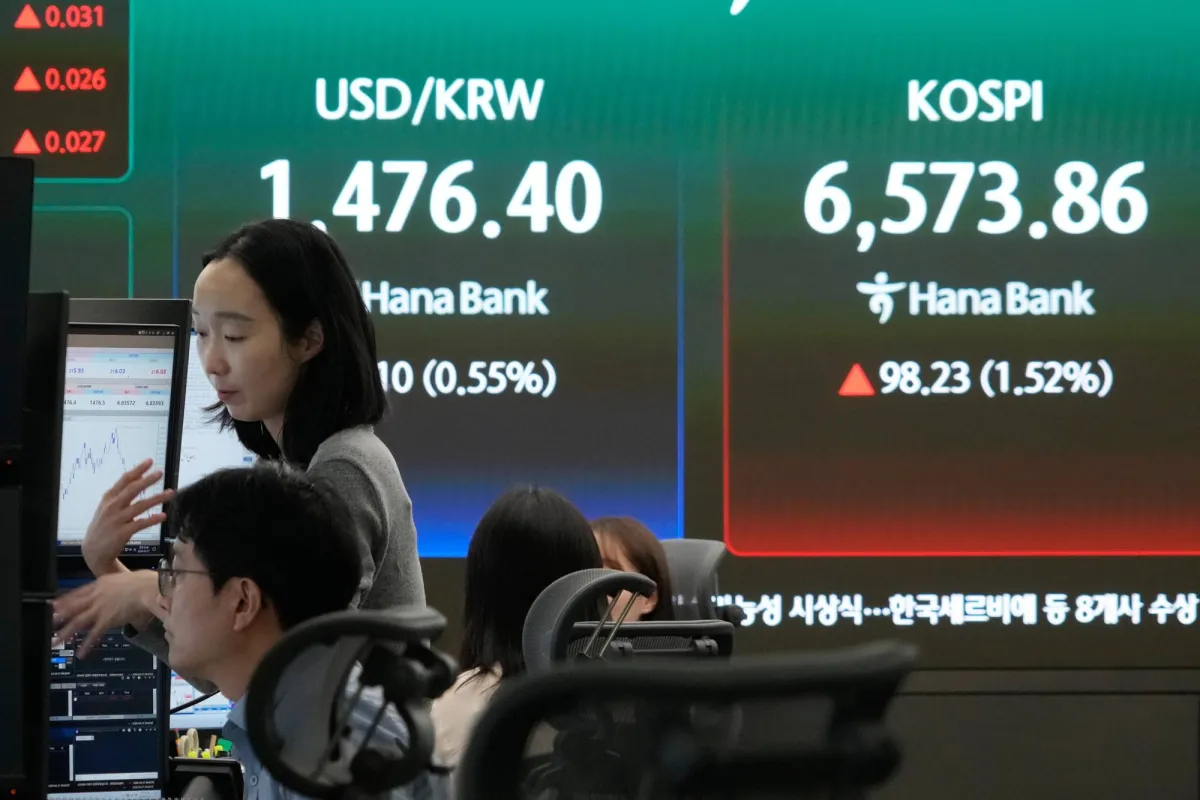
The stock markets in South Korea and Taiwan achieved unprecedented historical levels on Monday, positioning themselves for their best monthly performance in over three decades. The renewed momentum, driven by the prospects of artificial intelligence, has helped to overshadow growing concerns about conflicts in the Middle East, as investors chose to focus on accelerating technological trends.
Confidence in the semiconductor sector was bolstered by optimistic forecasts announced by Intel last week, which exceeded Wall Street's estimates for second-quarter revenues. This sparked a new wave of enthusiasm towards AI-related stocks, contributing to pushing the markets towards record levels.
Event Details
In Taiwan, stocks surged by 3.2% to record a new high, driven by the performance of the giant company TSMC, one of only two companies in Asia with a market capitalization exceeding $1 trillion. The Taiwanese index made an astonishing gain of 26% in April alone, marking its best monthly performance since late 1993.
In Seoul, the South Korean KOSPI index stabilized at a historic peak of 6630.35 points. SK Hynix, a semiconductor manufacturer, led the scene with a rise of 6.4%, while its competitor Samsung Electronics recorded a new benchmark. Based on these figures, the Korean index is on track for exceptional gains in April, with growth nearing 31% so far, making it the best month for the index since January 1998.
Background & Context
This strong performance of technology stocks has reflected on emerging market indices in general, pushing the MSCI Emerging Markets Index in Asia to a record level, with an expected monthly increase of 20%. Michael Wan, an analyst at MUFG, noted that the global infrastructure for artificial intelligence remains very strong and appears to be accelerating, which is positive news for the Asian region leading this global transformation.
On the political front, media reports indicating Iran's desire to reach an agreement to open the Strait of Hormuz first and postpone nuclear talks to a later time have slightly improved investors' risk appetite. In Southeast Asia, the Thai index rose by 1.2% in anticipation of a central bank meeting later this week.
Impact & Consequences
Asian currencies showed mixed performance against the dollar, with the Malaysian ringgit rising by 0.3% and the Singapore dollar increasing by 0.1%. In contrast, the Indonesian rupiah fell to 17225 to the dollar, while the Philippine peso remained near its lowest levels in four weeks at 60.76 to the dollar.
Oil prices rose on Monday, while U.S. stock futures declined, as stalled peace talks between the U.S. and Iran prolonged the disruption of energy exports from the Middle East. This situation has caused concern among markets and policymakers ahead of a busy week of central bank meetings.
Regional Significance
Investors are now turning their attention to the Federal Reserve's decision on interest rates, which could significantly impact global markets, including Arab markets. Rising oil prices may lead to increased inflation rates, enhancing the likelihood of interest rate hikes in many Arab countries.
In conclusion, the focus remains on how these economic developments will affect financial stability in the region, as investors look to capitalize on available opportunities amid rapid technological transformations.