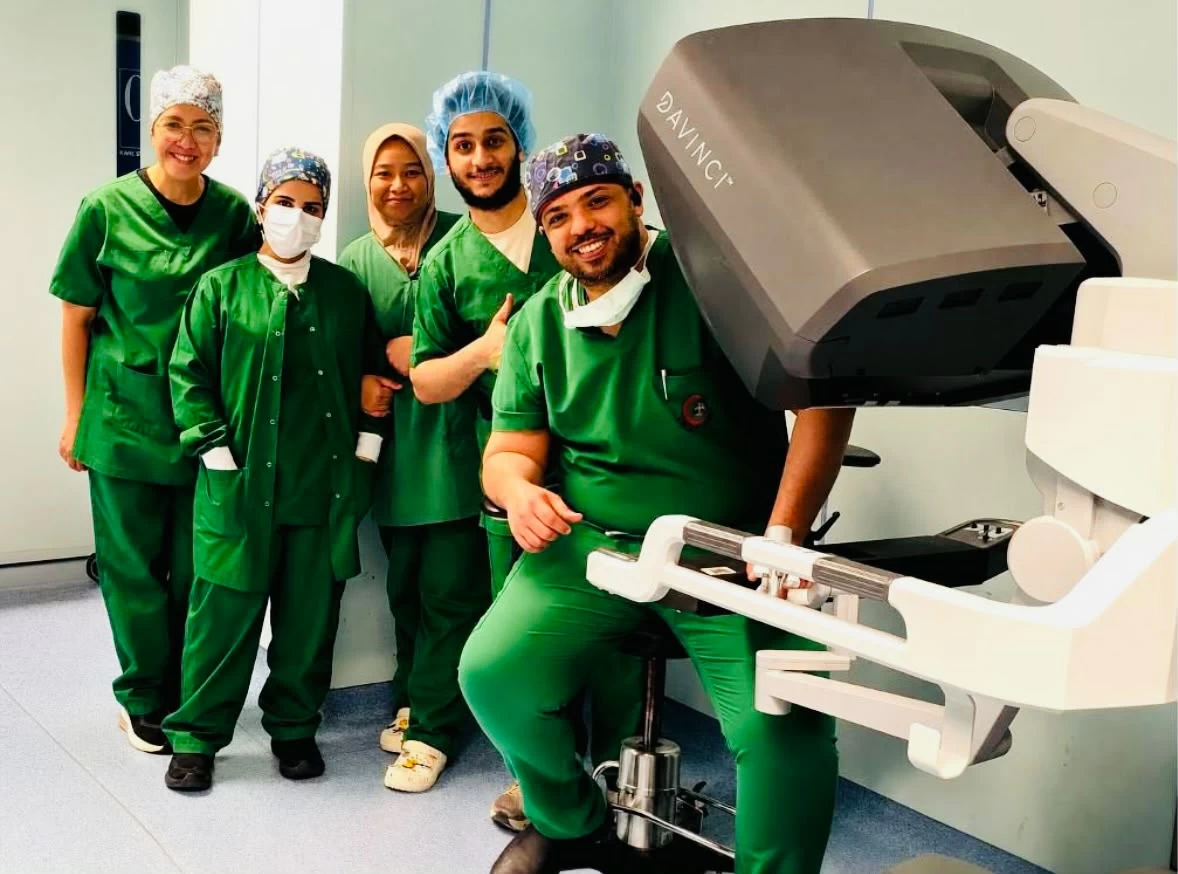
A medical team at King Abdulaziz Medical City in Riyadh, led by organ transplant consultant Dr. Mohammed Faisal Shaheen, has successfully performed a fully robotic kidney transplant outside the peritoneum. This technique is considered one of the latest surgical methods in the field of organ transplantation, as the procedure is conducted without the need to open the peritoneum, showcasing the substantial progress being made in the healthcare sector in the Kingdom.
Dr. Shaheen explained that this achievement represents an advanced medical step, reflecting a qualitative leap in adopting modern technologies and developing qualified medical personnel, in line with the goals of Saudi Vision 2030. This vision aims to enhance the quality of healthcare services and implement best global practices.
Event Details
Robotic surgery outside the peritoneum is one of the latest techniques in kidney transplantation, allowing access to the transplant site without opening the abdominal cavity or directly interacting with internal organs. This method reduces the likelihood of adhesions, lowers the risks of injury to the intestines or adjacent organs, and helps decrease infection rates and surgical complications.
One of the most notable advantages of this technique is the reduction in the size of surgical incisions compared to traditional operations, which contributes to alleviating post-operative pain, speeding up recovery, and shortening hospital stays. It also enables patients to return to their normal lives in a shorter time frame and is considered an ideal option for patients suffering from obesity or those who have undergone previous abdominal surgeries.
Background & Context
This operation is part of the ongoing efforts by the Kingdom to develop healthcare services, as the government seeks to enhance the capabilities of the health sector through investment in scientific research and modern technologies. In recent years, the Kingdom has witnessed significant progress in the field of organ transplantation and minimally invasive surgeries, reflecting its commitment to providing advanced healthcare to citizens.
Moreover, national competencies have become capable of applying the latest global technologies, enabling them to provide services comparable to those offered in the largest specialized medical centers worldwide. This progress reflects the substantial support from the leadership and enhances the Kingdom's position as a leading country in the healthcare sector.
Impact & Consequences
This achievement is considered an important step toward improving the quality of healthcare services in the Kingdom, as it helps reduce the risks associated with traditional surgery. It also reflects the Kingdom's ability to adopt modern medical innovations, thereby enhancing confidence in the healthcare system and encouraging further investments in this sector.
The success of this operation may open doors for more research and development in the field of organ transplantation, contributing to improved health outcomes for patients and enhancing opportunities for advanced healthcare access.
Regional Significance
This achievement serves as a model for the Arab region, as it can inspire other countries to invest in developing healthcare technologies. Advances in organ transplantation and minimally invasive surgeries can contribute to improving public health and enhancing the quality of life in Arab communities.
In conclusion, the success of robotic kidney transplantation outside the peritoneum at the National Guard represents a significant achievement that reflects the Kingdom's commitment to providing advanced healthcare services and enhances its status as a leading country in this field.