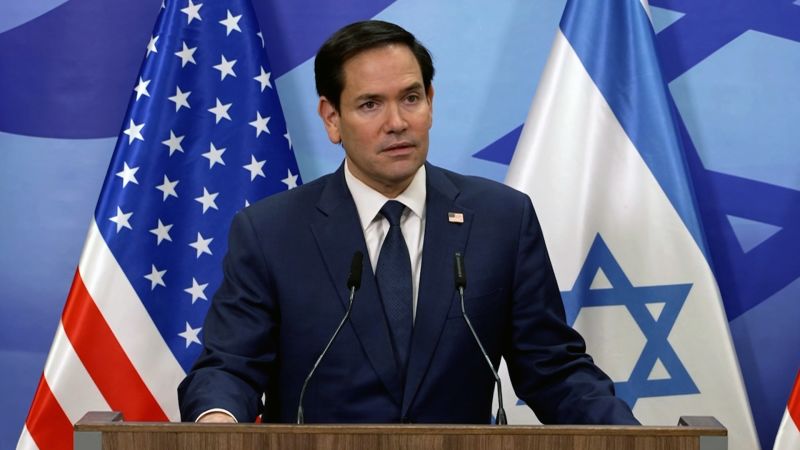
U.S. Senator Marco Rubio asserted that the United States is capable of achieving its objectives in Iran without the need to deploy ground troops. He pointed out that there are alternative strategies that can be employed to safeguard American interests in the region, reflecting a shift in American military thinking.
Rubio's comments come at a sensitive time, as tensions between the United States and Iran are escalating, particularly following the increase in Iranian nuclear activities and Tehran's threats to American interests in the Middle East.
Details of the Statement
During a press conference, Rubio explained that the United States possesses a range of diplomatic and military tools that can be utilized to achieve its goals without direct military intervention. He emphasized that there are multiple options available, including economic pressure and support for Washington's allies in the region.
He also highlighted the importance of strengthening cooperation with allied countries, such as Saudi Arabia and Israel, to address the challenges posed by Iran. Rubio affirmed that this strategy could be more effective and less costly than deploying ground troops.
Background & Context
Historically, U.S.-Iran relations have been marked by increasing tensions since the Islamic Revolution in 1979. These tensions have led to several direct and indirect conflicts in the region, including wars in Iraq and Syria.
In recent years, concerns over the Iranian nuclear program have intensified, prompting the United States to impose stringent economic sanctions. However, many experts believe that the use of military force could exacerbate the situation rather than resolve it.
Impact & Consequences
Rubio's statements indicate a potential shift in American strategy towards Iran, as Washington seeks to reduce reliance on military force. This approach may help alleviate tensions in the region, but it could also raise concerns among some allies who depend on American military support.
Moreover, this strategy could affect U.S. relations with other countries in the region, as some nations may feel that the United States is abandoning its security commitments, potentially leading to changes in regional alliances.
Regional Significance
For Arab countries, Rubio's remarks reflect growing anxiety over the increasing Iranian influence in the region. Many Arab nations, particularly in the Gulf, fear that a reduction in American military presence could lead to heightened Iranian threats.
At the same time, this strategy may open up new opportunities for cooperation between Arab nations and the United States in other areas, such as economics and cybersecurity, which could help enhance stability in the region.
In conclusion, the American strategy towards Iran remains a complex issue that requires a delicate balance between military force and diplomacy. As tensions continue, this matter will remain at the core of political discussions in Washington and the region.