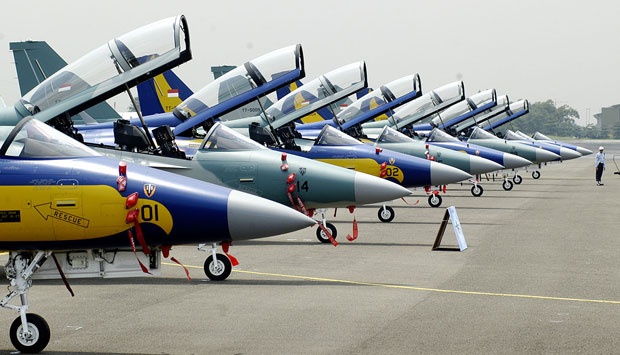
The Indonesian Air Force base Raden Sajad (Lanud RSA) in Natuna, located in the Riau Islands province, has announced the activation of an air center to support efforts in combating forest and land fires (karhutla) in the region. This announcement was made by the base commander, Air Marshal Onismus Gidi Ray Ariadi, who confirmed that the center began operations last Monday, March 30.
Ariadi explained that the activation of the center is a proactive step to address the risks of fires that may increase due to the dry season. Reports have indicated the outbreak of fires in Natuna that have led to the destruction of over 100 hectares of land, prompting local government to take immediate action in collaboration with relevant authorities.
Details of the Event
As part of the fire-fighting efforts, the Natuna provincial government, in collaboration with various local institutions, submitted a request for assistance to the central government. This request was approved, and the central government dispatched aircraft and helicopters to support firefighting efforts. Ariadi confirmed that the aircraft arrived in Natuna on the same day the center was activated.
The aircraft and helicopters are equipped for multiple tasks, with planes designated for weather modification to induce rain, while helicopters will be used for fire extinguishing operations through water bombing. The readiness of the aircraft and equipment was confirmed by the base commander during a site inspection visit.
Background & Context
Forest fires in Indonesia are a recurring problem, especially during the dry season, which typically extends from June to September. The primary cause of these fires is the use of burning as a method for clearing agricultural land, leading to rapid fire spread. In recent years, there has been a noticeable increase in the number of fires, negatively impacting the environment and public health.
Historically, Indonesia experienced massive fires in 1997 and 1998, which resulted in an environmental and health crisis in the region. Since then, the Indonesian government has taken steps to improve its response to fires, including enhancing cooperation with neighboring countries to tackle this phenomenon.
Impact & Consequences
Forest fires pose a significant threat to the environment, leading to the destruction of natural habitats and air pollution. They also have negative impacts on human health, potentially causing respiratory problems and other illnesses. Therefore, efforts to combat these fires are essential for preserving the environment and public health.
Reports indicate that a rapid response from local government and relevant authorities can help mitigate the damage caused by fires. However, the biggest challenge remains addressing the root causes of this phenomenon, including land management and sustainable land use practices.
Regional Significance
Although forest fires in Indonesia may seem distant from the Arab region, there are lessons to be learned. Environmental challenges such as forest fires and climate change affect everyone, including Arab nations. These events can serve as a warning for Arab countries to adopt effective strategies to face environmental challenges.
In conclusion, the activation of an air base in Natuna represents a positive step towards enhancing efforts to combat forest fires. However, continuous cooperation between the government and local communities is required to ensure the protection of the environment and public health.