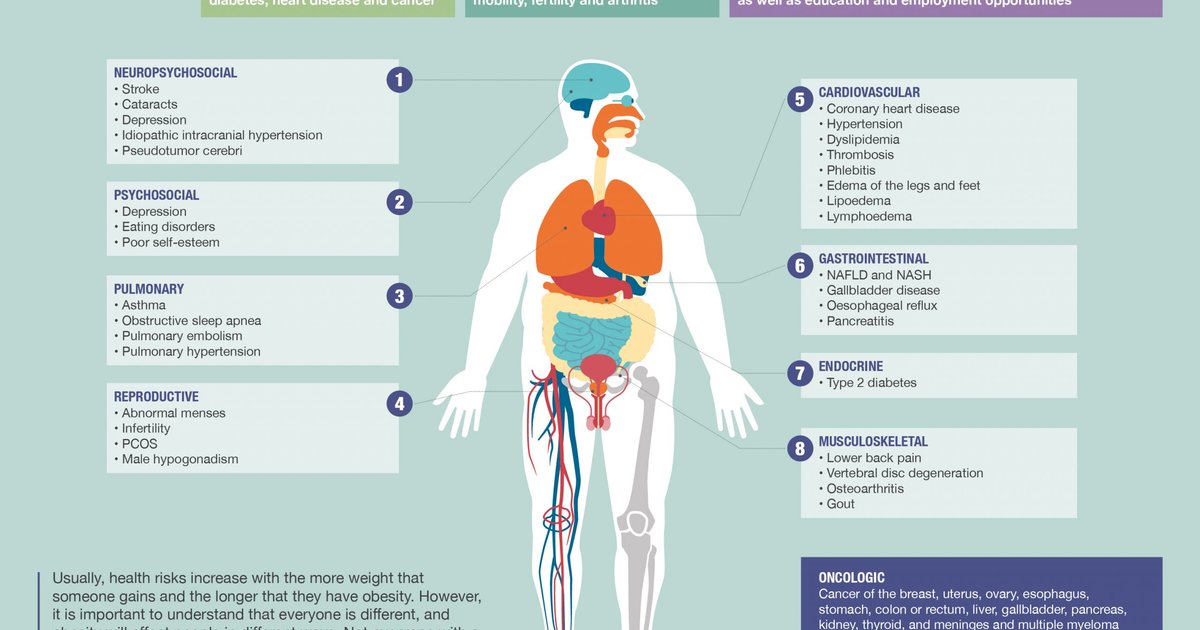
Obesity transcends mere appearance or lifestyle issues, serving as a precise temporal indicator that shapes health for many years to come. While many focus on the numbers displayed on the scale, recent studies reveal a deeper truth: the danger lies in the timing of weight gain onset.
From the moment weight gain begins, a long journey of silent changes starts within the body, with effects accumulating slowly over time. These impacts arise early and gradually form, making excess weight in youth a countdown to health, necessitating early intervention as an urgent requirement.
Event Details
It is not just weight that determines health outcomes, but the timing of when weight gain begins. In a phase that seems fleeting to many, from late adolescence to the twenties, one of the most dangerous silent turning points in the body's trajectory occurs, where weight gain transforms from a mere number on a scale to the beginning of a long-term biological pathway.
A recent study conducted by Lund University in Sweden, involving over 600,000 individuals, found that obesity starting between the ages of 17 and 29 is associated with a 70% increased risk of premature death compared to those who maintained a healthy weight into later life. The onset of obesity was defined as the first instance of a body mass index reaching 30 or higher.
Background & Context
It has long been known that obesity increases the risk of many diseases and significantly heightens the risk of premature death, particularly from serious conditions such as heart disease and diabetes. Instead of focusing on obesity at a specific age, this study investigated how weight changes during adolescence affect health outcomes.
The study confirmed that early weight gain has a substantial impact on our health for many subsequent years, revealing a clear pattern: weight gain at the onset of puberty has the most significant effect.
Impact & Consequences
Tania Stokes, a professor at Lund University and one of the researchers involved in the study, stated, "The most consistent finding is that early weight gain is linked to an increased risk of premature death later on, compared to individuals who gain less weight." Lead researcher Huynh Lee added that "one possible explanation for the increased obesity risk among those who become obese early is the prolonged exposure to the biological effects of excess weight."
The danger of this stage does not stop at the 'number' of weight itself but rather what it represents as the beginning of 'long-term exposure' to risk factors within the body. This means that the body spends longer years under the influence of excess fat, gradually opening the door to a series of chronic biological disorders.
Regional Significance
Obesity among youth is no longer a phenomenon that can be explained solely by individual choices; it has become a direct result of a modern environment that profoundly reshapes dietary behavior and lifestyle. Ultra-processed foods play a crucial role in this context, becoming an essential part of the daily diet.
Studies indicate a correlation between the consumption of these foods and food addiction-like behaviors among youth, reflecting the impact of an obesogenic environment. As this situation continues, the body enters a more complicated phase, where cells begin to lose their sensitivity to insulin, marking a critical step towards developing type 2 diabetes.
Growing evidence shows that ultra-processed foods not only affect weight but extend their effects to the entire health system, making them one of the most significant nutritional challenges of modern times. Therefore, it is essential for individuals to adopt a healthy lifestyle that includes proper nutrition and physical activity.