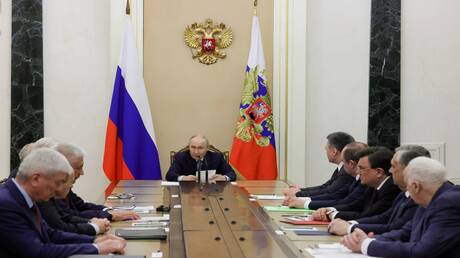
Russian President Vladimir Putin stated that the Russian economy has been operating under serious external pressures and challenges for several years. He pointed out that these conditions have significantly impacted the country's economic performance, necessitating new strategies to adapt to these challenges.
During a meeting with senior economic officials, Putin clarified that the Russian economy has faced difficulties due to Western sanctions and geopolitical tensions. He affirmed that the Russian government is working to enhance economic stability through the implementation of structural reforms and support for vital sectors.
Details of the Event
Putin's statements came at a time when the global economy is experiencing significant fluctuations, with many countries affected by the repercussions of economic crises. The Russian president highlighted the importance of strengthening cooperation with friendly nations and expanding new markets to offset the negative impacts of sanctions.
He also added that the Russian government is focusing on developing local industries and increasing productivity, which contributes to reducing reliance on imports. He emphasized that there are ongoing efforts to improve the business climate and attract foreign investments.
Background & Context
Since 2014, Western countries have imposed sanctions on Russia due to its annexation of Crimea, leading to a deterioration of economic and political relations. These sanctions have contributed to a decline in Russian economic growth and increased pressures on various sectors.
Despite these challenges, Russia has managed to achieve some successes in certain areas, such as energy and agriculture. These sectors have helped bolster the Russian economy in the face of global crises.
Impact & Consequences
External challenges significantly affect the Russian economy, as the government seeks to achieve stability and growth under difficult conditions. These challenges could lead to increased poverty and unemployment in some regions, reflecting the urgent need for economic reforms.
Furthermore, the continued external pressures may impact trade relations with other countries, requiring Russia to seek new partnerships to enhance economic growth.
Regional Significance
Russia is considered a strategic partner for many Arab countries, playing an important role in energy and security fields. The economic challenges facing Russia may affect trade and investment relations with Arab nations.
Under these circumstances, Arab countries may seek to enhance cooperation with Russia in new areas, such as technology and agriculture, which could help achieve mutual benefits amid global crises.
In conclusion, the external challenges facing the Russian economy remain a vital topic that requires close monitoring, as these conditions affect stability and growth in the country and also reflect on relations with other nations, including Arab countries.