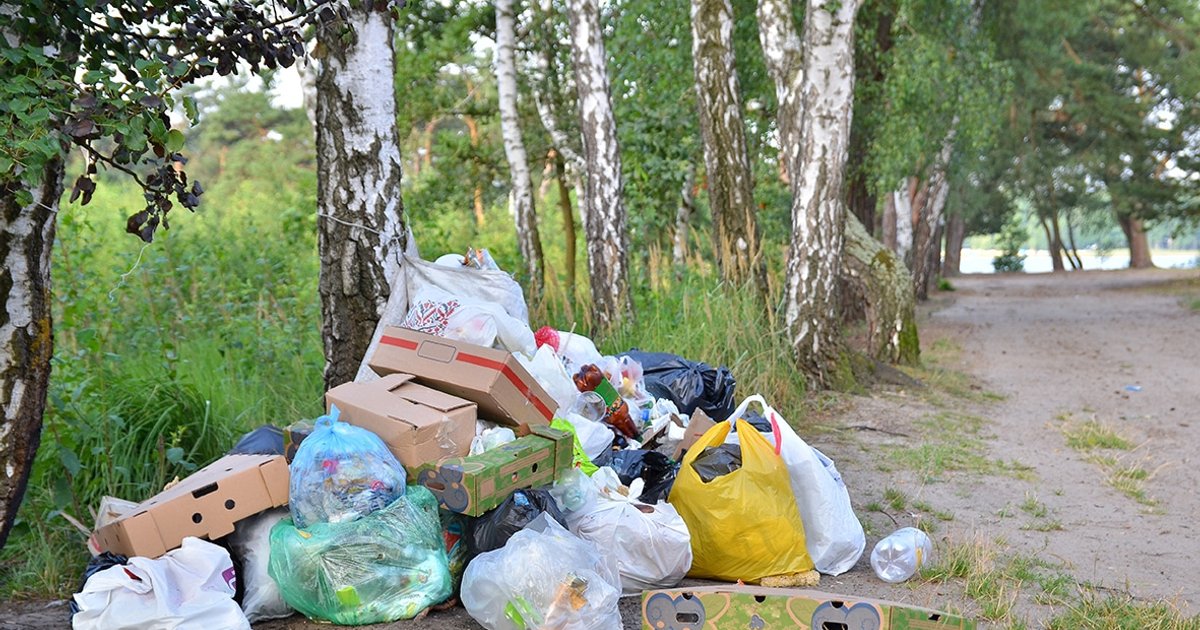
In a scene reflecting significant challenges in waste management, local authorities in the Pasar Minggu area of Jakarta have noted that some citizens continue to dispose of garbage illegally, despite strict laws prohibiting such actions. This phenomenon raises increasing concerns about its impact on the environment and the health of residents.
Okok, an employee of the local environmental department, stated, "There are laws against littering, but people still ignore them." He pointed out that the site where waste is dumped is easily accessible, contributing to the persistence of these practices.
Details of the Incident
On Masjid Al-Makar Street, near the train station in Pasar Minggu, illegal dumping sites have emerged, where waste accumulates daily. Reports have shown that the volume of waste at this site reaches approximately half a meter above ground level, posing an environmental and health threat.
The accumulated waste consists of food scraps, plastics, and market waste such as vegetables and fruits, reflecting irresponsible behaviors by some residents. Despite efforts by local authorities to collect waste daily, the problem remains unresolved.
Background & Context
This issue arises within the framework of the Indonesian government's efforts to improve waste management, highlighted by the issuance of the Waste Management Law in 2019, which stipulates strict penalties of up to 10 million rupiah or imprisonment for up to three months. However, the enforcement of these laws faces significant challenges due to insufficient awareness among citizens.
Despite the presence of warning signs and surveillance cameras, these efforts have not yielded results. One resident, Wasti, noted that these measures have not been enough to deter people from littering. She confirmed that the situation is worsening, affecting the quality of life in the area.
Impact & Consequences
The repercussions of these practices extend beyond environmental impacts; they also affect the public health of residents. Waste accumulation can lead to the spread of diseases and contributes to the deterioration of air and water quality. With the increasing population in Jakarta, this problem may become more complex if effective measures are not taken.
Moreover, the disregard for laws reflects larger challenges in community culture regarding waste management, necessitating the enhancement of environmental awareness among citizens.
Regional Significance
The waste management issue is one of the environmental challenges facing many Arab countries as well, where numerous cities suffer from waste accumulation in illegal sites. Arab nations could benefit from Indonesia's experiences in addressing these challenges by strengthening laws and increasing environmental awareness among citizens.
In conclusion, waste management remains a significant challenge that requires cooperation between the government and the community to achieve a clean and healthy environment for all.