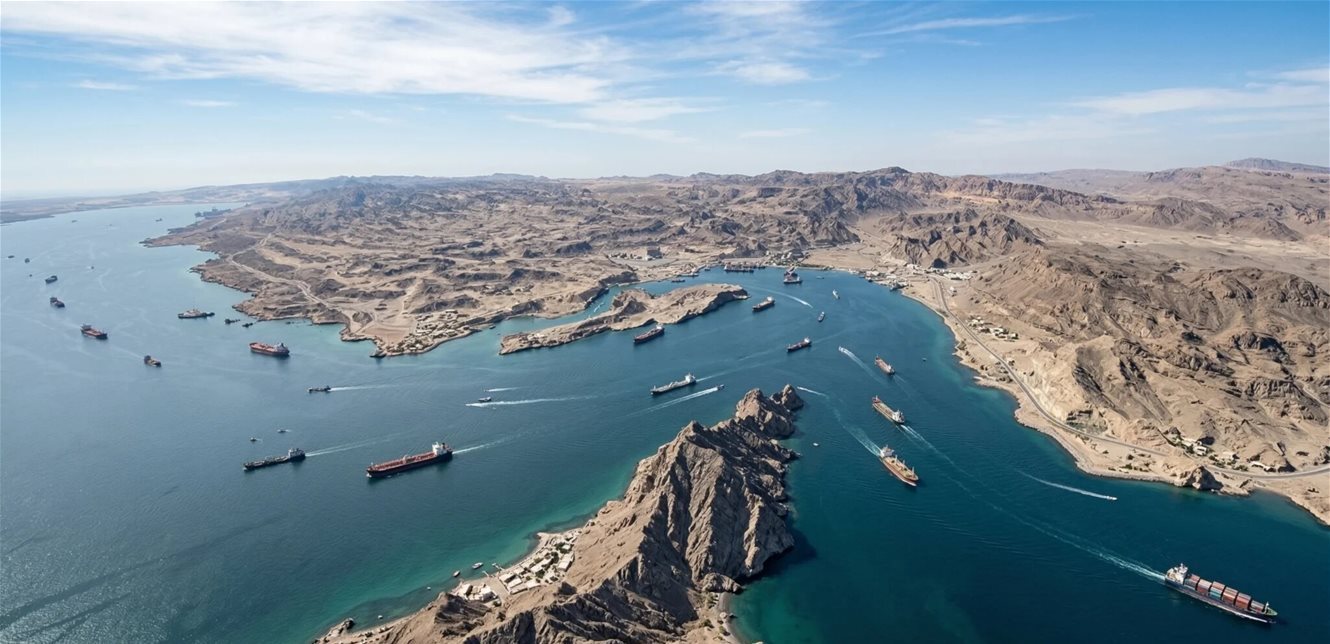
The United States is striving to clear the Hormuz Strait of mines planted by Iran, amidst escalating threats from missiles and drones. This complex mission may take weeks, raising questions about the feasibility of securing the vital corridor through which nearly one-fifth of global oil trade passes.
Iran alone is aware of the extent of the mines it has laid in this narrow waterway, prompting the United States to begin preparations for scouring the seabed for them. Expert estimates suggest that accomplishing this task could take a long time, especially with mines camouflaged to resemble rocks, making their detection more challenging.
Details of the Situation
Amid rising tensions, Kevin Aire, former training director at the U.S. Navy's Mine Warfare and Submarine Command, described the situation as a "catastrophic scenario." He noted that securing a safe passage to the Gulf could take about 45 days, while the complete mine-clearing operation could extend to four months.
On the other hand, Brian Clark, a former U.S. Department of Defense official, asserted that securing a safe corridor could be achieved within a week, based on recent war simulation results. However, complete mine removal could take up to four weeks.
Background & Context
Earlier this month, U.S. forces announced the start of a mine-clearing mission, with President Donald Trump ordering the U.S. Navy to "fire on any Iranian ships involved in laying mines." In response, Iranian Parliament Speaker Mohammad Baqer Qalibaf stated that Iran would firmly confront U.S. attempts to remove the mines, considering it a violation of the ceasefire.
A lot depends on the number of mines Iran successfully laid during its eight-week battle with the United States and Israel. While U.S. officials assert that Iran has planted some mines, their estimates suggest that the number may be limited.
Impact & Consequences
The Tasnim News Agency, affiliated with the Iranian Revolutionary Guard, is urging ships to avoid sailing in a prohibited area in the strait and to resort to alternative shipping routes. Iran announced that the strait would be "fully open" during the ceasefire between Israel and Lebanon, prompting many ships to attempt to leave the Gulf.
However, the reality has been different, as several ships were fired upon by the Iranian Revolutionary Guard, creating confusion about whether the strait was indeed open. At the same time, Trump maintained the U.S. naval blockade, leading to a retreat of the majority of ships attempting to cross.
Regional Significance
The prevailing uncertainty remains the biggest challenge in this scenario. If one mine is dropped, more must be assumed to exist, complicating mine-clearing efforts. Mine-clearing ships will need to scour a channel approximately one mile wide, sharing its coordinates with oil tankers to facilitate their safe passage.
Attention is turning to potential European support, as European countries possess extensive experience in mine clearance. However, any move may not be swift, as preparing and deploying a European mine-clearing operation could take up to four months.
In the absence of European support, Washington may resort to unconventional forces, such as mine-detecting dolphins, which have proven effective in previous operations. These developments could present an opportunity to demonstrate the effectiveness of these methods in facing current challenges.