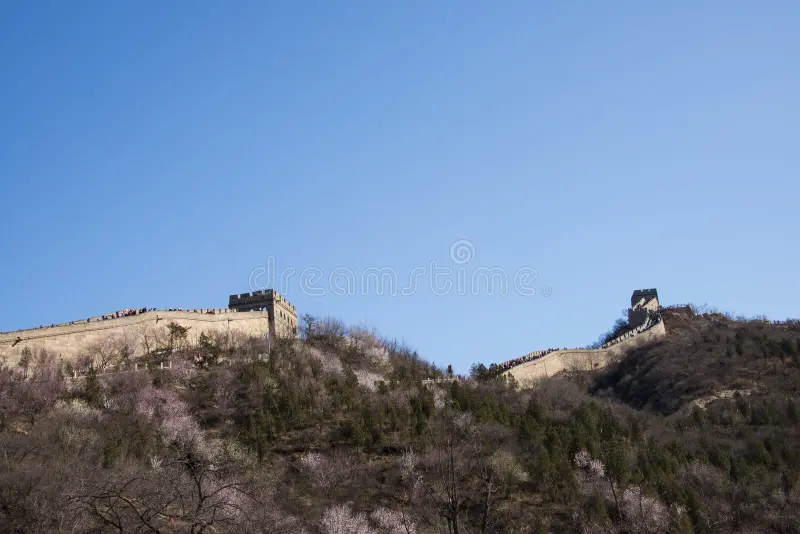
Stunning spring landscapes in the Qianxi area of Hebei Province, northern China, highlight the Great Wall of China as a historical symbol in harmony with nature. During this time of year, the hills surrounding the wall are adorned with vibrant colors from blooming trees and plants, creating a magical scene that attracts visitors from around the globe.
These images embody the beauty of nature in spring, where the wall stands out as a cultural and historical landmark that transcends time. The harmony between cultural heritage and natural beauty emphasizes the importance of preserving these historical sites that reflect the identity of nations.
Event Details
The photos captured in the Qianxi area illustrate how nature rejuvenates with the arrival of spring, as the hills surrounding the wall don a lush green hue. This scene is not only beautiful but also reflects the ongoing interaction between humans and nature, with everyone striving to enjoy the beauty of this region.
The Great Wall of China, which stretches over 13,000 miles, is one of the greatest historical landmarks in the world and has been listed as a UNESCO World Heritage site. Visiting it in spring offers tourists a chance to enjoy its unique beauty in its most splendid form.
Background & Context
The Great Wall of China was built over several dynasties, starting from the 7th century BC until the 17th century. The purpose of constructing this wall was to protect the Chinese empire from invasions. Today, the wall represents a symbol of Chinese culture and its rich history, attracting millions of tourists annually.
The history of the wall is filled with stories and legends, having witnessed numerous historical events that shaped the course of China. Preserving this historical landmark requires ongoing efforts from the government and local communities, especially in light of the environmental challenges facing the country.
Impact & Consequences
These breathtaking spring scenes serve as evidence of the importance of cultural and environmental tourism. Visiting historical landmarks like the Great Wall of China enhances cultural awareness and contributes to supporting the local economy through tourism.
Moreover, these images reflect the challenges faced by historical sites amid climate change, necessitating urgent actions to protect these landmarks from erosion and degradation. Preserving cultural and natural heritage is a shared responsibility between governments and local communities.
Regional Significance
The experience of the Great Wall of China in spring serves as a model for the Arab world, where many Arab countries possess historical and cultural landmarks that could benefit from environmental tourism. Promoting tourism at these sites can contribute to supporting the local economy and enhancing cultural identity.
Additionally, cooperation between Arab countries and China in tourism can open new horizons for cultural and commercial exchange, strengthening bilateral relations and fostering mutual understanding among peoples.
The beauty of nature and the history of cultural landmarks like the Great Wall of China reflect the importance of preserving cultural and natural heritage. Everyone must work together to protect these landmarks to ensure their continuity for future generations.