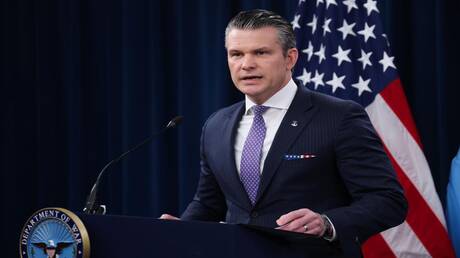
US Secretary of War Pete Hegseth reported that the ongoing talks with Iran are showing significant progress, stating that these discussions are "continuing and gaining momentum." Hegseth explained that the United States is seeking to reach an agreement with Tehran, indicating that Iran must finalize a deal if it wishes to act wisely.
Hegseth's statements come at a highly sensitive time, as tensions between the United States and Iran are escalating, particularly amid multiple regional crises. The Secretary noted that failing to reach an agreement would lead to increased military pressure from the United States, reflecting Washington's firm policy towards Tehran.
Details of the Ongoing Talks
The discussions between the United States and Iran are part of diplomatic efforts aimed at addressing outstanding issues, including the Iranian nuclear program and Tehran's support for armed groups in the region. The United States has shown a willingness to negotiate but has simultaneously warned that a failure to reach an agreement will result in heightened military pressures.
This statement comes at a time when the Middle East is experiencing rising tensions, with Iran continuing to bolster its influence in the region by supporting groups such as Hezbollah in Lebanon and the Houthis in Yemen. This situation is a significant concern for the United States and its allies in the region.
Historical Context and Background
Historically, relations between the United States and Iran have been marked by increasing tensions since the Islamic Revolution in 1979. Since then, the United States has imposed economic sanctions on Iran, significantly impacting its economy. In 2015, a nuclear agreement was reached between Iran and major powers, but the US withdrawal from the agreement in 2018 brought matters back to square one.
In recent years, the United States has attempted to reimpose sanctions on Iran, exacerbating the situation in the region. Under these circumstances, Iran is seeking to strengthen its position by developing its military and nuclear capabilities, complicating the situation further.
Potential Impact and Consequences
If the United States and Iran fail to reach an agreement, it could lead to military escalation in the region, threatening regional stability. These developments may impact oil prices and financial markets, as Iran is one of the world's largest oil producers.
Moreover, military escalation could provoke reactions from other countries in the region, increasing tensions further. Neighboring countries, such as Iraq and Syria, could be significantly affected by any potential escalation, potentially worsening humanitarian crises in those nations.
Significance for the Arab Region
The Arab countries in the region are among the most affected by the tensions between the United States and Iran. Gulf states, in particular, are closely monitoring the developments in the negotiations, fearing that any escalation could impact their security and stability.
Additionally, the situation in Iraq, Syria, and Lebanon could be greatly affected by any military escalation, increasing civilian suffering. In this context, the need for diplomatic solutions to prevent worsening conditions in the region becomes evident.
In conclusion, all eyes remain focused on the developments in the talks between the United States and Iran, as any agreement or escalation could significantly impact the future of the region.