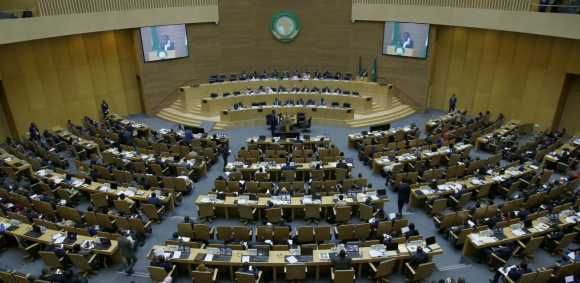
The African Peace and Security Council has entered a new term today, Wednesday, following elections held last February during the African summit in Addis Ababa. These elections saw the renewal of half of the council's members, raising expectations for a shift in the dynamics of work within the council.
The council consists of 15 countries, and Somalia managed to secure its seat for the first time in its history, after three previous unsuccessful attempts. Somalia becomes the only African country that holds membership in both the African Peace and Security Council and the United Nations Security Council.
Details of the Event
An internal document obtained by Al Jazeera Net revealed details of the elections, which saw successive withdrawals from some countries, paving the way for Mogadishu to achieve this important victory. The legal advisor's office of the African Union received a list of 6 candidates from the East African region competing for 2 out of 3 seats allocated to the region: Comoros, Djibouti, Kenya, Rwanda, Somalia, and Uganda.
Before the voting date, Rwanda withdrew two weeks prior, followed by Kenya one week later, and then Comoros announced its withdrawal a day before the vote. The surprise came when Djibouti announced its withdrawal in favor of Somalia just one hour before the voting began. These withdrawals reduced the competition, leaving Somalia and Uganda as the only candidates, and both countries managed to achieve the required quorum from the first round, with Mogadishu receiving 46 votes and Kampala 45 votes.
Background & Context
The African Union has 55 member states, with 6 of them having suspended memberships: Burkina Faso, Guinea-Bissau, Madagascar, Mali, Niger, and Sudan. Guinea is under sanctions for failing to pay its dues, depriving it of the right to vote. Thus, the number of countries eligible to participate in the voting was 48, making the minimum required quorum for electing council membership 32 votes, or a two-thirds majority.
In the North African region, Morocco received 34 votes, compared to 12 votes for Libya, with two members abstaining from voting, allowing it to secure the seat in the first round after obtaining the required two-thirds majority. The Kingdom is considered a major contributor to the regular budget of the African Union and had held membership in the Peace and Security Council for 3 years, which ended in March 2025, before returning after a one-year absence.
Impact & Consequences
Somalia's victory in securing a seat on the council after collective withdrawals from competitors serves as a clear message of political support from regional countries, recognizing that Mogadishu needs to be a decision-maker at this stage. Somalia's presence in the council will enhance its voice on issues related to the African Union mission in Somalia, and its dual membership in both the Security Council and the African Peace and Security Council will make it a bridge between the two systems, granting it the ability to elevate its security priorities.
For Morocco, winning council membership in the first round reflects its active diplomacy within the African system, qualifying it to play a more effective role in how the council addresses Arab crises. Morocco is expected to exert pressure to direct the council's focus towards urgent Arab peace issues, such as the situations in Sudan and Libya.
Regional Significance
Morocco played a crucial role during its presidency of the council in September 2019, successfully ending Sudan's suspension from African Union activities after the formation of Abdullah Hamdok's government. The African Peace and Security Council is the highest authority concerned with managing peace and war issues in Africa, tasked with preventing, managing, and resolving conflicts, making it one of the most important tools of the Union in addressing security and political crises on the continent.
In conclusion, the renewal of the African Peace and Security Council membership presents an opportunity to enhance cooperation among African nations, reflecting the political changes in the region, which may contribute to achieving stability and peace on the continent.