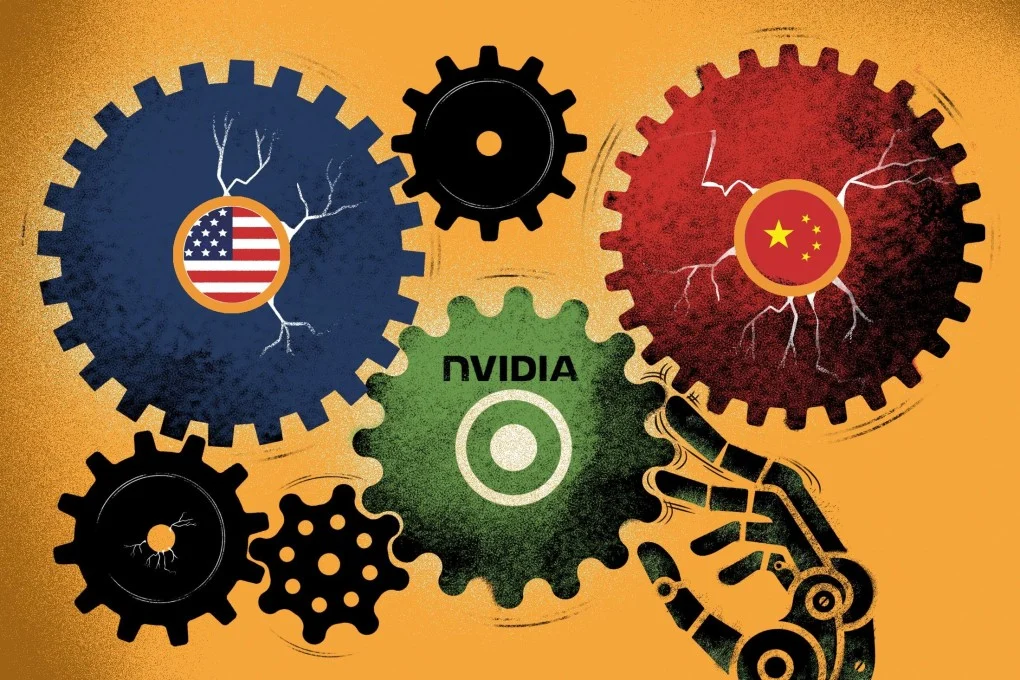
The GPU Technology Conference (GTC) organized by NVIDIA in San Jose, California, featured an unexpected appearance by Liang Zhi Lin, the founder of the Chinese company Monshot AI. This participation comes at a time when the discourse surrounding competition between the United States and China in the field of artificial intelligence is intensifying, with some describing this competition as akin to a technological arms race.
Monshot AI is considered one of the startups contributing to the development of core AI models, including the Chemi model family. Zhi Lin's participation in this conference raises questions about the potential for cooperation between major technological powers, despite existing political and economic tensions.
Event Details
The NVIDIA conference, one of the leading events in the technology sector, gathered numerous industry leaders and innovators. Zhi Lin's presence, representing a Chinese startup, reflects a shift in the global dynamics of technology. In recent years, there has been a significant focus on the competition between the United States and China, especially in areas such as artificial intelligence and advanced technology.
During the conference, the importance of cooperation among companies from different countries was highlighted, as this could lead to faster advancements in the field of artificial intelligence. Zhi Lin pointed out that innovation knows no boundaries and that collaboration could be the key to success in this domain.
Background & Context
Over the past years, the world has witnessed a rise in competition between the United States and China in technology sectors. This rivalry is not limited to artificial intelligence but also encompasses fields such as communications and biotechnology. Under these circumstances, it has become essential to understand how these dynamics can affect innovation and technological development.
Historically, the United States has been a leader in technology, but China has significantly enhanced its technological capabilities in recent years. This shift has made China a formidable competitor in various fields, including artificial intelligence. In this context, the participation of Chinese companies in global events is an important step towards enhancing international cooperation.
Impact & Consequences
The competition between the United States and China in artificial intelligence has significant implications for the global economy. If these dynamics continue, they may lead to a division of the technology market into spheres of influence, which could affect innovation and international collaboration. On the other hand, cooperation among companies from different countries could accelerate the pace of innovation and provide new solutions to global challenges.
These dynamics may also influence government policies, as governments may seek to bolster local innovation by supporting startups. In this context, governments can play a crucial role in facilitating cooperation among companies from different countries.
Regional Significance
In light of these global dynamics, Arab countries need to consider how to benefit from advancements in artificial intelligence. There could be significant opportunities for collaboration with global companies, including those from China and the United States. By fostering local innovation and supporting startups, Arab nations can play an important role in this field.
Moreover, investing in education and training in modern technology fields can contribute to building strong local capabilities, enhancing the ability of Arab countries to compete in the global market.