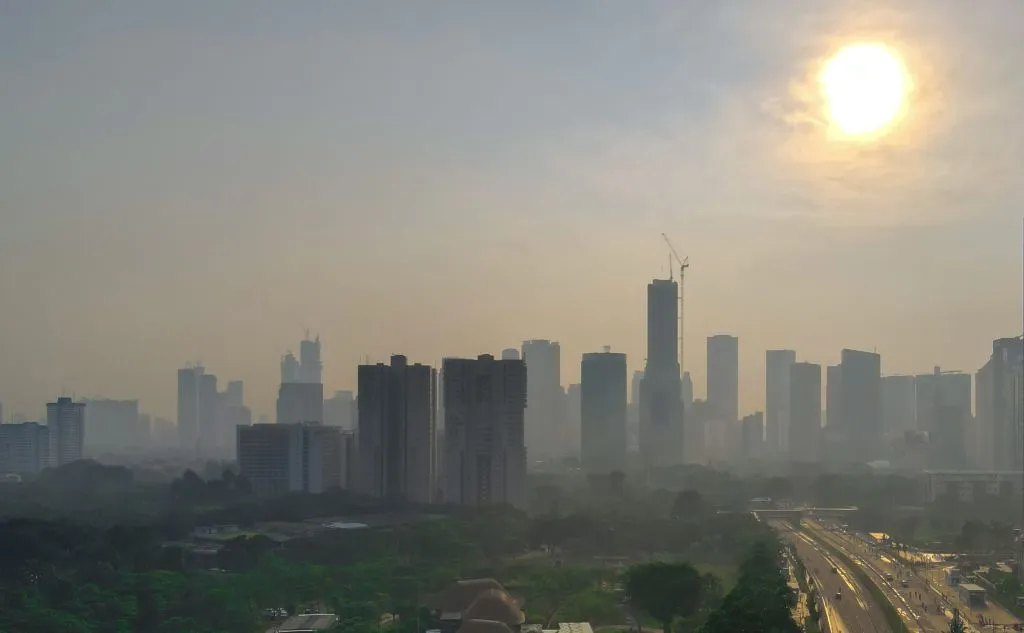
On Tuesday morning, air quality in the Indonesian city of Jakarta was rated unhealthy, with the air quality index (AQI) on the IQAir website indicating that the city ranked tenth among cities with poor air quality. This deterioration in air quality came after daily activities returned to normal following the Eid al-Fitr holiday in 2026.
The air quality index reached 127, with PM2.5 particle concentrations at 46 micrograms per cubic meter, indicating that this level could be harmful to public health, especially for individuals with high sensitivities or pets. Local authorities issued warnings to citizens to take necessary precautions, such as wearing masks when going outside.
Details of the Incident
Air quality in Jakarta is an ongoing issue affecting residents' lives. Data has shown that the city frequently suffers from air pollution, leading to negative impacts on public health. Experts have pointed out that the return to normal activities after a long holiday contributed to increased traffic, exacerbating the air pollution problem.
At the same time, the Jakarta Environmental Agency launched a platform to monitor air quality, supported by 31 air quality monitoring stations spread throughout the city. These stations provide accurate data on pollution levels, helping to raise awareness among residents about potential risks.
Background & Context
Historically, Jakarta has faced air pollution issues due to population growth and rapid traffic increases. The city is considered one of the most polluted in the world, affected by harmful PM2.5 particles from various sources, including vehicles and factories. Studies have shown that air pollution causes serious health problems, such as respiratory diseases and heart conditions.
Addressing this issue requires collective efforts from the government and civil society, as effective environmental policies must be adopted, and awareness among residents about the importance of maintaining air quality must be increased. Cooperation between neighboring cities may also be essential to mitigate the impact of pollution.
Impact & Consequences
Poor air quality directly affects residents' health, potentially leading to increased cases of respiratory and heart diseases. Additionally, deteriorating air quality can negatively impact the local economy, as tourists may avoid visiting the city due to health concerns. Therefore, improving air quality is vital for maintaining residents' health and promoting economic development.
Moreover, air pollution can adversely affect the environment overall, leading to the degradation of plant and animal life. Thus, taking immediate action to address this issue is crucial.
Regional Significance
Air quality and pollution issues are common challenges facing many major cities worldwide, including Arab cities. Some Arab capitals suffer from air pollution due to rapid population growth and increased traffic. Therefore, Jakarta's experience can serve as an important lesson for Arab cities on how to tackle these issues.
It is essential for Arab countries to adopt effective strategies to improve air quality, such as enhancing public transportation and encouraging the use of clean energy. There should also be cooperation among Arab countries to share knowledge and experiences in this field.