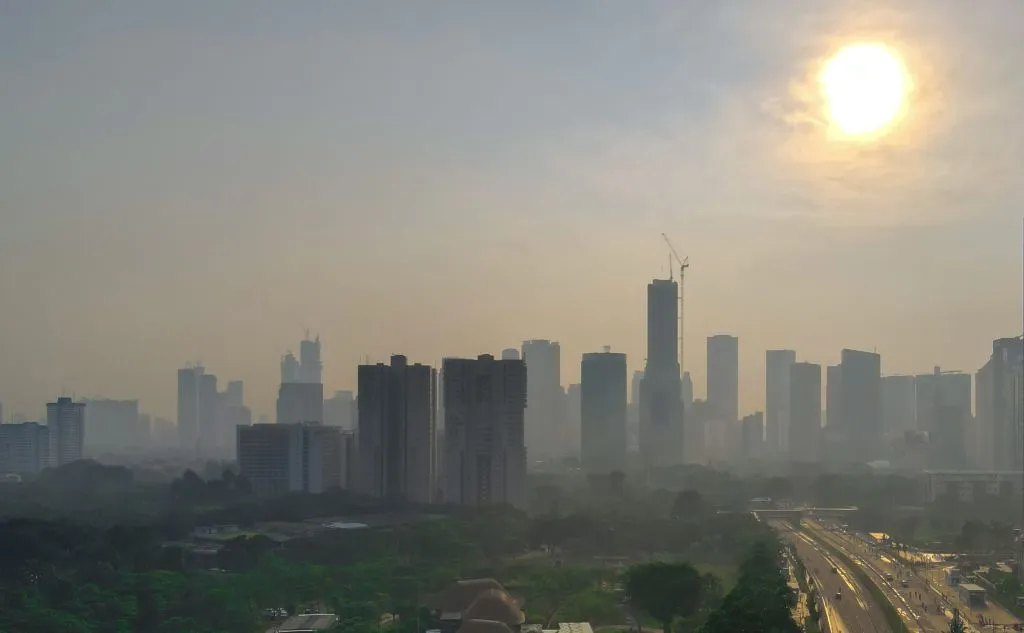
Jakarta, the capital of Indonesia, has experienced a significant decline in air quality, becoming unhealthy as heavy traffic returns after the Eid al-Adha holiday. This situation raises concerns among residents and questions about government measures to combat pollution.
On Sunday morning, as citizens began returning to the city after the holiday, reports indicated a substantial deterioration in air quality, rendering it unhealthy. Data showed that pollution levels had risen significantly, adversely affecting the health of citizens.
Details of the Incident
Reports indicate that air quality in Jakarta has deteriorated to dangerous levels, with pollution measuring devices recording high levels of fine particulate matter, threatening the health of the population. Environmental experts noted that this problem is exacerbated by the substantial increase in traffic, as thousands of citizens return to the city after spending the holiday in rural areas.
Jakarta is considered one of the most polluted cities in the world, facing significant challenges in managing pollution caused by traffic and industries. With life returning to normal after the holiday, pollution levels are expected to continue rising, necessitating urgent action from the government.
Background & Context
Historically, Jakarta has suffered from air pollution issues for a long time, being one of the most densely populated cities in the world. The causes of air pollution stem from several factors, including rapid population growth, economic development, and the increasing number of vehicles. Studies have shown that air pollution can lead to serious health problems, such as respiratory diseases and heart conditions.
In recent years, the Indonesian government has attempted to take steps to improve air quality, such as imposing traffic restrictions and enhancing public transportation. However, these efforts have not been sufficient to address the significant challenges the city faces.
Impact & Consequences
The deterioration of air quality in Jakarta is a serious public health issue, affecting the lives of millions of residents. Doctors have warned that continuous exposure to pollution can exacerbate chronic diseases and increase hospitalization rates. Additionally, deteriorating air quality can impact the local economy, as tourists may avoid visiting the city due to health concerns.
This problem requires an urgent response from the government, including improving public transportation, promoting the use of clean energy, and implementing strict policies to reduce vehicle emissions. Civil society must also play an active role in raising awareness about the importance of maintaining air quality.
Regional Significance
Pollution and air quality issues are global challenges that affect all countries, including Arab nations. Many Arab cities, such as Cairo and Beirut, face similar challenges related to air pollution. Therefore, the experiences and policies adopted by Jakarta could serve as a model for the region.
In conclusion, the deterioration of air quality in Jakarta requires a swift and effective response from both the government and the community. There must be joint efforts to protect the health of citizens and improve the quality of life in the city.