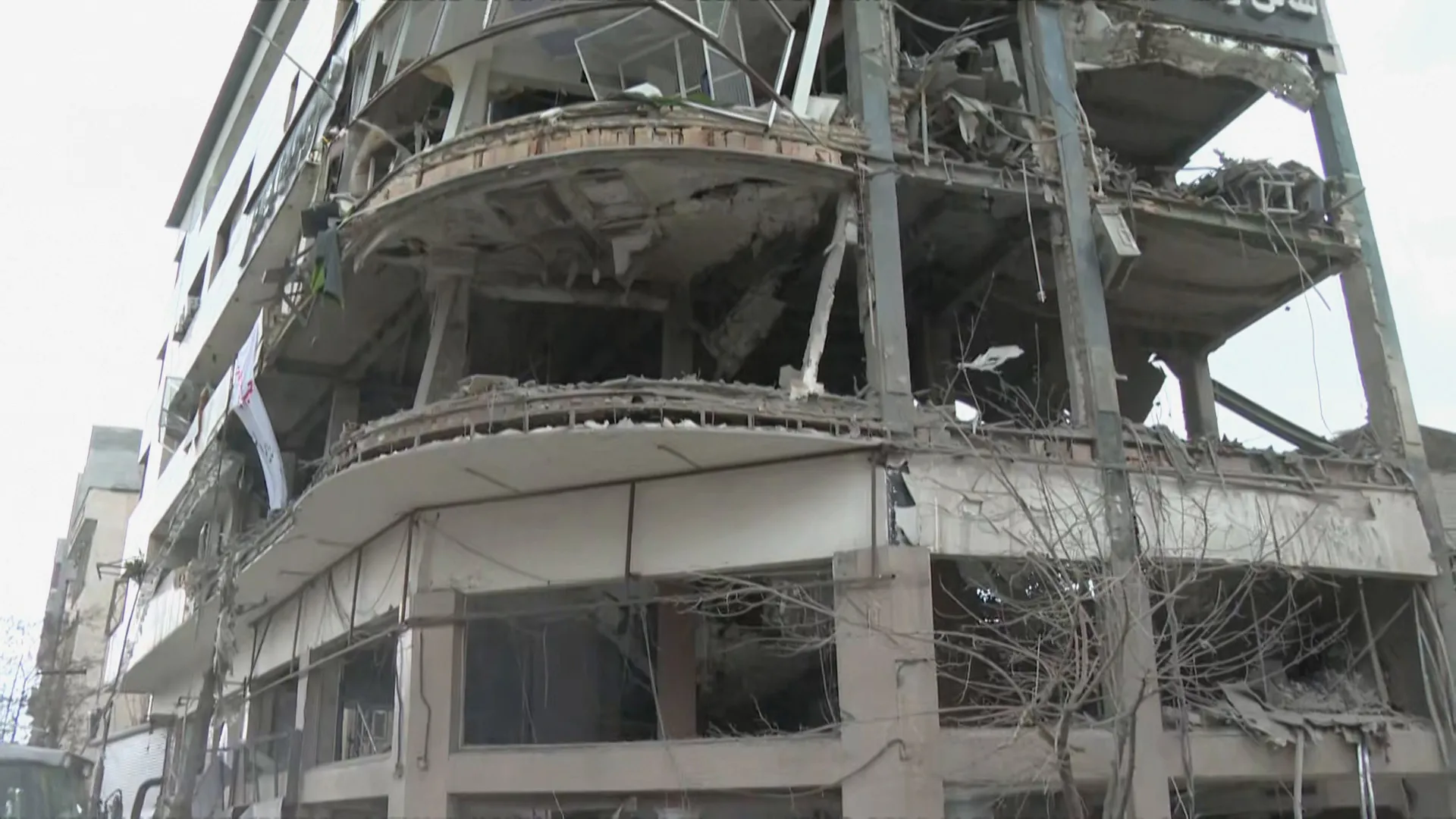
An airstrike targeted a building in the Iranian capital, Tehran, resulting in widespread destruction. Al Jazeera reporter Sohaib Al-Asa toured the area and conveyed images from there, where the signs of devastation were evident on the targeted building, raising questions about the true objectives behind this attack.
This airstrike comes at a highly sensitive time, as the region is witnessing increasing tensions between Iran and other countries, heightening concerns about the stability of the situation in the Middle East. The attack did not result in human casualties, but the destruction left behind reflects the scale of the rising tensions.
Details of the Incident
The attack occurred late at night, with warplanes targeting a building in a vital area of Tehran. Images captured from the site show significant destruction, with debris scattered around the building. Iranian authorities have yet to issue an official statement regarding the attack, leaving room for speculation about the responsible party.
This airstrike is considered part of a series of attacks that have targeted Iran in recent years, as fears of a potential military escalation in the region increase. Reports indicate that this attack comes after a period of relative calm, complicating the security landscape in the country.
Background & Context
Historically, Iran has witnessed numerous military attacks, particularly from the United States and Israel, which view Iran as a threat to regional security. Relations between Iran and the West have significantly deteriorated since the U.S. withdrawal from the nuclear agreement in 2018, leading to heightened tensions in the region.
Other regional conflicts, such as the disputes in Syria and Yemen, cast a shadow over the situation in Iran, where Tehran is accused of supporting armed groups in those countries. This context makes it difficult to understand the motivations behind recent attacks and complicates peace efforts in the region.
Impact & Consequences
This airstrike could escalate tensions between Iran and Western countries, as Tehran may feel compelled to respond to this attack. Possible reactions could include increased military activities or even issuing new threats, raising the risk of armed conflict in the region.
Moreover, these events could impact global markets, particularly in the energy sector, where Iran is a key player in the oil market. Any escalation in conflict could lead to rising oil prices, affecting the global economy.
Regional Significance
Neighboring Arab countries are on high alert, closely monitoring developments in Tehran. Any military escalation could affect regional security, increasing fears of negative repercussions on stability in countries like Iraq, Syria, and Lebanon.
These events may also affect relations between Arab countries and Iran, as some nations may seek to strengthen their military alliances in the face of potential threats. This situation could lead to further division in the region and complicate efforts to achieve peace and stability.
In conclusion, the situation in Iran remains under scrutiny, as this airstrike raises questions about the future of regional and international relations. It is clear that military escalation would not be in the interest of any party, and all stakeholders must work towards de-escalating the situation.