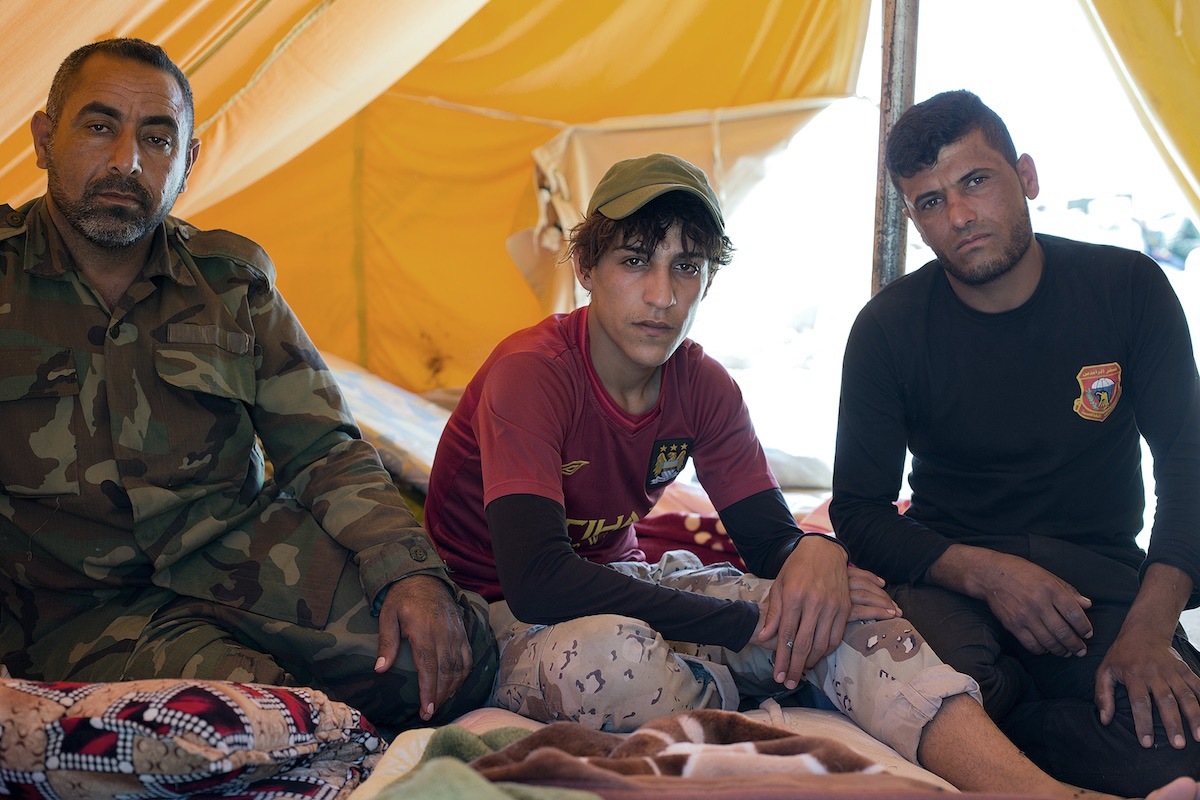
The Popular Mobilization Forces in Iraq reported the death of two of their fighters in a treacherous attack targeting a checkpoint in the west of the country, specifically in Anbar province. The forces confirmed in a statement that this attack also resulted in the injury of four other fighters, highlighting the increasing tensions in the region.
In their statement, the Popular Mobilization Forces accused both the United States and Israel of responsibility for this attack, indicating that these hostile acts come amid a continuous escalation against Iran-aligned forces in Iraq. The forces considered this attack a cowardly act targeting the security and stability of the country.
Details of the Incident
The attack occurred at a sensitive time, as Iraq is witnessing rising tensions between Iran-backed armed factions and U.S. forces present in the country. Reports have shown that armed factions, including the Popular Mobilization Forces, have been subjected to several attacks recently, exacerbating the conflict in the region.
The Popular Mobilization Forces are a coalition of armed factions formed in 2014 to confront the Islamic State organization and have played a key role in reclaiming territories lost by the Iraqi government. However, these factions face criticism due to their ties with Iran, making them targets for airstrikes.
Background & Context
Historically, Iraq has experienced military interventions by the United States since 2003, when the regime of Saddam Hussein was overthrown. Since then, the country has become a battleground for regional and international conflicts, with multiple powers competing for influence. Iran-backed armed factions, such as the Popular Mobilization Forces, have become part of the security and political fabric of Iraq, complicating the situation further.
In recent years, attacks on U.S. interests in Iraq have escalated, with armed factions launching strikes on military bases and locations where U.S. forces are stationed. These attacks are part of reactions to U.S. pressures and sanctions imposed on Iran.
Impact & Consequences
The recent attack may heighten tensions between armed factions and U.S. forces, potentially leading to greater military escalation in the region. Additionally, this incident may provoke reactions from the Iraqi government, which seeks to maintain its sovereignty and security amid increasing pressures from armed factions.
If these attacks continue, they could exacerbate the security situation in Iraq, threatening reconstruction and stability efforts in the country. Furthermore, these events could impact relations between Iraq and its neighbors, particularly with Iran and the United States.
Regional Significance
The events in Iraq hold significant implications for the Arab region as a whole, as any escalation in Iraq could reflect on the situations in neighboring countries such as Syria and Lebanon. Iran-backed armed factions may seek to expand their operations, further complicating the conflict in the region.
Moreover, the rising tensions in Iraq could affect the stability of oil markets, as Iraq is one of the largest oil producers in the world. Any disruption in production or transportation could lead to rising oil prices, impacting the global economy.