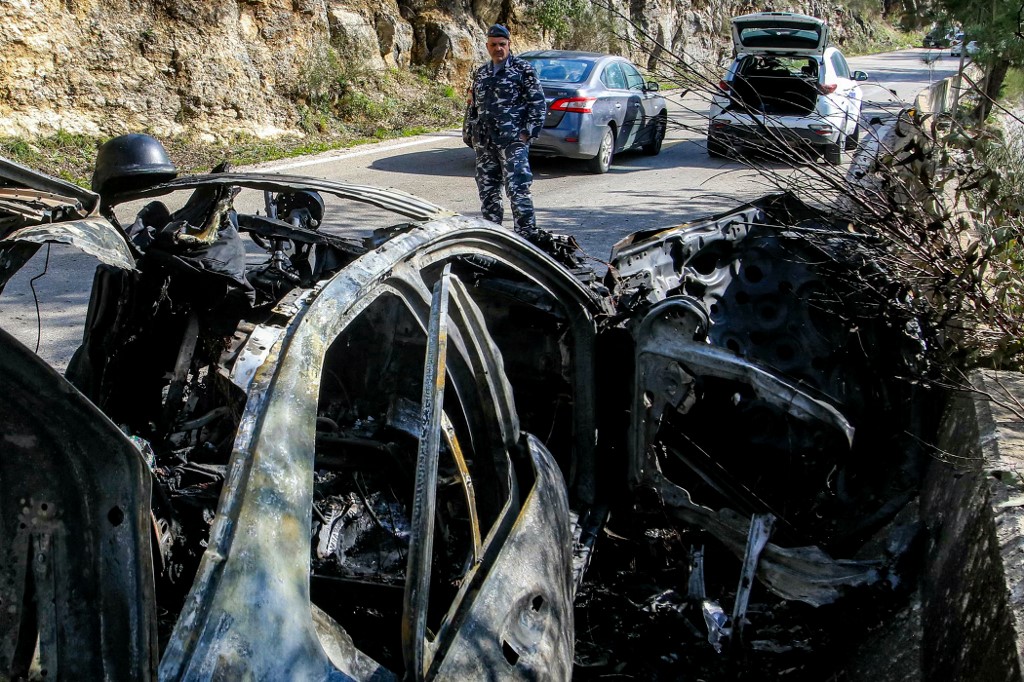
An airstrike on a dock in Bandar Khamir, Hormozgan province, has resulted in the deaths of five individuals and injuries to four others. The attack, believed to be carried out by American and Israeli forces, also caused damage to two ships and a vehicle.
Earlier, Israeli forces announced that they had completed a new wave of airstrikes in Iran, targeting weapons storage and production sites as well as air defense systems. This announcement came just hours after reports of massive explosions in Tehran, indicating a rise in tensions between the two sides.
Details of the Incident
The attack on Bandar Khamir port is considered part of an escalating military confrontation between Iran on one side and the United States and Israel on the other. Reports have confirmed that the strikes targeted strategic sites in Iran, reflecting a military strategy aimed at undermining Iran's military capabilities.
This airstrike comes at a sensitive time, as fears of escalating conflict in the region are growing, especially with the increase in Israeli military activities in Iranian airspace. These events have sparked varied reactions from Iranian officials, who condemned the attack and deemed it a violation of national sovereignty.
Background & Context
Historically, relations between Iran and the United States have been marked by ongoing tensions since the Islamic Revolution in 1979. These tensions have significantly increased in recent years, particularly following the U.S. withdrawal from the Iranian nuclear deal in 2018. Since then, the United States has imposed stringent economic sanctions on Iran, severely impacting its economy.
In response, Iran has bolstered its nuclear program, raising concerns in the international community. Israel views Iran as an existential threat, prompting it to carry out military operations against Iranian targets on several occasions in an attempt to prevent Iran from developing nuclear weapons.
Impact & Consequences
The recent strikes may lead to greater escalation in the conflict, as Iran is likely to respond to these attacks in various ways, whether by targeting American interests in the region or by increasing its military activities. This escalation could drag the region into a broader conflict, threatening security and stability in the Middle East.
Moreover, these events could affect relations between major powers, as some countries seek to mediate the conflict and ease tensions. European and Russian nations are expected to closely monitor the situation, as any escalation could impact their efforts to reach a nuclear agreement with Iran.
Regional Significance
The recent events in Iran have a direct impact on Arab countries, particularly those close to the Arabian Gulf. The tensions between Iran and the United States could lead to increased divisions in the region, threatening the stability of countries like Iraq, Syria, and Lebanon.
Additionally, military escalation could affect global oil prices, impacting the economies of Arab countries that heavily rely on oil revenues. Under these circumstances, Arab nations must be prepared to face any repercussions that may arise from the escalating conflict between Iran and the United States.