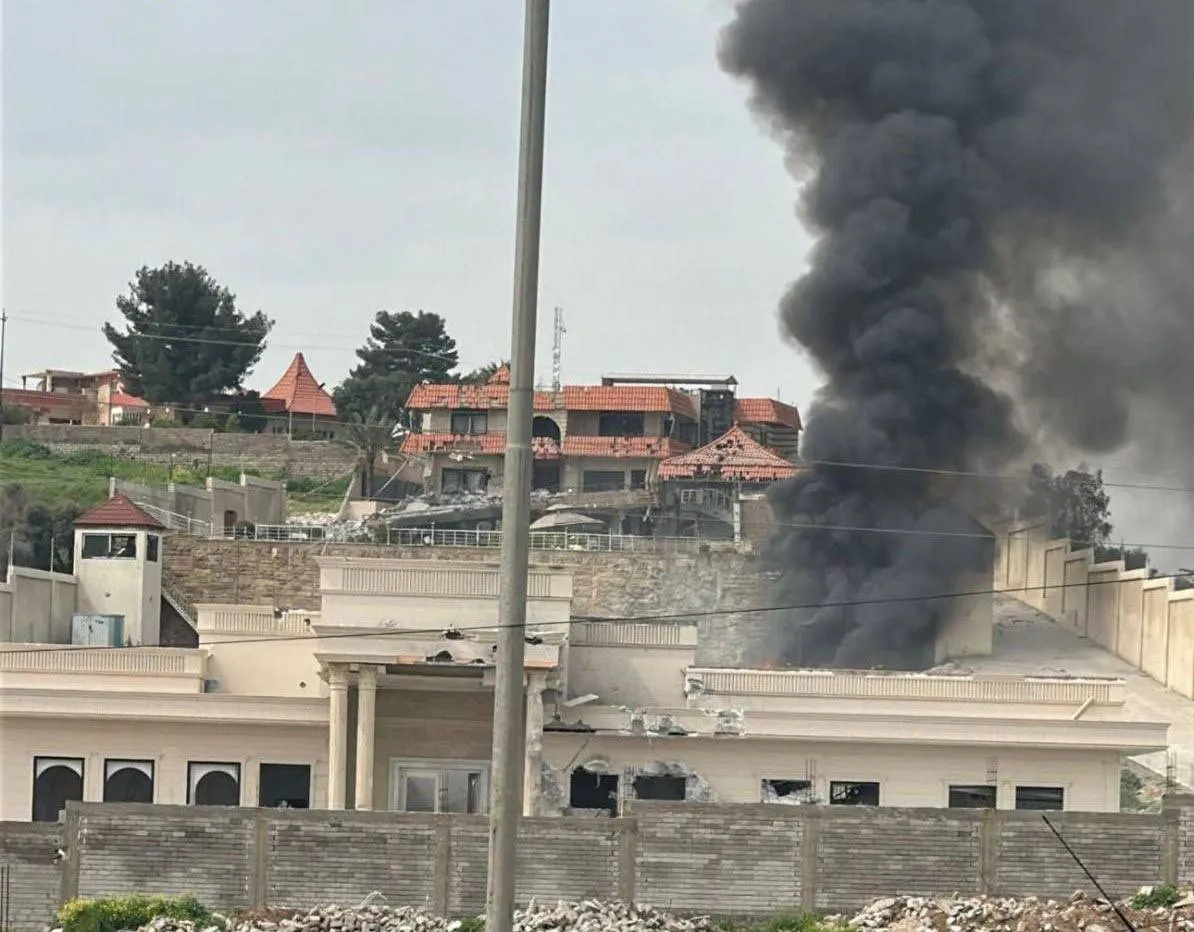
An airstrike targeted the Popular Mobilization Forces' security headquarters in Al-Habaniyah, western Iraq, with smoke rising from the site. Security sources reported that the airstrike specifically hit the headquarters in Al-Anbar.
According to security sources, the airstrike targeted the Popular Mobilization Forces' headquarters in Al-Anbar, and the Iraqi authorities also granted the security forces and the Popular Mobilization Forces, which are part of the official forces, the "right to respond and defend themselves" against attacks on their locations.
Details of the Incident
For years, Iraq has been a battleground for influence between Washington and Tehran, with successive governments striving since the American invasion that toppled Saddam Hussein's regime in 2003 to achieve a delicate balance in their relations with both powers.
Since the war extended into Iraq, facilities belonging to the Popular Mobilization Forces and Iranian-aligned armed factions have been subjected to airstrikes attributed to the United States and Israel, while attacks claimed by Iraqi factions target American interests. Iran has also conducted strikes against Kurdish opposition groups in the north of the country.
Background & Context
Yesterday, Lebanon raised a "red card" against the Iranian ambassador and his country's interventions in Lebanese affairs, as the Lebanese Foreign Ministry declared Ambassador Mohammad Reza Sheibani a persona non grata, giving him until next Sunday to leave the country.
Although the decision was made by Foreign Minister Youssef Raji, who took it upon himself, a Lebanese official source confirmed to "Asharq Al-Awsat" that it was based on consultations with President Joseph Aoun and Prime Minister Nawaf Salam. The source indicated that the decision falls within the minister's powers, while severing relations is within the Cabinet's authority, warning that this scenario may ultimately arise if Iranian actions continue to threaten Lebanon's stability and its relations with friends.
Impact & Consequences
The Lebanese Foreign Ministry clarified that withdrawing approval for Sheibani's accreditation "does not constitute a severance of diplomatic relations with Iran, but rather a measure against the ambassador for violating the principles of diplomatic conduct and obligations as an appointed ambassador in Lebanon."
In a sign of internal crisis, the decision was welcomed by Lebanese political forces, except for the "Shia duo," whose sources confirmed to "Asharq Al-Awsat" that they requested the ambassador to stay and "will not leave." Hezbollah described the decision as a "major sin," while Parliament Speaker Nabih Berri refrained from commenting, although leaks from those close to him expressed "great discomfort."
Regional Significance
The interception of an Iranian missile over the Kesrouan area in northern Beirut raised widespread concern, considering that the Jounieh area is far from the war.
Yesterday, Iraqi Prime Minister Mohammed Shia' al-Sudani tasked Foreign Minister Fouad Hussein with summoning the Iranian ambassador and the American chargé d'affaires to deliver an official protest note regarding the assaults on the country.
Security sources confirmed the death of the commander of Al-Anbar operations in the Popular Mobilization Forces, Saad Duwai, along with 15 members in what was described as an American-Israeli strike. Other airstrikes targeted factions in Mosul. Authorities in the Kurdistan region reported casualties due to an Iranian ballistic missile attack near Erbil, which targeted Peshmerga forces. The leader of the Kurdistan Democratic Party, Masoud Barzani, described the attack as "an act of aggression that cannot be justified in any way."
The National Security Ministerial Council authorized yesterday the Popular Mobilization Forces and security agencies to operate under the principle of the right to respond and self-defense in order to "counter military assaults targeting their locations."
On Tuesday, the Israeli army warned residents of neighborhoods in the southern suburbs of Beirut to evacuate immediately as it would strike Hezbollah centers, noting that the area has become nearly empty after successive waves of displacement.
The targeted neighborhoods included: Haret Hreik, Ghobeiry, Lilaki, Hadath, Burj al-Barajneh, Tahwita al-Ghadir, and Shiyah.
Security sources reported that the airstrike targeted the Popular Mobilization Forces' security headquarters in Al-Anbar, and the Iraqi authorities also granted the security forces and the Popular Mobilization Forces the "right to respond and defend themselves" against attacks on their locations.