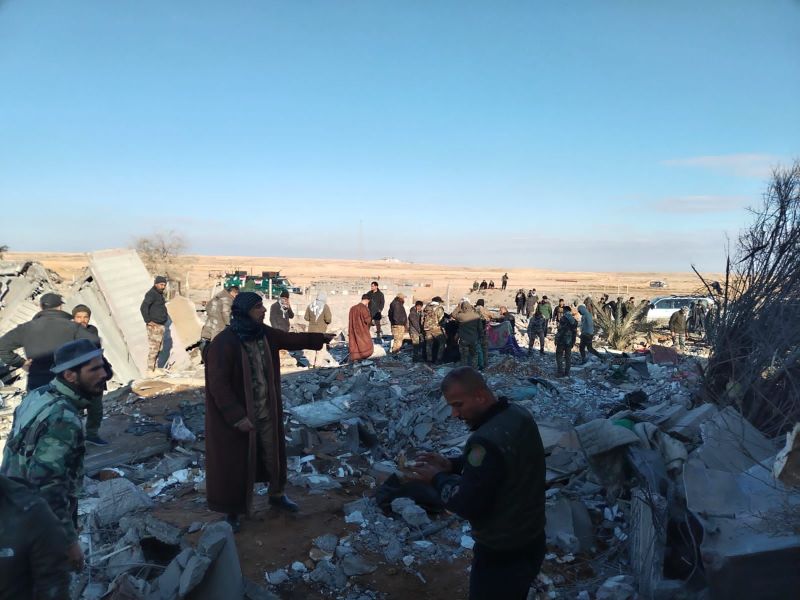
Airstrikes have targeted Popular Mobilization Forces in the cities of Haditha and Mosul, resulting in injuries among personnel. These strikes occur amid rising security tensions in Iraq, where fears of escalating violence are increasing.
According to military sources, the airstrikes targeted specific locations of the Popular Mobilization Forces, a military formation that includes fighters from various factions, established to combat the ISIS terrorist organization. Details regarding the number of injuries or the damage inflicted on the targeted sites have not been disclosed.
Details of the Incident
These airstrikes coincide with escalating tensions in Iraq, as the Iraqi government seeks to enhance security and stability in the country after years of conflict. Reports indicate that the strikes were carried out following intelligence information suggesting potential threats from armed groups.
At the same time, these airstrikes reflect the ongoing conflict between Iraqi forces and armed factions, complicating the security landscape in the country. Some observers have noted that these operations could provoke a response from the Popular Mobilization Forces, potentially heightening tensions further.
Background & Context
The Popular Mobilization Forces were established in 2014 in response to the emergence of ISIS and have played a significant role in reclaiming territories previously under the organization's control. However, the presence of the Popular Mobilization Forces in Iraq has sparked widespread controversy, with some viewing it as a supportive force for security, while others see it as a threat to stability due to its ties to Iranian-backed armed factions.
Over the years, Iraq has witnessed numerous military operations against armed groups, including ISIS, but these operations often lead to escalated violence and deteriorating security conditions. These dynamics pose significant challenges for the Iraqi government in its efforts to achieve stability.
Impact & Consequences
These airstrikes serve as an indicator of the ongoing conflict in Iraq, as they could lead to an escalation of violence between armed factions and government forces. Additionally, these events may impact national reconciliation efforts, as Iraq seeks to build a stable society after years of conflict.
Moreover, these airstrikes could affect relations between Iraq and neighboring countries, especially amid rising regional tensions. Such events raise concerns about potential external interventions or military escalations in the region.
Regional Significance
The repercussions of these airstrikes extend beyond Iraq's borders, potentially impacting regional stability. In light of the tense situation in the Middle East, any escalation in Iraq could have ramifications for neighboring countries such as Syria and Iran.
Furthermore, the ongoing violence in Iraq may affect counter-terrorism efforts in the region, as Arab countries strive to confront security threats. Consequently, events in Iraq remain of significant interest to Arab nations and the international community.
In conclusion, the airstrikes targeting the Popular Mobilization Forces in Haditha and Mosul reflect the ongoing security challenges facing Iraq. As tensions rise, hope remains pinned on the Iraqi government's efforts to achieve stability and peace in the country.