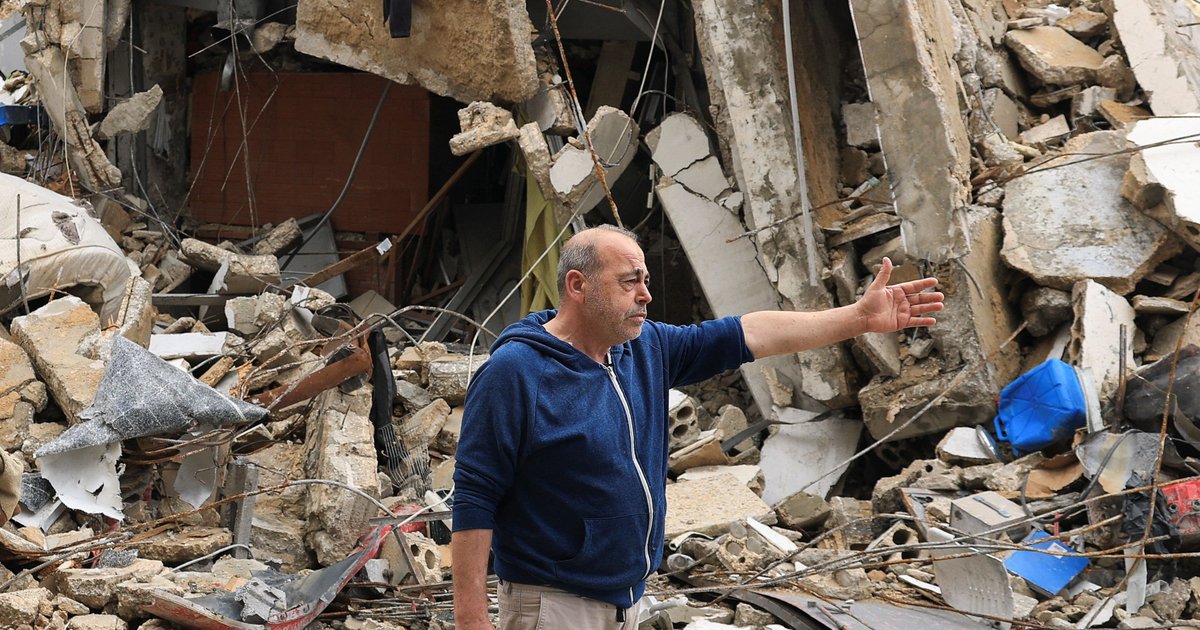
Rescue efforts are continuing in the Iranian capital of Tehran after a residential area was targeted by American-Israeli airstrikes, as reported by the Iranian Red Crescent Society. Rescue operations were announced after explosions were heard in several parts of the city, causing panic among residents.
In a post on platform X, the society confirmed that relief teams have been deployed in the area, where volunteers are working to rescue citizens affected by the attacks. These airstrikes come at a time when Tehran is experiencing increasing military escalation, with emergency teams frequently sent to search for survivors under the rubble following the attacks.
Details of the Incident
Reports indicate that the attack targeted Sharif University of Technology in western Tehran, with the sound of explosions echoing throughout the capital. Al Jazeera reported that warplanes were flying overhead as explosions occurred in several areas. This escalation is part of the ongoing tensions in the region, which have notably increased in recent times.
These airstrikes are considered part of the ongoing conflict between Iran and its allies on one side, and the United States and Israel on the other. This attack has sparked angry reactions in the Iranian street, where many view it as a blatant violation of national sovereignty.
Background & Context
Historically, relations between Iran and the United States have seen increasing tensions since the Islamic Revolution in 1979. These tensions have escalated in recent years, particularly after the United States withdrew from the Iranian nuclear deal in 2018. Since then, Washington has imposed strict sanctions on Tehran, exacerbating the country's economic and social conditions.
The regional conflict in the Middle East, including disputes in Syria and Iraq, has also contributed to heightened tensions between Iran and its allies on one side, and the United States and Israel on the other. These airstrikes come at a sensitive time, as both parties seek to achieve strategic gains in the region.
Impact & Consequences
These airstrikes could lead to a larger escalation in the conflict, increasing the likelihood of an all-out war in the region. Additionally, attacks on residential areas may heighten public discontent against the Iranian government, potentially affecting the stability of the ruling regime.
Moreover, the escalation of military operations could negatively impact the Iranian economy, which is already suffering from severe sanctions. This may worsen the humanitarian situation in the country, as citizens face difficulties in obtaining basic necessities.
Regional Significance
These events are of great importance to Arab countries, as any military escalation in Iran could affect regional security. Neighboring countries, such as Iraq and Syria, may be directly impacted by any military escalation, complicating the situation in the region.
Arab nations that have relations with the United States may find themselves in a precarious position, as they must balance supporting their allies while maintaining relations with Iran. Ultimately, these events could lead to a reshaping of alliances in the region, creating new dynamics in international relations.