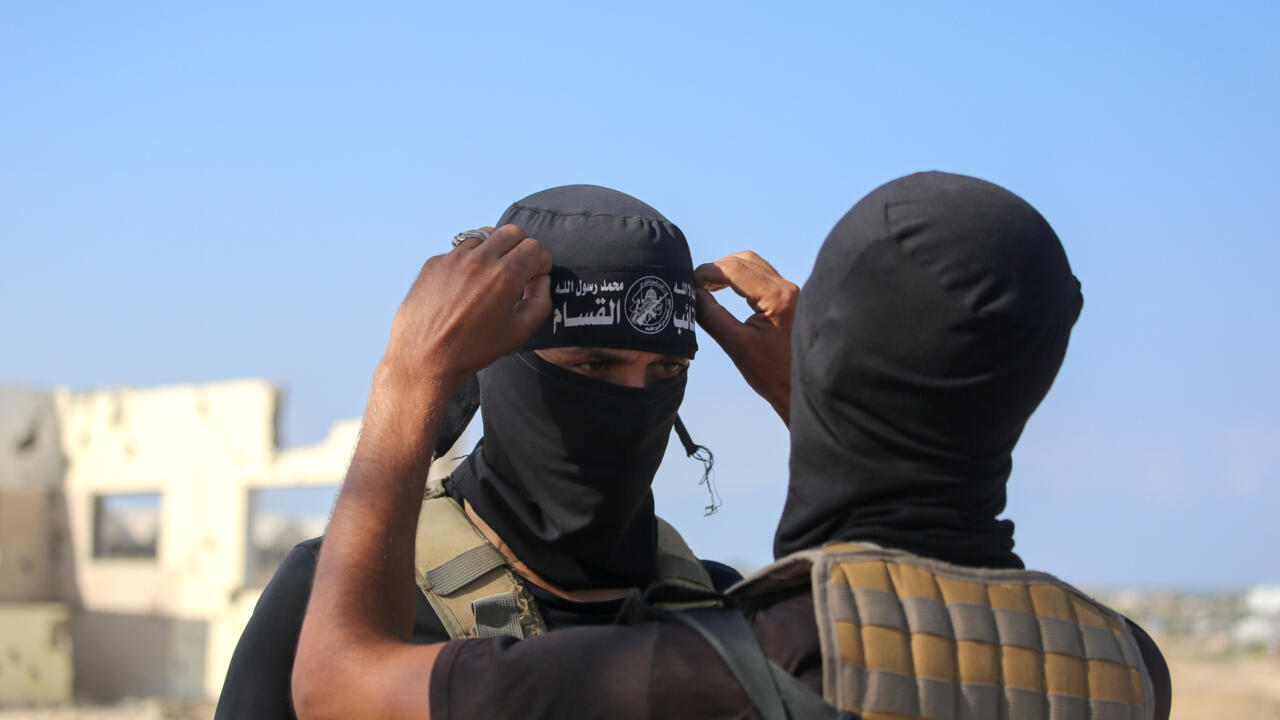
In a televised address broadcast on Sunday via Al-Aqsa TV, the Al-Qassam Brigades, the military wing of Hamas, affirmed that it will not accept disarmament, stressing the necessity of protecting Al-Aqsa Mosque and Palestinian detainees in Israeli prisons.
Spokesman Abu Ubaida stated, "Presenting the issue of weapons in such a crude manner is a blatant attempt by the occupation to continue the killing and genocide against our people, which we will not accept under any circumstances." He added, "What the enemy could not take from us with tanks and genocide will not be taken through politics or at the negotiation table."
Details of the Event
Abu Ubaida warned that "what the enemy is trying to pass today regarding the Palestinian resistance through our intermediary brothers is extremely dangerous," calling on the mediators to pressure the occupation to fulfill its commitments before discussing any new phases. He confirmed that the Palestinian side "has fulfilled its duties with utmost honesty and responsibility," pointing out that it is the enemy that is obstructing the agreement.
In a related context, a Hamas negotiating delegation headed by Khalil Hayya held talks with Egyptian officials in Cairo and Turkish officials in Ankara last week, where they discussed ongoing Israeli violations and the push towards implementing the first phase of the ceasefire agreement.
Background & Context
These statements come at a sensitive time when the region is witnessing increasing tensions, especially after the Israeli Knesset approved a law allowing the execution of Palestinian detainees convicted of "terrorism". Recent events, including the closure of Al-Aqsa Mosque to worshippers, have heightened tensions between Palestinians and Israelis.
Abu Ubaida warned that "any assault on Al-Aqsa Mosque and the prisoners will not go unpunished," calling on Palestinians in the West Bank, Jerusalem, and the occupied territories to march towards Al-Aqsa Mosque. He also urged the masses of the nation and the world to demonstrate in defense of the mosque and Palestinian prisoners.
Impact & Consequences
These statements from the Al-Qassam Brigades indicate a rise in tensions in the region, as the refusal to disarm could exacerbate the conflict between Palestinians and Israelis. Additionally, warnings regarding Al-Aqsa Mosque may inflame anger in the Palestinian street, potentially leading to more protests and confrontations.
At the same time, the unified Palestinian stance in the face of Israeli threats may strengthen Hamas's position in the political arena, especially amid growing popular support for the resistance. However, ongoing escalation could undermine international mediation efforts and complicate any attempts to reach a sustainable peace agreement.
Regional Significance
This development highlights the regional dimensions of the Palestinian-Israeli conflict, as any escalation in Gaza could affect the stability of neighboring countries and increase tensions in the region. Furthermore, the Arab stance on the Palestinian issue may be impacted, necessitating urgent action from Arab states to support Palestinian rights.
In conclusion, the future of the Palestinian-Israeli conflict hangs in the balance, depending on the ability of the concerned parties to reach peaceful solutions amid rising tensions and divergent positions.