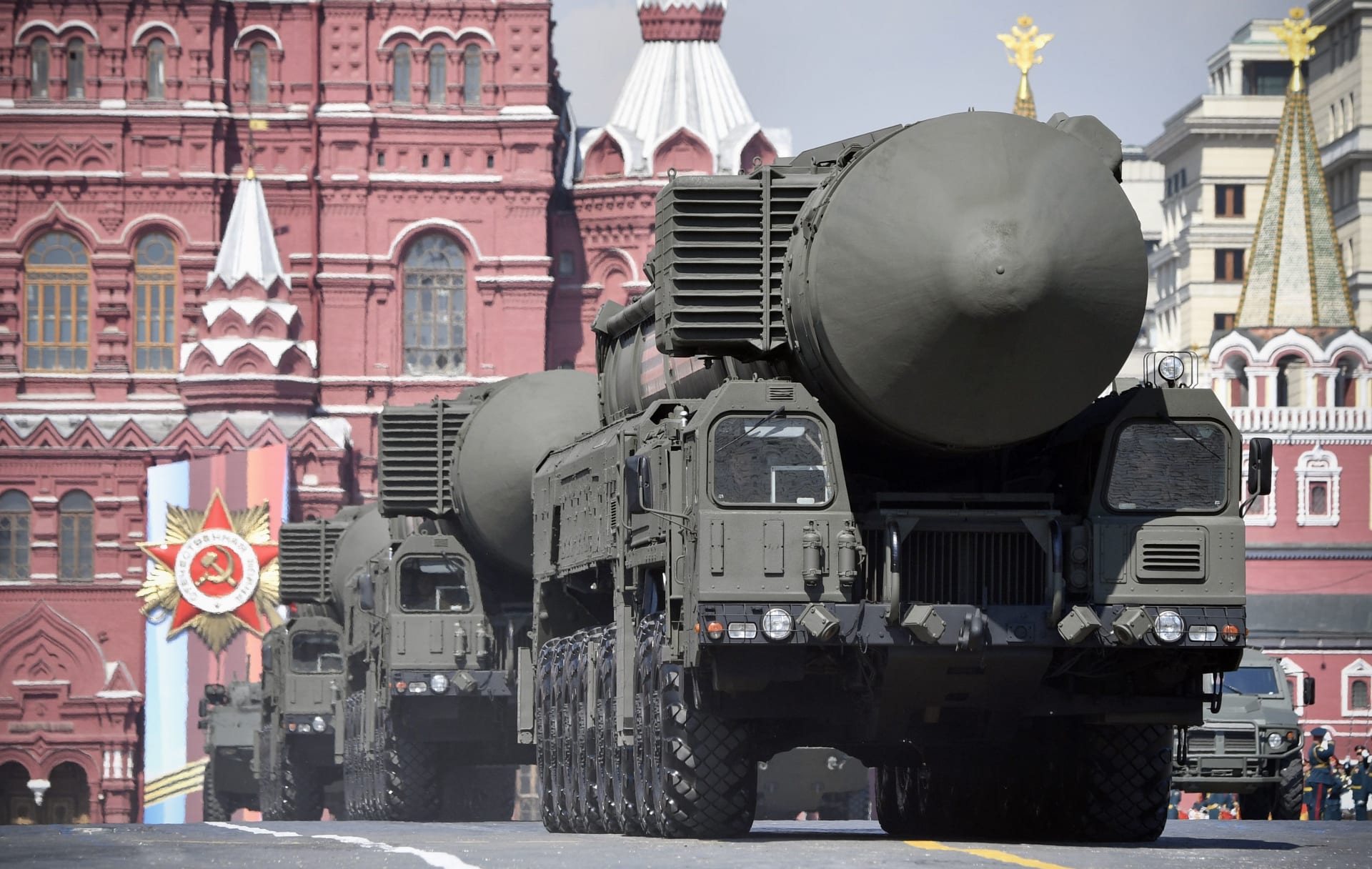
A report titled "Nuclear Weapons Monitoring" issued by the "Norwegian People's Aid" warns of a troubling increase in the number of deployed nuclear weapons ready for use around the world. Despite a slight decrease in the total number of nuclear warheads, the number of weapons ready for immediate use has seen a significant rise, raising concerns amid escalating armed conflicts.
The report, released on Thursday in collaboration with the Union of Concerned Scientists, noted that nine countries possess nuclear weapons: the United States, Russia, France, the United Kingdom, China, India, Pakistan, Israel, and North Korea. According to the report, the total number of nuclear warheads owned by these countries has reached 12,187, which represents a slight decrease of 144 warheads compared to the beginning of last year.
Details of the Situation
What is particularly alarming is that the number of nuclear weapons ready for immediate use has steadily increased, reaching approximately 9,745 weapons last year. This number is equivalent to 135,000 times the destructive capacity of the atomic bomb dropped by the United States on Hiroshima in 1945, which resulted in the deaths of around 140,000 people.
The report also indicated that 40% of the available nuclear warheads, equivalent to 4,012 warheads, are equipped with ballistic missiles on both fixed and mobile launch platforms, as well as submarines and bomber bases. These figures represent an increase of 108 warheads compared to 2024.
Background & Context
Hans Kristensen, director of the Union of Concerned Scientists, considers the continuous increase in deployed warheads to be a concerning development, heightening the risks of rapid escalation, miscalculation, and accidental use of nuclear weapons. In a statement from the "International Campaign to Abolish Nuclear Weapons," he emphasized that this situation makes the world more dangerous for everyone.
The report reflects the growing anxiety amid escalating conflicts in Europe, Asia, and the Middle East, where some nuclear-armed countries are involved. It also warns of the erosion of disarmament, non-proliferation, and arms control regimes, especially with the expiration of the "New START" treaty last month, which was the last agreement between Russia and the United States, the two main nuclear powers.
Impact & Consequences
As of the end of last year, 99 countries had joined the Treaty on the Prohibition of Nuclear Weapons established in 2017, either as active parties or signatories. However, nuclear-armed states that have not joined the treaty are investing substantial amounts in modernizing and expanding their arsenals, a policy actively supported by 33 countries that are under the umbrella of nuclear-armed allies.
Melissa Park, executive director of the International Campaign to Abolish Nuclear Weapons, stressed the need for countries that claim nuclear weapons guarantee their security, particularly in Europe, to realize that the nuclear umbrella does not provide any protection from danger.
Regional Significance
Concerns are growing in the Arab region regarding the implications of this increase in nuclear weapons, especially amid ongoing conflicts in some countries. This situation could affect the stability of the region and increase tensions between nations, necessitating enhanced disarmament efforts and arms control.
In conclusion, the report indicates that the world faces significant challenges related to nuclear weapons, requiring greater international cooperation to curb their proliferation and enhance global security.