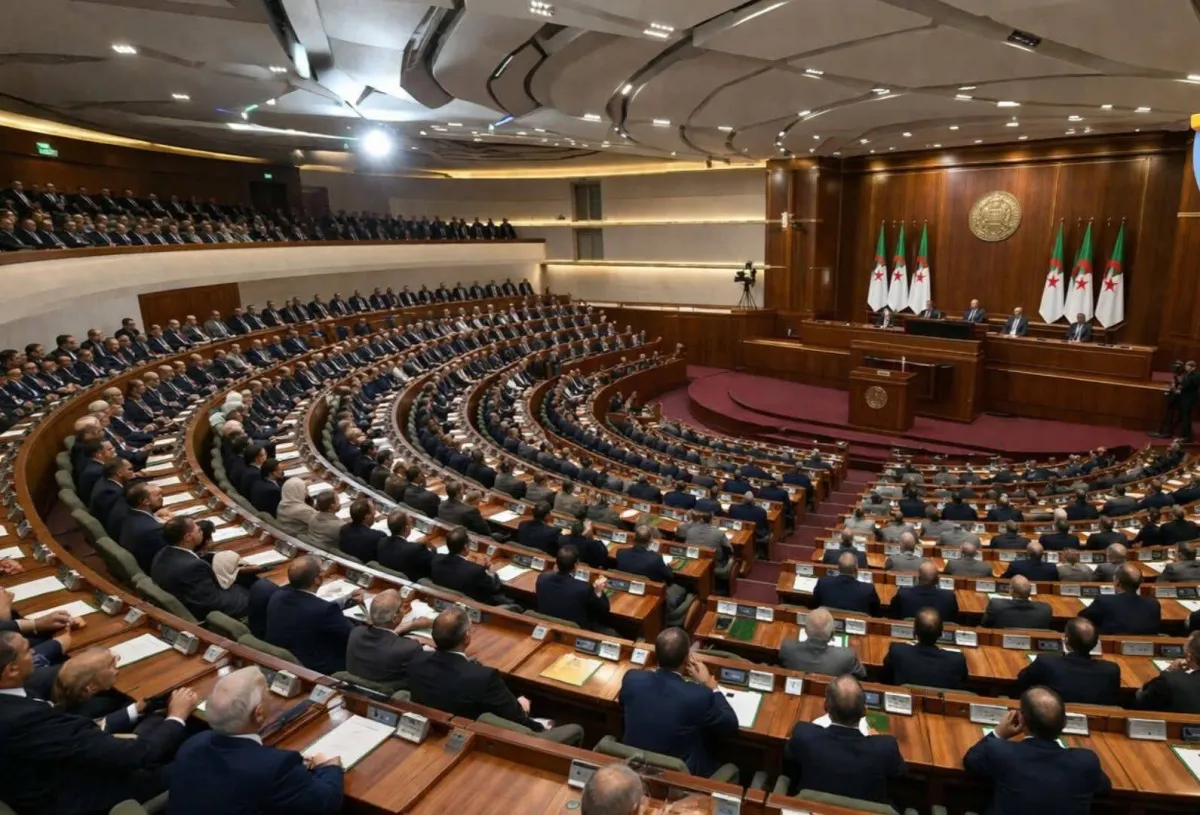
The Algerian Parliament, on Wednesday, held a joint session of both chambers and unanimously approved the "technical constitutional amendment" document, which was announced by the presidency at the end of last year. This document was presented to political parties at the beginning of this year for approval, receiving the backing of three-quarters of the parliament members, totaling 583, with 407 in the "People's National Assembly" and 176 in the "Council of the Nation".
The Minister of Justice, Lotfi Boujemaa, presented an overview of this amendment to the parliamentary office, emphasizing that the review touches on the essence of organizing powers, including the roles of the President, Parliament, and judiciary, in addition to the "independent electoral authority".
Details of the Event
The government attributed these amendments to "deficiencies revealed by constitutional practice" over the past five years since the adoption of the 2020 Constitution. They asserted that these amendments are considered "technical improvements" aimed at enhancing institutional performance, meaning they do not require a public referendum as they do not affect "fundamentals".
Regarding the presidency, the amendment stipulates that candidates must possess a certain "educational level" as a prerequisite, given the increasing responsibilities of the position. The role of the president will also be strengthened with the authority to summon the "electoral body" for early local elections, addressing a constitutional gap that previously restricted this authority to presidential and legislative elections only.
Context and Background
These amendments come as part of the Algerian government's efforts to improve the political system and enhance stability following years of popular protests in the country. They may represent a step towards strengthening democracy, despite reservations expressed by some opposition parties.
Changes were also made to the provisions of the "Council of the Nation", where the government proposed revising the representation criterion to allow one or two seats per province based on demographic size. The term of the president of the "Council of the Nation" was extended to six years instead of three, aiming to ensure institutional continuity.
Implications and Effects
These amendments raise concerns among some observers that they may enhance presidential powers, potentially leading to a regression in democratic gains. The head of the "Rally for Culture and Democracy" party, Othmane Mezouar, warned of the implications of this review on the democratic path, considering it paves the way for a return to an absolute presidential system.
Mezouar also criticized the expansion of presidential powers to include the ability to dissolve local councils prematurely, reflecting concerns over tightening control over institutional succession mechanisms. In contrast, pro-presidential parties expressed their support for these amendments, indicating a political consensus among supportive circles.
Impact on the Arab Region
This step is part of Algeria's efforts to enhance political stability in the region, at a time when many Arab countries are facing political and economic crises. These amendments could improve Algeria's image on the international stage and bolster its role as a mediator in regional issues.
In conclusion, these amendments remain a subject of debate and discussion within political circles, as citizens look forward to seeing their impact on political life in Algeria.