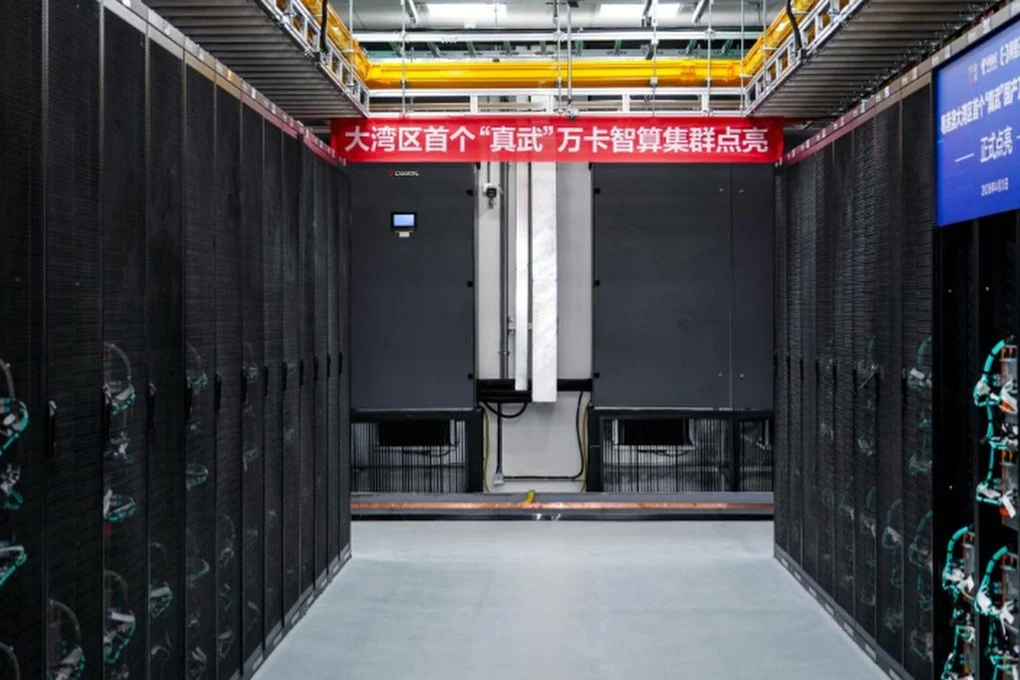
Chinese tech giant Alibaba has announced the launch of a smart computing group consisting of 10,000 cards to enhance its artificial intelligence capabilities. This initiative comes amid increasing competition in the AI sector, as China aims to develop a robust local infrastructure to support technological innovation.
The smart computing group has been developed using Zhenwu AI chips designed by Alibaba's semiconductor design arm, known as T-Head. The launch took place in collaboration with China Telecom at the Shaoguan Data Center in Guangdong Province, reflecting China's commitment to strengthening its local technological capabilities.
Details of the Event
The new computing group represents a strategic move by Alibaba, aiming to meet the growing demand for AI services across various sectors. In recent years, China has witnessed significant growth in its technology investments, bolstering its position as a key player in the global market.
The new group includes advanced technologies designed to improve performance and efficiency in data processing, facilitating the development of AI applications in areas such as e-commerce, healthcare, and transportation. This step comes at a time when Chinese companies face increasing pressure to develop local technologies rather than relying on imported ones.
Background & Context
Historically, China has heavily relied on technology imported from Western countries, particularly in fields like computing and artificial intelligence. With rising trade and political tensions with the United States, China has begun taking serious steps to enhance its local technological capabilities. In recent years, the Chinese government has launched several initiatives to support technological innovation, contributing to the growth of local companies like Alibaba and Huawei.
These initiatives are part of a broader strategy aimed at making China a leader in technology by 2030, with the government seeking to enhance research and development in areas such as artificial intelligence, big data, and the Internet of Things.
Impact & Consequences
This move by Alibaba signals a general trend in China towards strengthening its technological capabilities, which could lead to significant changes in the global market. With increased investments in artificial intelligence, Chinese companies are expected to compete more vigorously with American and European firms, potentially altering the balance of power in the global market.
Moreover, enhancing AI capabilities in China could lead to improved efficiency across many sectors, contributing to economic growth. However, these developments may raise concerns in Western countries regarding technological competition, potentially leading to further trade and political tensions.
Regional Significance
The technological advancements in China are of great importance to the Arab region, where many Arab countries are seeking to enhance their technological capabilities. Arab nations could benefit from collaboration with Chinese companies in areas such as artificial intelligence and modern technology, contributing to the achievement of sustainable development goals.
Additionally, strengthening technological cooperation between China and Arab countries could open new avenues for investment and development, contributing to economic growth in the region.
In conclusion, the launch of the smart computing group by Alibaba represents a significant step in enhancing China's capabilities in the field of artificial intelligence, reflecting the general trend towards developing local technological infrastructure. As competition in this field continues, China is expected to play an increasingly prominent role in shaping the future of global technology.