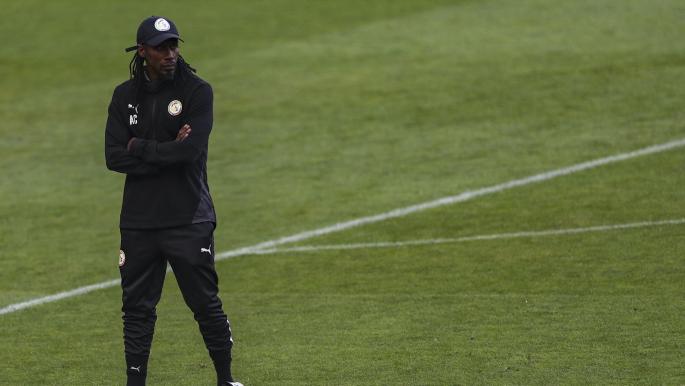
Senegalese coach Aliou Cissé announced on Wednesday his departure from the Libyan national football team after a tenure that lasted over a year. Cissé took charge in March 2025, during which he faced many challenges.
This decision comes after a series of mixed results achieved by the team under his leadership, with high hopes for improving the performance of the Libyan national team in regional and international competitions. Despite Cissé's efforts, the team was unable to meet its desired goals.
Details of the Departure
During his leadership, Cissé encountered numerous difficulties, including instability in the team’s formation, as well as financial and administrative challenges that affected the national team's preparations. The period also saw several injuries that impacted the performance of key players, complicating his task further.
Cissé, who is regarded as a prominent figure in the coaching world, initially expressed optimism about achieving positive results with the Libyan national team. However, the results did not meet expectations, leading to the decision to part ways.
Background & Context
The history of the Libyan national team is filled with challenges, having suffered from instability in both technical and financial management. Since the Libyan revolution in 2011, the team has faced difficulties in organizing matches and training, which has affected player development. There have been numerous attempts to rebuild the team, but results have not been satisfactory.
Cissé took on the role at a critical time when the national team desperately needed strong leadership to overcome obstacles. However, the challenges he faced were greater than anticipated, resulting in the failure to achieve the set objectives.
Impact & Consequences
Cissé's departure may open the door for a new coach who can rebuild the team and improve its performance. The Libyan Football Federation is expected to search for a coach with a new vision and clear strategy for developing the national team. There may also be an impact on the players, who will need to adapt to a new coaching style.
This step is significant for the national team, as it must now reassess its strategies and future goals. These changes may affect the team's preparations for upcoming competitions, including qualifiers for international tournaments.
Regional Significance
Cissé's experience with the Libyan national team exemplifies the challenges faced by sports teams in the Arab region. This case reflects the need for effective strategies in team management and player development. Additionally, the departure of coaches can impact team stability and increase pressure on sports federations in the region.
In light of the ongoing changes in the world of football, Arab teams must adopt new methods in training and management to ensure success. Improving athletic performance requires investment in infrastructure and training, which should be a focus for sports federations.