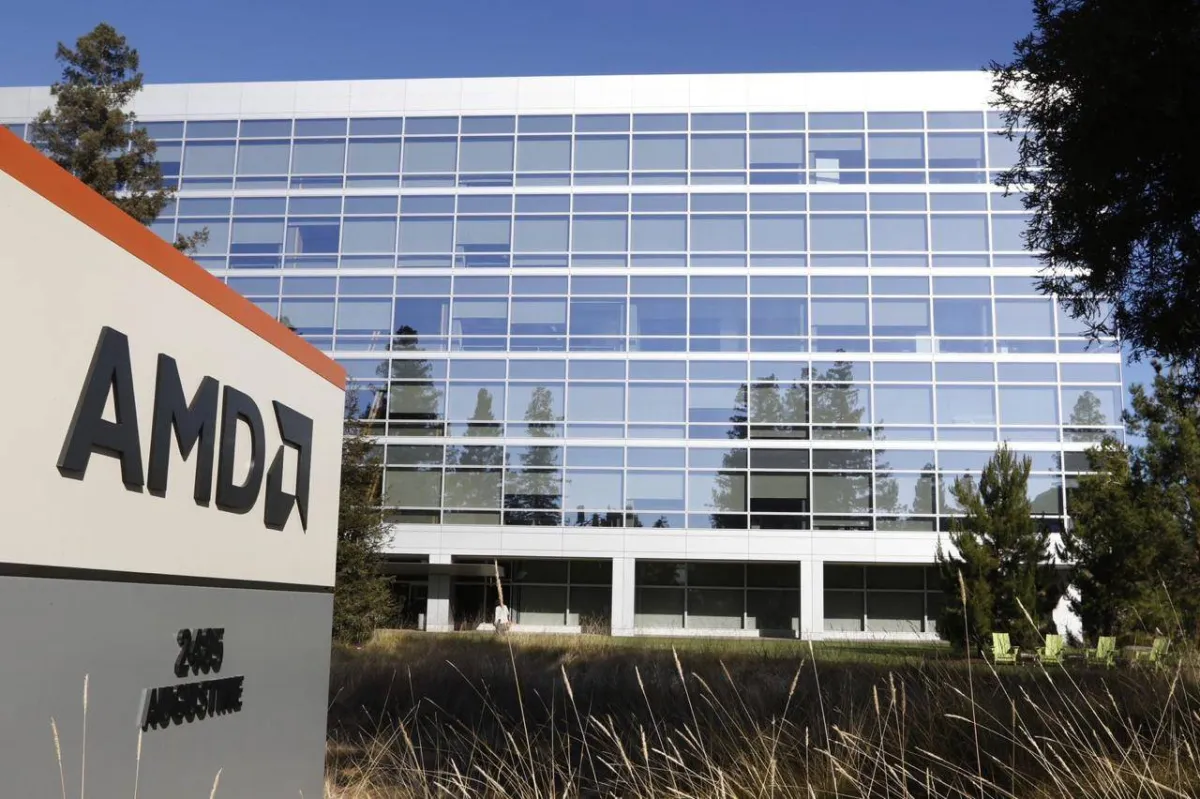
AMD (Advanced Micro Devices) continues to bolster its presence in the professional processors market, driven by a series of technological innovations aimed at enhancing performance and strengthening data security, especially in the sector of business laptops.
The company's latest products showcase its competitive capabilities across multiple computing fields, ranging from supercomputers to artificial intelligence and gaming applications. The fourth-generation processors from the EPYC series contribute to powering the fastest supercomputers globally, while the EPYC 9005 series offers advanced performance for workloads in cloud computing, enterprise applications, and artificial intelligence.
Event Details
In the professional mobile devices sector, the Ryzen AI PRO processors stand out as one of AMD's key solutions, combining Zen 5 architecture with an integrated neural processing unit. This allows for high-efficiency local execution of artificial intelligence tasks without relying on cloud services. The processing capability reaches approximately 55 trillion operations per second (TOPS), enhancing the performance of data-intensive applications while maintaining energy efficiency and smooth operation.
The company bets on these technologies to enable businesses to run artificial intelligence models directly on devices, positively impacting processing speed and data security, especially in environments that require high protection for sensitive information.
Background & Context
In the realm of cybersecurity, AMD offers a comprehensive system based on multiple layers of protection, including firmware security, BIOS, full memory encryption through Memory Guard, and code protection via Shadow Stack. The company also supports Microsoft Secured-Core PCs and secures virtual environments through AMD-V, in addition to enhancing Supply Chain Security.
This approach comes at a time when the end of support for Windows 10 is approaching in October 2025, prompting companies to accelerate their plans to update their technological infrastructure. In this context, AMD offers the Test Drive program, allowing organizations to experience its latest processors in real operating environments to evaluate performance and security capabilities before making upgrade decisions.
Impact & Consequences
Since its establishment in 1969, AMD has transformed into a major player in the semiconductor industry, relying on a long track record of innovation in high-performance computing and artificial intelligence, which enhances its position in a market experiencing rapid competition for future technologies. The innovations provided by AMD not only strengthen its competitive capabilities but also contribute to driving technological advancement in the global market.
These developments in the field of professional processors represent a strategic step by AMD to solidify its position amid fierce competition with other major companies like Intel, providing it with a greater opportunity to dominate the market.
Regional Significance
These innovations are particularly significant for the Arab region, where many countries are striving to enhance their technological capabilities and achieve digital transformation. The adoption of advanced technologies such as those offered by AMD can contribute to improving performance across various sectors, including education, healthcare, and industry.
In conclusion, AMD represents a model of innovation and development, reflecting the importance of investing in modern technology to enhance security and efficiency in a world increasingly reliant on digital solutions.