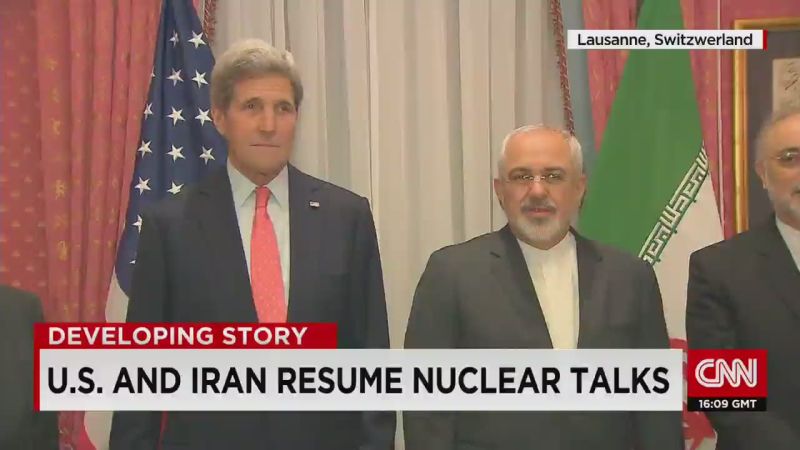
U.S. Congressman Johnny Olzewski has voiced his deep concerns regarding the ongoing negotiations between the United States and Iran, following Iran's response to an American proposal conveyed through Pakistan. During his appearance on the program "Bloomberg This Week," Olzewski emphasized that the U.S. administration has not provided any substantial updates or public hearings regarding this dispute, which exacerbates the uncertainty surrounding the negotiations.
Olzewski's statements come at a sensitive time, as fears are mounting that a lack of transparency could lead to undesirable outcomes in the bilateral relations. He pointed out that Congress has not been adequately consulted regarding these negotiations, raising questions about the viability of any potential agreements.
Details of the Negotiations
Recently, Iran submitted a response to an American proposal concerning its nuclear program, facilitated by mediation from Pakistan. This development has sparked considerable debate, as this response is seen as a significant step in the negotiations aimed at reviving the nuclear agreement signed in 2015.
It is noteworthy that the Iranian nuclear deal was halted in 2018 after the United States withdrew from it, leading to heightened tensions between Tehran and Washington. In this context, any progress in the negotiations is viewed as a positive step, yet doubts regarding transparency remain prevalent.
Background & Context
Historically, U.S.-Iranian relations have experienced significant fluctuations, deteriorating notably after the Iranian revolution in 1979. Since then, the United States has imposed stringent economic sanctions on Iran, which have severely impacted the Iranian economy and exacerbated internal crises.
In recent years, the current U.S. administration has attempted to reopen channels of dialogue with Iran; however, these efforts face substantial challenges, including mutual distrust and internal political pressures within the United States.
Impact & Consequences
The negotiations with Iran are strategically important for the United States, as their outcomes could influence regional and global security. If successful, the negotiations could lead to a de-escalation of tensions in the Middle East; however, failure to reach an agreement could escalate the situation further.
Moreover, the absence of transparency in the negotiations may provoke negative reactions from members of Congress, potentially affecting political support for the administration's foreign policy. This situation could complicate efforts aimed at achieving stability in the region.
Regional Significance
The negotiations with Iran hold strategic importance for the United States, as their outcomes can significantly impact both regional and global security dynamics. A successful negotiation could pave the way for reduced tensions in the Middle East, while failure could lead to an escalation of conflicts.
In conclusion, the ongoing negotiations are not just a matter of diplomatic engagement; they are pivotal in shaping the future of U.S.-Iran relations and the broader geopolitical landscape.