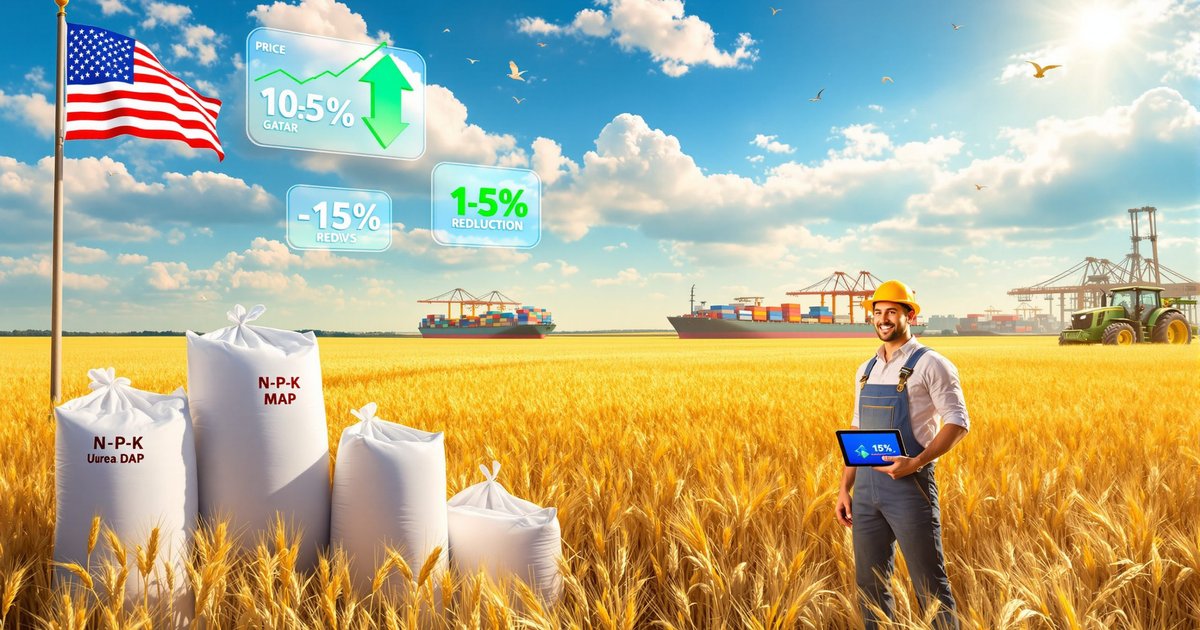
American fertilizer traders are seizing business opportunities in foreign markets due to the war in Iran, reflecting the challenges faced by U.S. farmers amidst global market fluctuations.
These developments come at a time when American farmers are struggling with rising production costs, as global market disruptions have led to increased demand for imported fertilizers. Reports indicate that American fertilizer traders have begun redirecting their shipments to European and Asian markets, where they can achieve higher profits.
Details of the Event
The fertilizer markets are significantly influenced by geopolitical events, especially in the Middle East. The war in Iran, which has heightened tensions in the region, has made it difficult for certain countries to obtain fertilizers from traditional sources. In this context, American traders have decided to capitalize on this opportunity to meet international market needs.
It is worth noting that the United States is one of the largest fertilizer producers in the world and has managed to achieve significant gains by exporting its products to countries suffering from supply shortages. However, this success comes at the expense of American farmers who face difficulties competing with rising global prices.
Background & Context
Historically, the United States has relied heavily on domestic fertilizer markets, but changes in global dynamics have led to a reassessment of this strategy. In recent years, global markets have experienced sharp fluctuations due to political and economic crises, affecting American farmers' ability to obtain the necessary materials for their crops.
The war in Iran is just one of many crises impacting the fertilizer markets. Markets have also felt the effects of conflicts in Ukraine and Africa, complicating the trade landscape. These events underscore the need for new strategies to adapt to rapid market changes.
Impact & Consequences
The repercussions of these developments extend beyond American borders, affecting global food prices. With increased demand for imported fertilizers, food prices in global markets may rise, putting additional pressure on consumers worldwide.
Moreover, these changes could lead to a reshaping of global supply chains as countries seek alternative sources to meet their needs. This may open the door for new countries to enter the fertilizer market, increasing competition and impacting prices.
Regional Significance
For the Arab region, the current situation in fertilizer markets could have significant implications. Many Arab countries rely on importing fertilizers to meet their agricultural needs, and any increase in prices could affect food security in the region.
Furthermore, tensions in Iran could lead to increased instability in the region, potentially impacting trade and markets overall. It is crucial for Arab countries to monitor these developments and take proactive steps to ensure the stability of their agricultural markets.