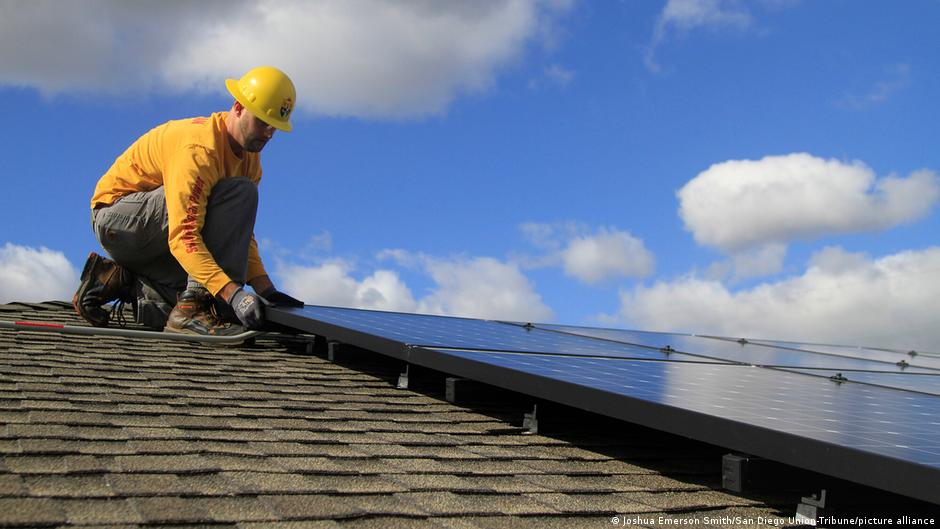
With the continuous rise in energy prices, producing electricity at home has become an attractive option for many Americans. Brian McGowan from Costville, Pennsylvania, reported spending only about $150 on energy last year and expects his bills to be lower this year after installing more solar panels.
Previously, McGowan spent over $2000 annually on electricity, in addition to $1000 on gas and $2000 on heating oil. By using a small heat pump, he has significantly reduced his reliance on heating oil.
Details of the Shift to Solar Energy
McGowan's journey with solar energy began after installing a few panels that were sufficient to power essential appliances like the boiler and coffee machine. Over time, this system evolved to include battery storage and a heat pump, allowing his home to rely more on renewable energy.
McGowan is not alone in this trend; John Spesia, a retired university professor from Steamboat Springs, Colorado, noted that he installed solar panels about 13 years ago and recently added a heat pump, enabling him to discontinue his gas supply.
Background & Context
Reports indicate that the U.S. Energy Information Administration stated that customers in the United States experienced an average of 11 hours of power outages in 2024, which is double the annual average recorded in the past decade. This increasing trend of power outages has prompted many households to consider alternative solutions.
A study from Stanford University revealed that approximately 60% of households could financially benefit from using solar energy and battery storage. However, the presence of government tax incentives may impact the economic feasibility of these solutions.
Impact & Consequences
The factors influencing the potential for savings vary by state, as electricity prices and compensation terms for generated energy differ. In some states, households are compensated for the energy they send to the grid at the same rate they pay for electricity, while in others, they are compensated at wholesale prices.
The payback period for solar energy systems ranges from 2 to 5 years in states with strong incentives, while it can extend to 11 years in states with lower electricity market costs.
Regional Significance
As the Arab world faces similar energy challenges, the American experience with solar energy could serve as an important lesson for Arab countries. With the increasing demand for energy, adopting renewable energy technologies may be beneficial in enhancing sustainability and reducing reliance on traditional energy sources.
In conclusion, the trend towards home energy production appears to be an optimal solution to address the growing energy challenges, contributing to financial and environmental stability for households.