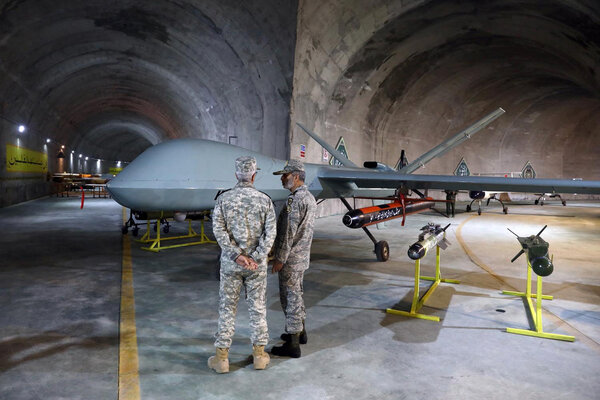
A video circulated on the social media platform X has garnered significant attention, achieving nearly one million views from a single account. Its publishers claim it documents a recent scene displaying part of Iran's drone stockpile.
The clip was accompanied by a claim that Iranian authorities recently released it as part of a showcase of their military capabilities, allegedly showing a large number of drones inside closed facilities.
Details of the Incident
Users also shared a statement attributed to Iranian officials stating that "if Iran launches 200 missiles and drones daily, its stock will not run out even in ten years." However, an analysis conducted by Al Jazeera's open-source unit demonstrated that the video is not real and was generated using artificial intelligence techniques.
Through visual scrutiny, clear indicators of digital generation emerged, including irregularities in the movement of the drones within the scene. Additionally, a lack of physical consistency in the distribution of the drones in the space was noted, along with the near-identical repetition of visual models, reinforcing the hypothesis of artificial generation.
Background & Context
In the context of the U.S.-Israeli war against Iran since late February 2026, Tehran has adopted an escalating military response pattern based on diversifying offensive mediums and geographically distributing them. This reflects a strategy centered on saturating firepower and confusing air defense systems in the region. This escalation comes at a sensitive time as Iran seeks to assert its military strength in the face of international pressures.
Historically, Iran has always been a focal point for major powers, especially given its nuclear program and the development of its military capabilities. These factors have contributed to rising tensions in the region, making any claims regarding Iran's military capabilities of significant interest.
Impact & Consequences
Concerns are growing that such fake videos could escalate tensions between Iran and other countries in the region, especially as the psychological warfare between the conflicting parties continues. Additionally, the dissemination of inaccurate information can influence public opinion and exacerbate political polarization.
Moreover, the use of artificial intelligence in producing fake content raises questions about the credibility of information circulated online, necessitating the need to verify sources before believing any claims.
Regional Significance
Considering the potential impact on the Arab region, these events reflect the challenges faced by Arab countries in dealing with misleading information. Amid rising regional tensions, it becomes essential for Arab nations to be more cautious in consuming information and verifying its accuracy.
These events may also affect relations between Arab countries and Iran, as they could foster suspicion and mistrust, complicating the political landscape in the region.
In conclusion, it remains crucial for media outlets and citizens to stay vigilant regarding the information being circulated and for everyone to work towards promoting a culture of fact-checking in an era where misinformation is on the rise.