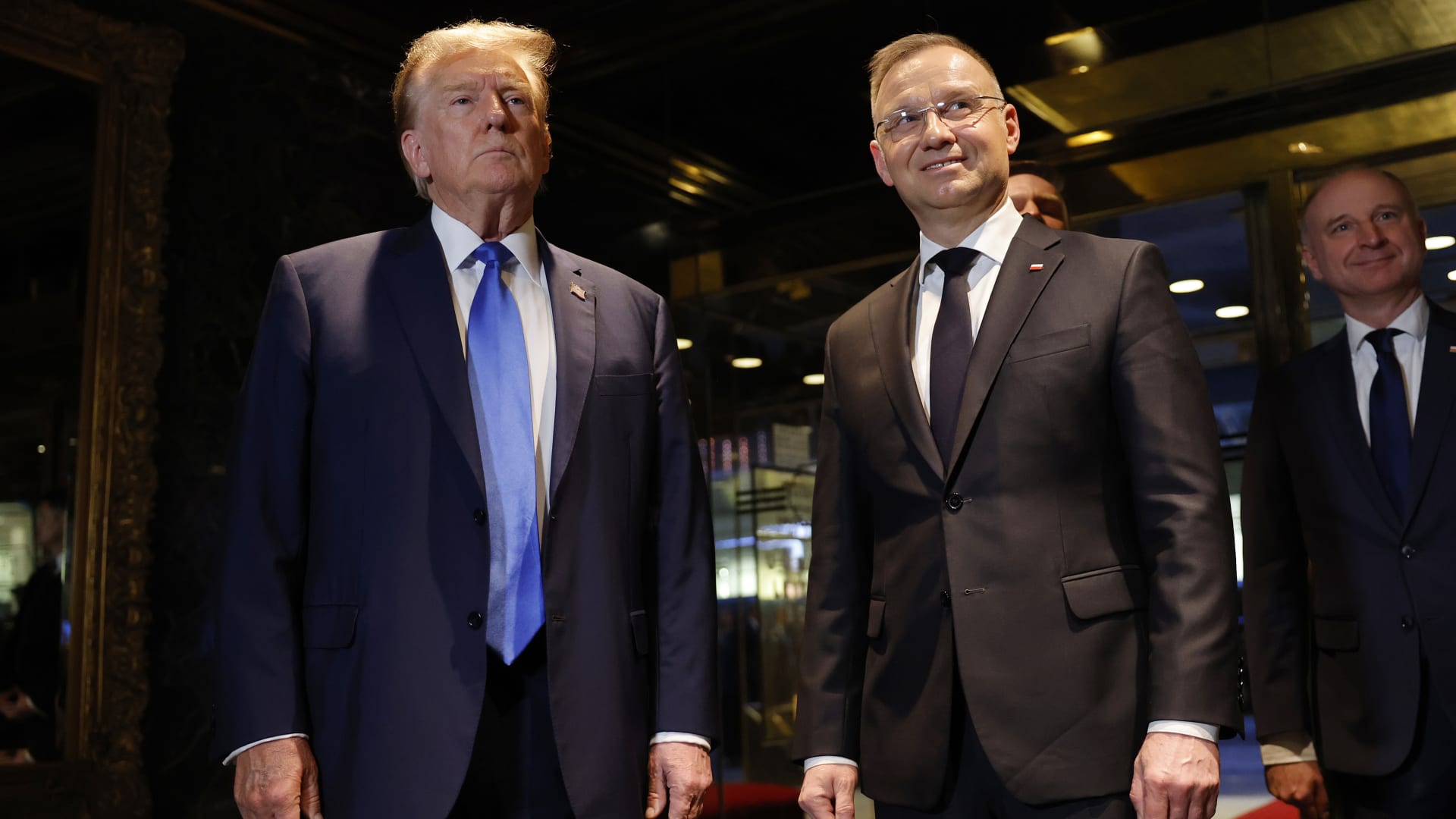
NATO Secretary General Mark Rutte confirmed that former U.S. President Donald Trump's administration contributed to strengthening the alliance. Rutte explained that the pressure exerted by Trump on member states to increase their defense spending had a positive impact, and he also highlighted Trump's ability to draw Russian President Vladimir Putin to the negotiation table.
Rutte's statements came in the context of discussing the challenges facing the alliance amid increasing geopolitical tensions, where he considered that Trump helped make NATO more flexible and capable of addressing threats.
Details of the Event
In discussing Trump's role in strengthening NATO, Rutte pointed out that the pressure exerted by the former U.S. president on member states to increase their defense budgets was essential. Some member countries had been suffering from low defense spending, which affected their readiness to face security challenges.
Rutte also added that Trump played a role in redirecting dialogue with Russia, as he managed to convince Putin to sit at the negotiation table, which he viewed as a positive step in the context of international relations.
Background & Context
NATO was established in 1949 as a military alliance aimed at enhancing the collective security of member states against external threats. Over time, the alliance has faced multiple challenges, ranging from the Cold War to terrorist threats and tensions with Russia.
In recent years, NATO has witnessed significant changes in its strategies, especially after Trump assumed the presidency in the United States. Trump was known for his unconventional approach to foreign policy, which included sharp criticisms of some member states due to their low defense spending.
Impact & Consequences
Rutte's statements serve as evidence of the ongoing impact of Trump's policies on NATO, as these policies could lead to enhanced cooperation among member states and increased defense spending, potentially contributing to strengthening collective security.
However, these policies may also spark controversy among member states, as some countries may feel pressured to increase their spending, which could lead to tensions within the alliance. Therefore, balancing pressure on member states with effective cooperation will be vital in the upcoming phase.
Regional Significance
The Arab region is directly affected by developments in NATO, especially amid increasing regional tensions. An increase in defense spending by member states could mean enhanced military capabilities, which may impact the military balance in the region.
Moreover, dialogue with Russia, as Rutte pointed out, could influence regional policies, potentially leading to changes in relations between Arab states and Russia, especially in light of increasing geopolitical competition.
In conclusion, U.S. policies towards NATO remain pivotal in shaping the global security landscape, and Arab states should closely monitor these developments.