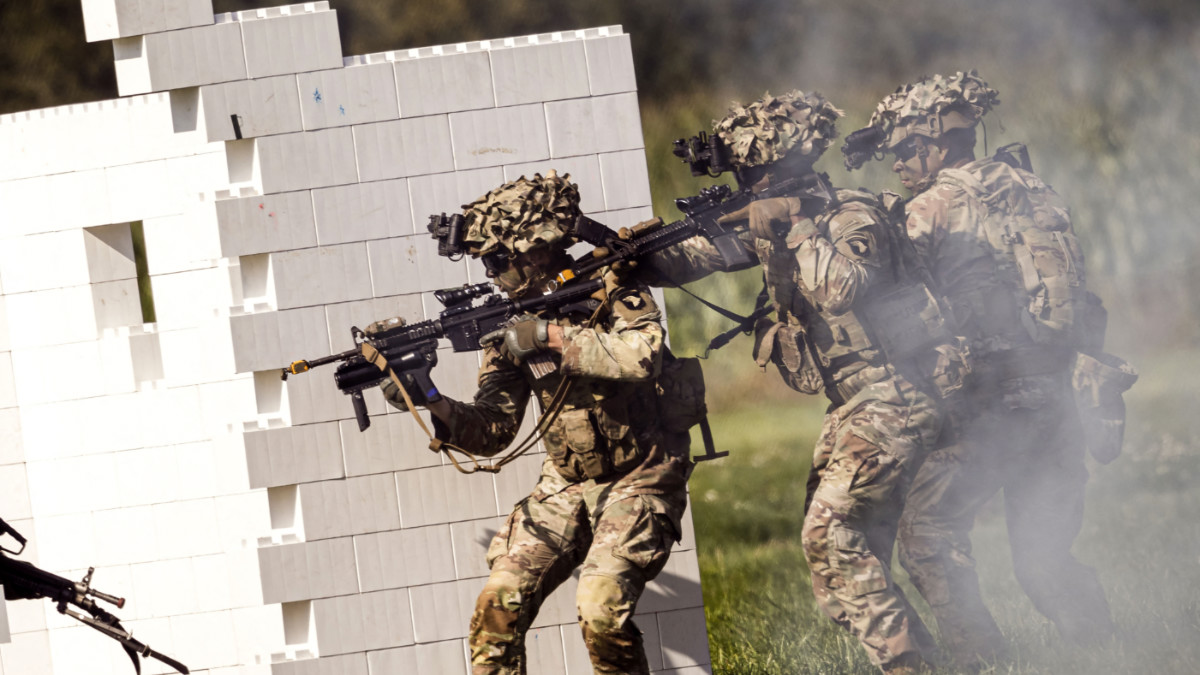
Reports indicate that American forces, including Marines and paratroopers, may be sent to seize Iranian islands in the Gulf, placing them in direct confrontation with significant challenges related to supply lines and undefined objectives. According to former military analysts, any American invasion would begin with a campaign to jam electronic equipment and radars in the region, followed by an intensive bombing campaign.
Seth Cromartie, former head of U.S. Special Operations in the Middle East, states that the United States will need to conduct preparations and isolation before any attack. Electronic warfare will precede preparatory strikes aimed at destroying Iranian defenses.
Details of the Event
Attention is focused on several Iranian islands, but there are three main candidates. Kharq Island tops the list, located opposite Kuwait and housing facilities from which Iran exports about 90% of its oil. Meanwhile, Abu Musa Island and other smaller islands are situated in the center of the Gulf, having been seized by the Iranian Shah in 1971, but the UAE, a close U.S. ally, claims ownership. Qeshm Island is considered the hardest to seize, as it is the largest and contains a network of tunnels where Iran stores drones and missiles.
Approximately 150,000 Iranians live on Qeshm Island, which is a short distance from the port of Bandar Abbas. Iran has redirected ships transiting through the Strait of Hormuz between Qeshm and the neighboring Lark Island.
Background & Context
Historically, there have been similar invasion attempts, such as the battles of Okinawa and Iwo Jima during World War II, where American forces faced significant challenges. However, Daniel Davis, a former U.S. Army Colonel, points out that the attacking American force will likely come from the air, given Iranian control over the Strait of Hormuz.
Davis emphasizes that there is no possibility of American assault ships like the USS Boxer or USS Tripoli crossing the strait, making airstrikes the only available option. The United States is expected to use V-22 Osprey aircraft, Chinooks, and Black Hawks to transport troops to their destination.
Impact & Consequences
If the invasion is executed, American soldiers will face fierce resistance, especially on Kharq and Qeshm Islands, where the terrain provides refuge for Iranian soldiers. The Iranian Revolutionary Guard has adopted a decentralized command structure after witnessing how the United States defeated the Iraqi army in 2003.
This distributed defense structure may manifest in the current conflict, as the Revolutionary Guard has 31 different commands, allowing officers to launch missiles and drones independently. Analysts expect the United States to focus on redirecting its strikes to protect American forces on the ground.
Regional Significance
Concerns are rising that any escalation in the conflict could impact neighboring Arab countries. Reports indicate that Saudi Arabia and the UAE are moving closer to supporting the American-Israeli war against Iran. The UAE has publicly rejected any ceasefire that guarantees the status quo with Iran.
If tensions continue to escalate, the region may witness further escalation, especially with the potential involvement of the Houthis in the conflict. Control over the Iranian islands could exacerbate conditions in the Strait of Hormuz, affecting global oil supplies.