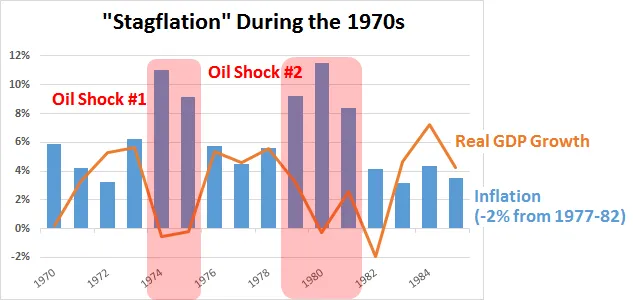
Economists reveal that the stagflation of the 1970s was not solely due to the oil shock but had deeper roots linked to global economic policies. This analysis highlights the multiple factors that contributed to the crisis, which continues to affect the global economy today.
In the 1970s, many countries experienced a sharp rise in inflation rates alongside economic stagnation. While the oil shock was a key factor, other elements such as unsustainable monetary and fiscal policies, and structural changes in the global economy exacerbated the situation.
Details of the Event
In 1973, oil prices surged significantly due to an oil embargo imposed by OPEC members. This increase led to higher production costs, negatively impacting economic growth. However, stagflation was not merely a result of this shock but rather a consequence of the accumulation of ineffective economic policies over the years.
This crisis coincided with significant changes in the global economy, as many countries transitioned from industrial economies to service-oriented economies, resulting in job losses in traditional sectors. Additionally, trade liberalization and reliance on global markets complicated the situation further.
Background & Context
Historically, the 1970s witnessed radical changes in the global economic system. After World War II, Western nations enjoyed rapid economic growth, but by the early 1970s, these dynamics began to shift. The rise in oil prices led to substantial inflation, affecting consumers' purchasing power.
Moreover, the monetary policies adopted by many governments, including increased government spending, exacerbated inflation. In this context, there were calls for changes in economic policies, but the response was slow and ineffective.
Impact & Consequences
The stagflation of the 1970s had far-reaching effects on the global economy. It led to changes in monetary policies, as central banks in many countries began to adopt stricter policies to control inflation. This crisis also contributed to the emergence of new political movements, with citizens demanding more transparency and accountability from their governments.
Furthermore, stagflation changed how economists think about the relationship between inflation and unemployment, leading to the development of new theories in macroeconomics.
Regional Significance
For the Arab region, the stagflation of the 1970s had direct impacts. Oil-producing countries significantly benefited from increased revenues due to rising oil prices. However, at the same time, non-oil-producing countries faced economic crises, exacerbating economic and social disparities.
Today, we can learn from the lessons of that historical period. The economic challenges faced by many Arab countries, including rising inflation and unemployment rates, remind us of the importance of sustainable and transparent economic policies.
Understanding the stagflation of the 1970s requires us to consider the multiple factors that contributed to that crisis. By analyzing these factors, we can be better prepared to face current and future economic challenges.