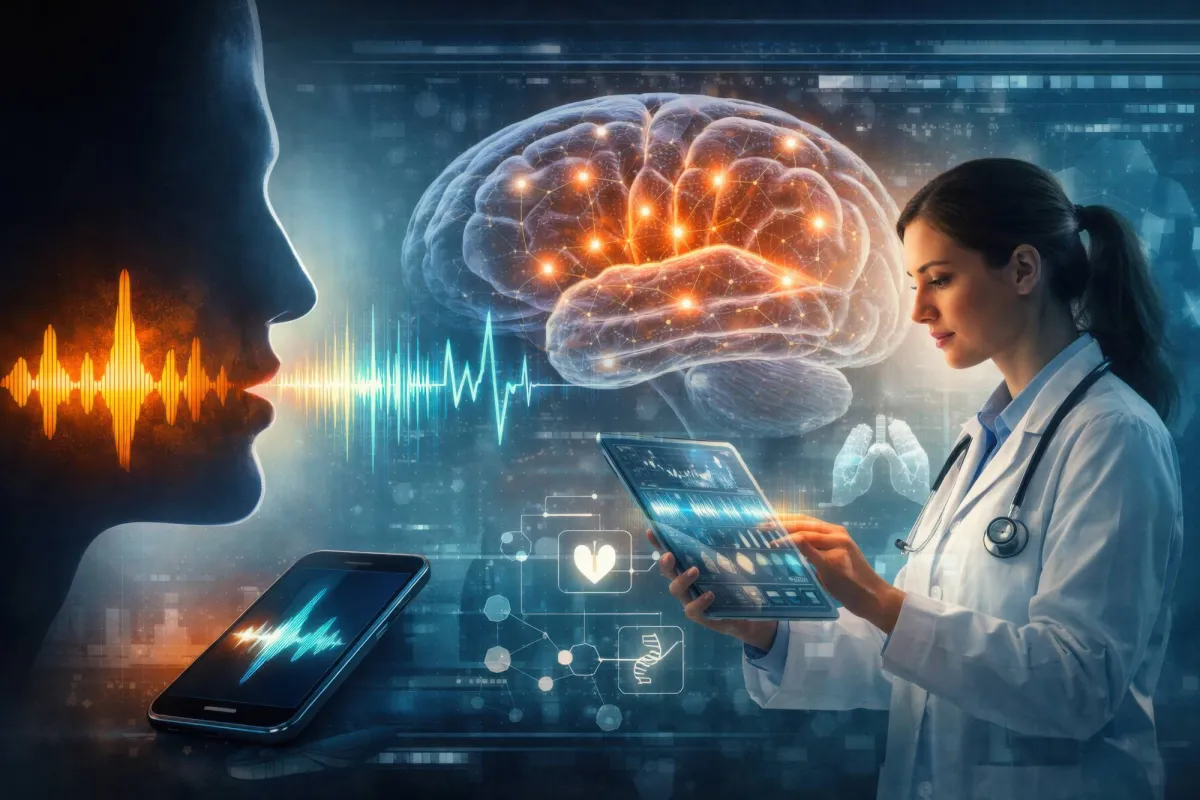
Recent studies indicate that spontaneous speech analysis can serve as an accurate indicator for assessing cognitive and health capabilities. In an unprecedented shift, artificial intelligence has begun to utilize voice as a medical tool, revealing subtle patterns that may be linked to neurological or psychological disorders.
In a study published in 2026 in the journal "Digital Medicine," led by researcher Chen Ziyi from Harvard University, voice characteristics were linked to brain functions, demonstrating a remarkable ability to detect cognitive decline in its early stages. These findings reflect a qualitative shift in understanding human voice, which has evolved from merely a means of communication to an analytical tool that reflects neurological state and cognitive functions.
Event Details
Voice analysis relies on monitoring the vibrations of the vocal cords, changes in rhythm, and inaudible frequencies that may reflect complex physiological changes within the body. A previous study from Stanford University, published in 2025, showed that analyzing short audio recordings could reveal indicators of neurological and psychological disorders.
Voice characteristics are influenced by multiple factors, such as psychological state and surrounding environment, making the use of artificial intelligence in voice analysis a challenge. However, modern algorithms are capable of analyzing thousands of voice features to identify patterns that may reflect biological changes within the body.
Background & Context
Historically, voice has been considered a means of communication, but recent research suggests it carries valuable health information. With advancements in voice analysis technologies, smartphones could become tools for health monitoring, as AI-powered applications analyze users' voices during calls.
This development enables early disease detection, making diagnosis a part of daily routine rather than a delayed event following symptom emergence. Nevertheless, the challenge remains in the accuracy of algorithms and their ability to comprehend human complexities.
Impact & Consequences
This research opens new horizons in medicine, where voice could become a vital health indicator alongside blood tests and traditional examinations. This shift may contribute to improving healthcare by providing early and accurate diagnoses.
However, we must be cautious of over-reliance on voice analysis, as psychological and environmental factors may influence results. Thus, the role of artificial intelligence should remain supportive of medical decision-making rather than replacing it.
Regional Significance
In the Arab region, these developments could enhance healthcare, especially in countries facing medical resource shortages. The use of voice analysis techniques may help provide better health services and strengthen health systems' ability to detect diseases early.
In conclusion, the most pressing question remains: Are we ready to listen to what our bodies say before they scream in pain?