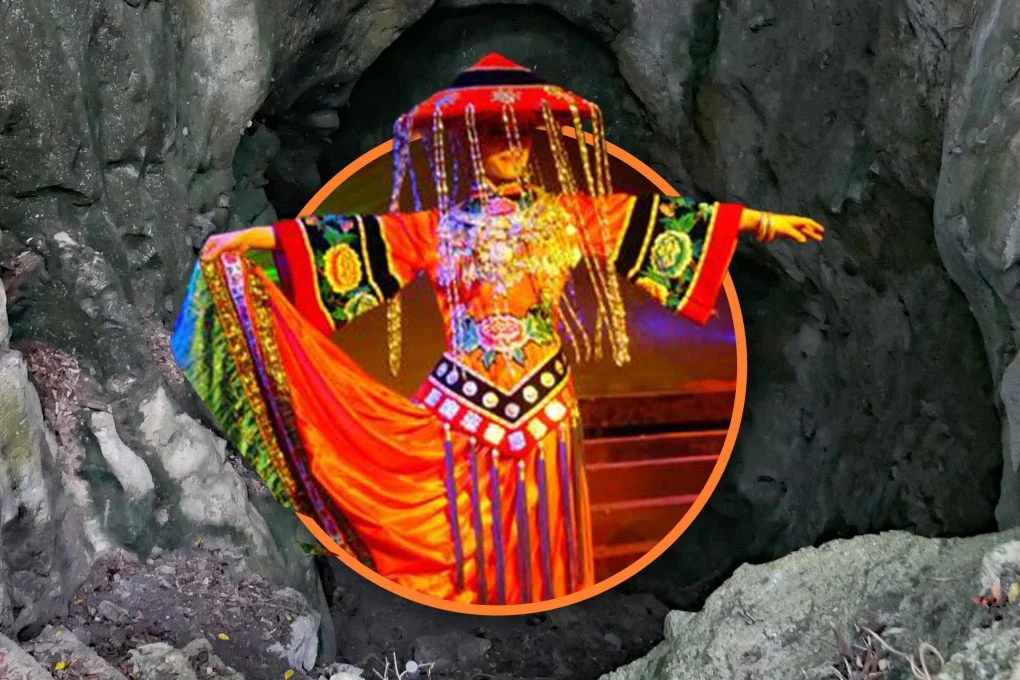
In a tragic and ancient tradition in China, unmarried girls were chosen as brides for the cave god and sent to live in caves where they were starved as a form of sacrifice. This practice, known as 'Luohua Dong Niv', is a folk legend from the Miao communities in the Xiangxi region, located in the western part of Hunan province. Although this practice no longer exists today, it carries a historical mystery regarding its origins and reasons.
This custom is described as a marriage between humans and gods, where girls were considered sacred victims offered as sacrifices to the deity. It is believed that this tradition was practiced during certain times of the year and was seen as a means to communicate with spiritual forces.
Details of the Tradition
The roots of this practice date back to ancient times when local communities believed in the power of gods and their influence on daily life. Girls were carefully selected, often from families of a certain social status. After their selection, they were sent to the caves and asked to fast, ultimately leading to their deaths.
Legends speak of this sacrifice as a means to bring goodness and prosperity to the community, as it was believed that the gods would respond to this offering and grant them abundant harvests and protection from enemies. However, this practice reveals a dark side of cultural traditions that require reconsideration.
Historical Context
Historically, communities in China relied heavily on traditions and religious rituals, which were considered the primary means of communication with the gods. In regions like Hunan, there were numerous customs related to sacrifice, which were practiced as part of religious celebrations.
Over the centuries, these customs evolved; however, some ancient practices persisted longer than they should have, resulting in the loss of many girls' lives in the name of old traditions. Today, these practices are considered part of China's cultural history and are studied in the context of understanding social and religious development in the country.
Impact and Consequences
This story illustrates how ancient traditions can affect individuals' lives, especially women, in traditional societies. The sacrifice of girls as brides for the god expresses gender inequality and highlights social issues that still persist in some cultures.
These practices serve as an important lesson on how societies evolve and the changes that occur in values and ethics. As time progresses, communities have begun to reevaluate their traditions, leading to positive changes in how they address human rights and equality issues.
Significance for the Arab Region
Although this practice belongs to a distant culture, it raises questions about how ancient traditions also affect Arab communities. In many cultures, there are still practices considered traditional, which may require reevaluation in light of human rights.
Understanding these traditions can help Arab communities reflect on how to address the social and cultural issues they face, fostering dialogue about women's rights and equality in society.
In conclusion, the story of 'Luohua Dong Niv' exemplifies how ancient traditions can impact individuals' lives and underscores the importance of rethinking cultural practices to ensure a better future for all.