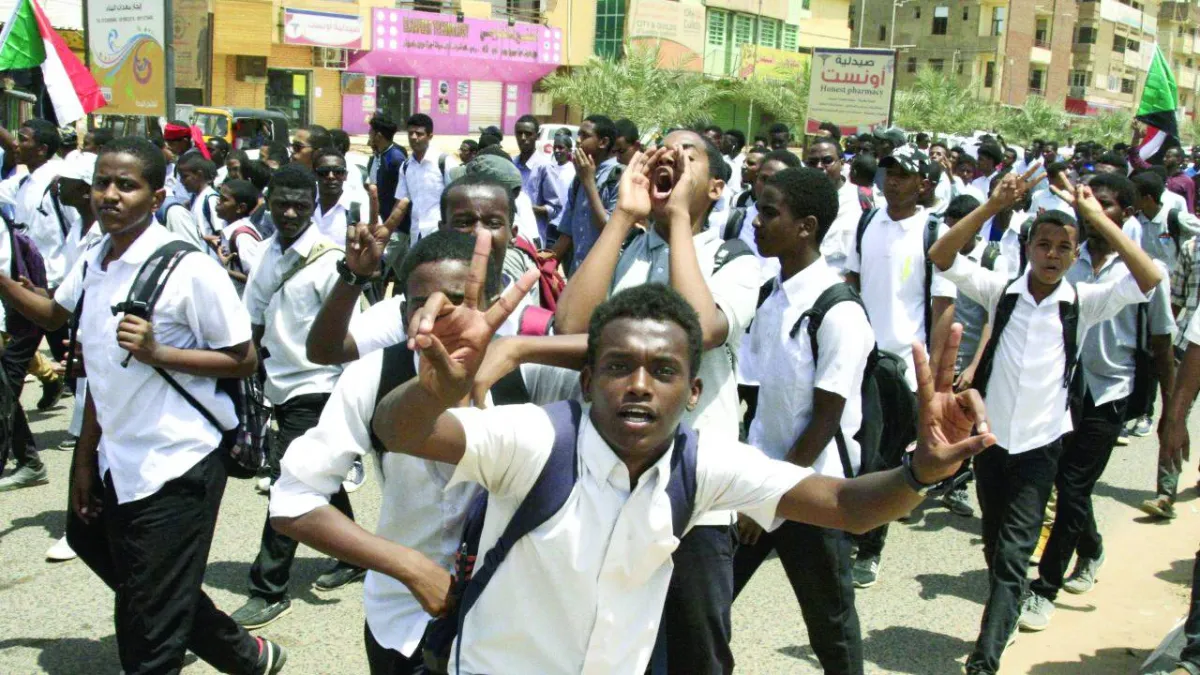
In a move that raises fears of entrenching political and administrative division in Sudan, the 'Foundation' government, supported by the Rapid Support Forces, announced its intention to organize secondary school exams in the areas under its control during June. This announcement comes just days after the Sudanese government, backed by the army, declared that it had completed arrangements for holding exams in the states under its control.
The two announcements coincided with the launch of a national initiative by national and academic figures aimed at saving the future of Sudanese secondary school students. The initiative called for postponing the exams announced by both governments and working towards organizing unified exams for all students across the country. The initiative received broad support from civil forces opposed to the war, which urged both parties in the conflict to respond urgently to ensure safe and fair exams.
Details of the Event
The initiative aims to protect the future of approximately 280,000 students in the Darfur and Kordofan states and other areas under the control of the 'Foundation' alliance, where these students have been deprived of sitting for the Sudanese secondary exams over the past three years due to the ongoing conflict. The organizers of the initiative have contacted leaders in the 'Hope' government led by Kamel Idris and members of the Transitional Sovereignty Council, seeking to reach an understanding that ensures students can take their exams in their regions.
At the same time, the Ministry of Education of the Sudanese government confirmed that it had completed its preparations for 544,000 students inside and outside the country to sit for the secondary school exams scheduled for April 13. Meanwhile, the Minister of Education in the 'Foundation' government, Kuku Jagdoul, stated that his government is proceeding with the exams in June, indicating their readiness to facilitate all students' participation.
Context and Background
This is the first time that the Sudanese secondary exams are being organized in the Darfur region since the outbreak of war between the army and the Rapid Support Forces in April 2023. Observers believe that conducting separate exams in the areas controlled by each party may open the door to entrenching the reality of division, not only at the political and military levels but also in educational institutions and public services.
In this context, a member of the Teachers' Committee, Sami Al-Baqir, confirmed that organizing independent exams in the areas controlled by the army and the Rapid Support Forces represents a dangerous entry point for administratively and politically dividing the country. He proposed the formation of an independent national committee comprising educational experts to oversee the exams in all regions.
Consequences and Impact
The Sudanese army currently controls the central, eastern, and northern states, including Sennar and most of the Blue Nile state, while the Rapid Support Forces control the five Darfur states and large parts of North and West Kordofan. In an attempt to address the situation of displaced students from Darfur, the Ministry of Education in the Northern state announced the allocation of centers to receive displaced Darfur students and enable them to take the exams.
These conditions evoke the experience of the previous war in Darfur between 2003 and 2010, where the Sudanese secondary exams were organized in areas agreed upon in advance, with arrangements ensuring students' safe access to exam centers. However, the continuation of the conflict may hinder these efforts.
Impact on the Arab Region
The educational situation in Sudan represents part of the larger picture of the crises facing the Arab region, highlighting the urgent need to protect students' rights to education amid conflicts. The political and security instability in Sudan may negatively affect efforts to rebuild the educational system in the country, reflecting on the future of upcoming generations.
In conclusion, the future of education in Sudan remains suspended between ongoing conflicts and efforts aimed at achieving peace and stability. The need for a national consensus that guarantees students' rights to education has become more urgent than ever.