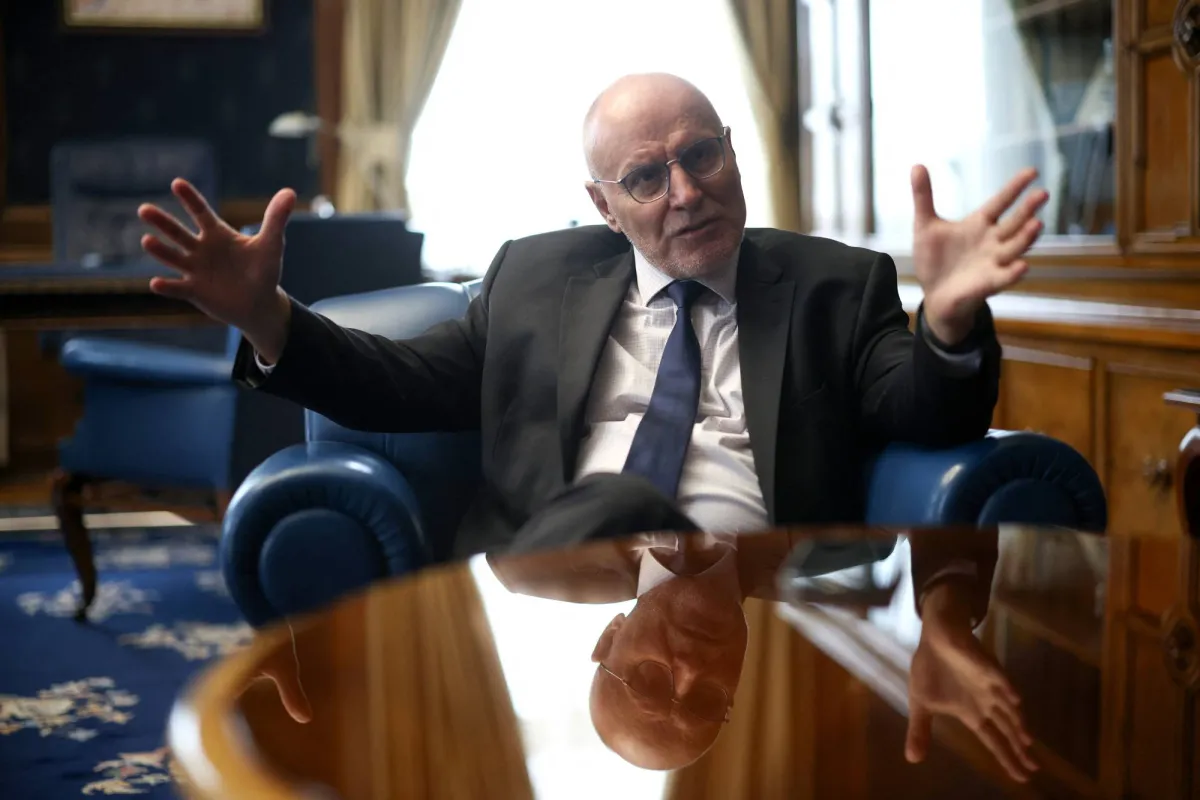
Dimitr Radif, a member of the Governing Council of the European Central Bank, cautioned that inflation expectations in the Eurozone face the risk of rising at a faster pace than in the past, emphasizing the need for the bank to be prepared to raise interest rates urgently if signs of persistent price pressures emerge.
In an interview with Reuters, Radif explained that the significant increase in energy costs resulting from the war in Iran has already pushed inflation beyond the bank's target of 2%. He noted that policymakers are now discussing tightening monetary policy to prevent this rise from spilling over into other goods and services, which could lead to a self-reinforcing "price spiral".
Details of the Event
Radif, who also serves as the Governor of the Bulgarian National Bank, stated, "The balance of risks has shifted in an unfavorable direction," adding that while the baseline forecasts remain the reference, the likelihood of a "pessimistic scenario" has increased, particularly amid the energy shock and high uncertainty.
The bank's major concern is that consumers and businesses, who experienced runaway prices four years ago following the Russian invasion of Ukraine, may now rush to adjust their expectations and demand higher wages and prices, raising the cost of curbing inflation later.
Background & Context
Data on inflation for March showed no tangible effects from the "second-round" (wage increases), yet Radif confirmed that the bank cannot rely on these results, warning that "the cost of inaction will increase if the shock begins to affect wages and profit margins."
While financial markets expect interest rates to rise twice this year starting in June, Radif indicated that it is too early to conclude that there is sufficient data to make a decision at the meeting on April 30. However, he affirmed that the meeting will provide an opportunity to discuss a more specific policy.
Impact & Consequences
Amid rising inflation fears, Radif warned against governments resorting to broad energy support, indicating that this could "pour oil on the fire" and increase inflationary pressures instead of alleviating them. These warnings come at a time when policymakers in Europe face mounting pressures to address growing economic challenges.
Concerns are increasing that rising energy prices could have negative effects on economic growth in the Eurozone, necessitating swift and effective action from the European Central Bank.
Regional Significance
The Arab region is directly affected by rising energy prices, as many Arab countries are among the largest oil importers. Any increase in energy prices could lead to inflationary pressures in these countries, impacting citizens' purchasing power.
At the same time, tight monetary policies in Europe could lead to indirect effects on Arab markets, as investments and trade between Arab countries and European nations may be impacted.
In conclusion, it remains to be seen how the European Central Bank will address these challenges and whether the measures taken will succeed in curbing inflation and ensuring economic stability in the Eurozone.