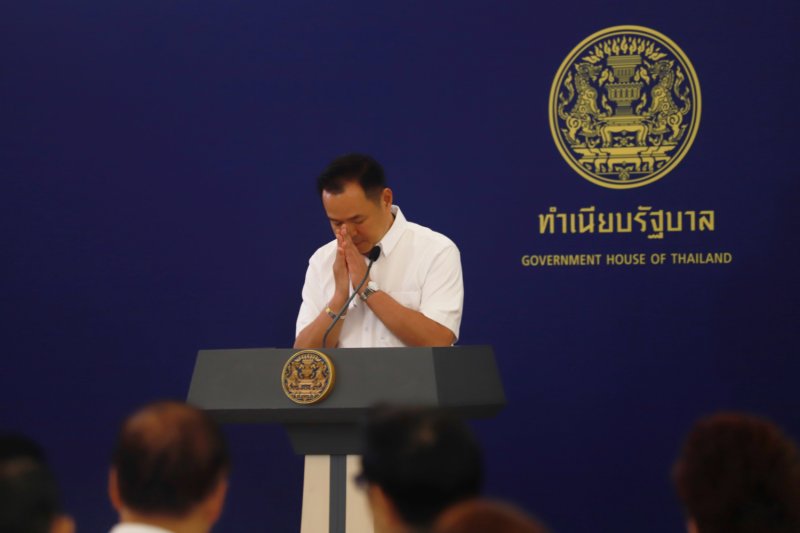
Thailand's Prime Minister, Anutin Charnvirakul, has apologized for the mismanagement of the fuel crisis in the country, indicating that the disruptions caused by the war in the Middle East have lasted longer than expected. This statement was made during a press conference in the Government House in Bangkok, where he discussed the ramifications of the ongoing conflict in the region.
In a controversial move, Charnvirakul announced the termination of the fuel price cap, which will help prevent oil smuggling to neighboring countries and alleviate shortages. Thai citizens were shocked by the increase in fuel prices by six baht per liter after the government abandoned its costly attempts to stabilize prices, leading to long queues at gas stations across the country.
Details of the Announcement
During the press conference, Charnvirakul confirmed that after a month since the outbreak of the conflict in the Middle East, it was necessary to adjust government policies. In the early days of the conflict, the government attempted to impose a cap on fuel prices to ease the burden on citizens, but it found that the cost had become unsustainable after spending around 20 billion baht in the first three weeks of the war.
He explained that the government would reduce the support rate from 24 baht to 16 baht per liter, allowing prices to adjust to global conditions. He emphasized that this change would help prevent smuggling of subsidized fuel across borders.
Background & Context
Historically, Thailand has been significantly affected by regional crises, especially those related to the Middle East. The country is one of the largest oil importers in the region, and any disruptions in supply directly impact the local economy. Since the onset of the war between the United States, Israel, and Iran on February 28, the government has been trying to control prices, but the situation evolved faster than anticipated.
Thailand is a country that heavily relies on imported fuel, making it vulnerable to fluctuations in the global market. With rising oil prices worldwide, the government found itself in a difficult position, having to make tough decisions to avoid fuel shortages.
Impact & Consequences
The government anticipates that lifting the price cap will reduce excessive demand for fuel, which has surged significantly due to panic among citizens. Charnvirakul noted that daily fuel demand has increased to 82 million liters, exceeding the normal rate by 22%.
He also added that the government will work to manage supplies strictly, especially with the Songkran holiday approaching, when many Thais are expected to travel to their hometowns. He confirmed that prices remain lower than those in Malaysia, Vietnam, and Laos, reflecting the relative situation in the region.
Regional Significance
The crises in the Middle East, such as the current conflict, have a significant impact on the global economy, including Asian countries like Thailand. Any increase in oil prices affects living costs worldwide, increasing pressure on governments to provide support to citizens.
Moreover, tensions in the region may lead to changes in energy policies in many countries, prompting governments to take proactive measures to deal with any future crises.
In conclusion, Prime Minister Charnvirakul's apology for the management of the fuel crisis reflects the substantial challenges governments face amid global crises. A swift and effective response to these challenges will be key to maintaining local economic stability and ensuring citizens' welfare.