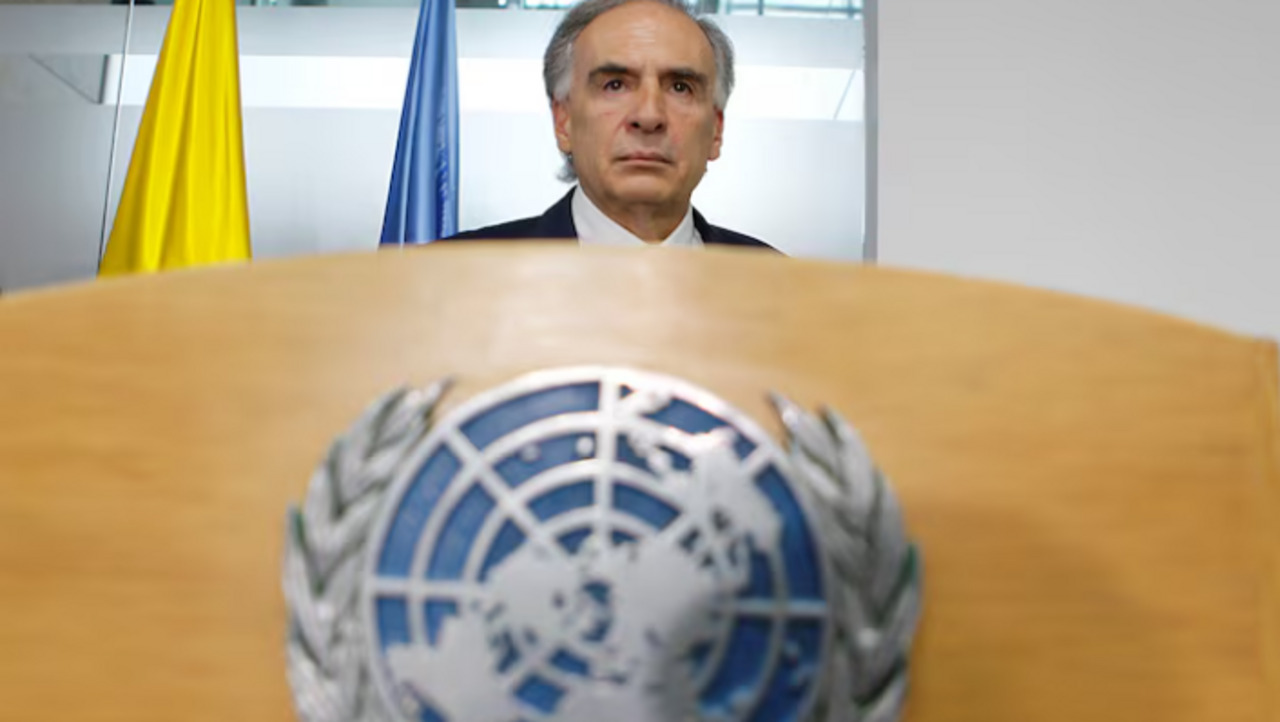
United Nations Secretary-General Antonio Guterres has appointed French diplomat Jean Arnaud as his personal envoy to support efforts to end the conflict in the Middle East, warning of the danger of a broader war if diplomatic efforts fail.
During a press conference, Guterres indicated that he is engaged in intensive communications with various parties in the region and beyond, affirming that multiple initiatives are aimed at enhancing dialogue and peace. He stressed the necessity for these movements to yield tangible results to avoid further sliding into confrontation.
Event Details
In a notable warning, Guterres alerted that a prolonged closure of the Strait of Hormuz could disrupt the flow of oil, gas, and fertilizer shipments, posing a significant threat at a sensitive time in the global agricultural season. He stated from the United Nations headquarters in New York that "the time has come to stop the escalation and begin diplomacy."
He also clarified that United Nations mediators have already offered their services, and Arnaud will do "everything in his power" to support de-escalation pathways and peaceful solutions. The international organization benefits from Arnaud's experience, which spans over 30 years in international diplomacy, focusing on peaceful settlements and mediation in UN missions across continents.
Background & Context
This step comes at a time of rising tensions in the Middle East, where armed conflicts continue to affect regional stability. Arnaud's last mission in 2021 was as Guterres' personal envoy to Afghanistan, reflecting his extensive experience in dealing with complex crises.
Experts indicate that the ongoing war against Iran could worsen humanitarian conditions, with the World Food Programme warning that tens of millions may face acute hunger if conflicts persist until June. The closure of the Strait of Hormuz, one of the world's most critical maritime passages, poses a real threat to global food security.
Impact & Consequences
Concerns are growing that disruptions in fertilizer shipments and rising energy prices due to the conflict could lead to a new wave of food price increases in vulnerable countries. This could signal a long-term setback, especially at a time when many nations are still recovering from successive global shocks.
Guterres noted that Gulf countries are among the leading suppliers of raw materials necessary for producing nitrogen fertilizers essential for developing nations, warning that "without fertilizers today, we may face hunger tomorrow." This warning reflects the humanitarian and economic dimensions of the current crisis.
Regional Significance
These developments are particularly significant for Arab countries, as any escalation in conflict could directly impact security and stability in the region. Arab nations heavily rely on food imports, making them vulnerable to the repercussions of any supply crisis.
In light of these circumstances, hope remains pinned on international diplomatic efforts to achieve peace and stability in the region, as the current situation requires the concerted efforts of all concerned parties to avoid further escalation.