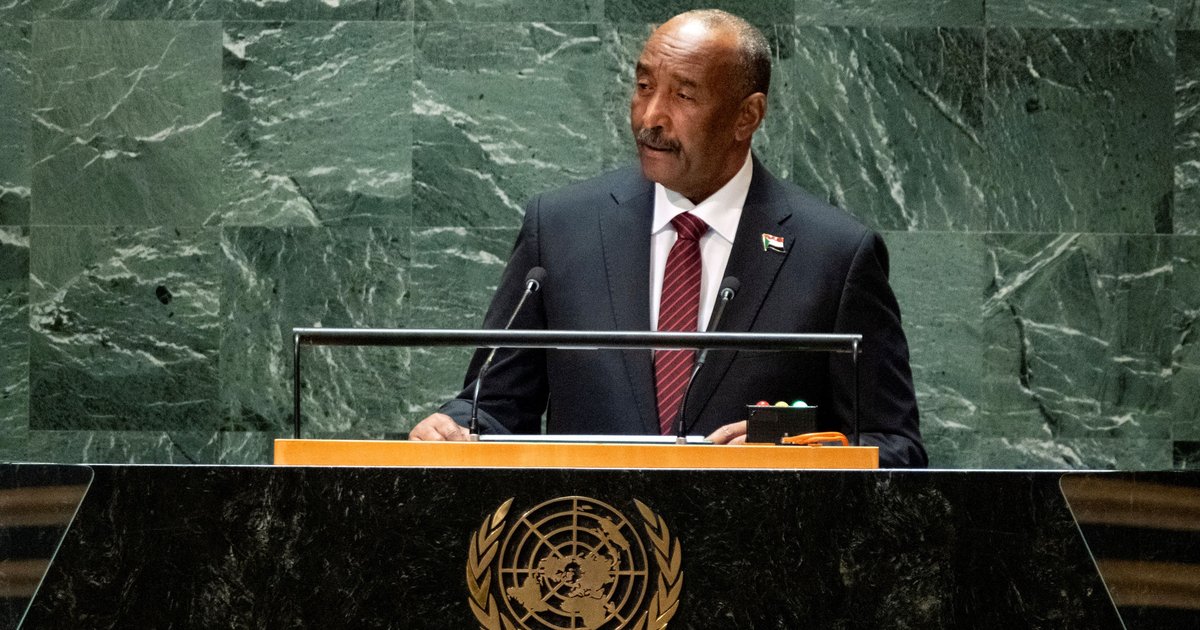
Sudan's transitional Sovereign Council Chairman and Commander-in-Chief of the Armed Forces, Abdel Fattah al-Burhan, has issued a series of military decisions that include the appointment of Lieutenant General Yasser al-Atta as the new Chief of Staff of the Sudanese Army. This appointment replaces Lieutenant General Mohamed Osman al-Hussein, who has been retired, as part of a restructuring of the leadership of the armed forces.
According to a statement from the Sudanese Armed Forces, the decisions also included the appointment of Lieutenant General Abdel Khair Abdullah Nasser Dergam as Deputy Chief of Staff for Administration, Lieutenant General Mohamed Ali Ahmed Sabir as Head of Military Intelligence, Lieutenant General Moatasem Abbas Al-Toum Ahmed as Deputy Chief of Staff for Operations, Lieutenant General Haidar Ali Al-Tarifi Ali as Deputy Chief of Staff for Training, and Lieutenant General Khalaf Allah Abdullah Idris Abdul Rahman as Deputy Chief of Staff for Logistics.
Details of the Event
These changes represent the most significant shift in the leadership of the Sudanese Army since fighting broke out between the armed forces and rapid support forces three years ago. These decisions may lead to changes in military strategy, especially with the opening of a new front in the war in the Blue Nile state in the southeast of the country.
Days ago, Yasser al-Atta stated in an interview with the Transitional Sovereign Council's YouTube channel that the upcoming phase will witness the integration of supporting forces within the Sudanese Army without exception. He confirmed that the integration process will include all forces that fought alongside the army against the rapid support forces, indicating a significant transformation in the structure of the armed forces.
Background & Context
Yasser al-Atta is considered one of the most prominent military leaders in Sudan, having played a pivotal role in the political and military landscape of the country. He had a significant presence during the political transformations in Sudan, especially during the fall of President Omar al-Bashir's regime in 2019, where he was a member of the Transitional Military Council and then the Sovereign Council.
The ongoing war in Sudan for three years has resulted in the deaths of tens of thousands and the displacement of more than 11 million people, causing a humanitarian crisis that the United Nations considers among the worst in the world. Humanitarian suffering continues to escalate, particularly in the Darfur region of western Sudan, where a large number of displaced people live in harsh conditions.
Impact & Consequences
These appointments come at a critical time as the conflict between the armed forces and rapid support forces escalates, raising concerns about the stability of the country. Changes in leadership could lead to shifts in military strategy, which may affect the course of the conflict and reshape the balance of power in the region.
Moreover, the integration of supporting forces may contribute to strengthening the Sudanese Army, but it may also raise questions about how to manage these forces and integrate them into existing military structures. These developments could impact regional security, especially amid ongoing tensions in the area.
Regional Significance
The situation in Sudan is of great importance to the Arab region, as the continuation of the conflict could lead to security and political repercussions affecting neighboring countries. Additionally, the humanitarian crises resulting from the conflict may necessitate international and regional interventions, further complicating the situation.
In conclusion, the recent changes in the leadership of the Sudanese Army reflect the significant challenges facing the country and highlight the urgent need to achieve peace and stability in the region.